
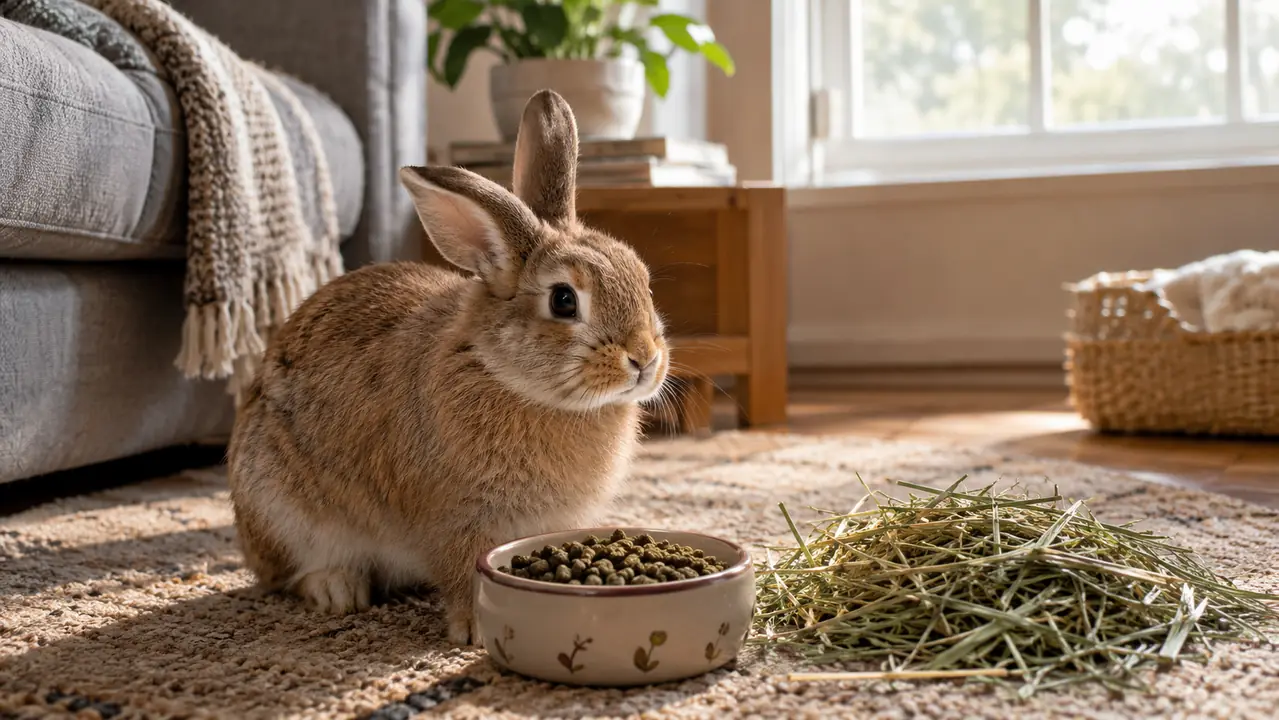
When my vet first told me to move Clover off alfalfa pellets, I nodded, came home, and kept feeding the old bag for another two weeks. She was four, healthy, and the change felt like extra work for no obvious payoff. Then I actually made the switch to Oxbow Essentials Adult Rabbit Food, and the difference showed up in her litter box, her waistline, and her mood.
I have kept house rabbits for about fifteen years, and Clover is a picky 4-year-old Holland Lop who free roams the living room and chews everything. I have made most of the pellet mistakes you can make. If you are wondering whether timothy-based pellets really suit an adult rabbit, these are the ten reasons I now say yes.
The timothy-based pellet my picky rabbit actually eats
Oxbow Essentials Adult Rabbit Food is the timothy-based pellet I feed Clover every day. It is high in fiber, low in calcium, and it made the switch from alfalfa painless.
Amazon Check Today's Price on Amazon →Adult rabbits need grass fiber, not legume richness
Alfalfa is a legume hay, rich in protein and calcium, built for growing babies. Timothy is a grass hay, closer to what an adult rabbit's digestive system is designed to process day in and day out. When I switched Clover to a timothy-based pellet, her digestion stayed steady and her cecotropes, the soft droppings rabbits re-eat, looked more normal within a week. I remember the exact morning I noticed: the tray under her pen held small, firm, uniform droppings instead of the soft clumps I had been scraping up for months. My vet described the change as swapping a heavy cream dinner for a balanced plate, and watching Clover's output settle down over about six days made the lesson stick. Her appetite never dipped once, which was my biggest worry with a picky eater.
Lower calcium protects an adult rabbit's urinary tract
Baby rabbits need calcium to build bone. Adult rabbits absorb what they need and excrete the rest, and excess calcium can turn into bladder sludge, a miserable and expensive problem. Timothy is naturally lower in calcium than alfalfa. That single fact is the main reason my vet recommended the switch for Clover, and it is the reason I now recommend it to every adult rabbit owner. The vet put it plainly during Clover's annual checkup last spring: a grown rabbit's body filters out the calcium it does not use, and too much of it settles in the bladder like fine sand. Passing that sand is painful, and treating it means fluids, medication, and a strict diet that is far harder on the rabbit than a simple pellet change. I have watched an older rescue rabbit go through that treatment, and I never wanted Clover to be that rabbit.
Moderate protein helps adult rabbits hold a healthy weight
A fully grown house rabbit does not need the protein punch a growing kit needs. Rich pellets make it easy for an adult rabbit to pack on weight, especially a free-roaming rabbit whose favorite hobby is napping. The Oxbow adult formula keeps protein moderate while holding fiber high, and Clover has stayed at a healthy weight since we switched.
The pellets taste like the hay they should be eating
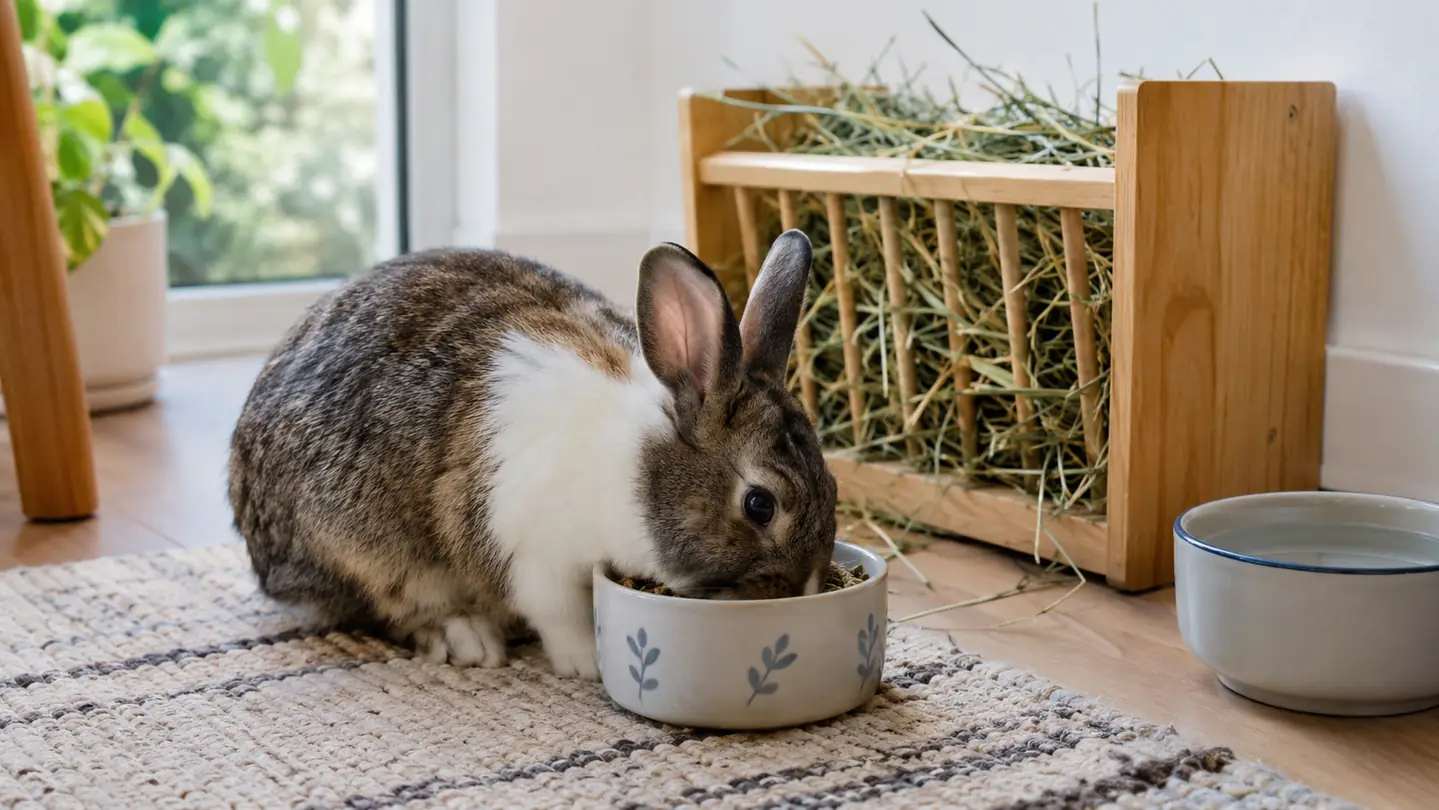
When a pellet tastes like alfalfa candy, hay starts to look boring. Oxbow timothy pellets carry the same mild grassy note as the timothy hay in Clover's rack, so hay and pellet reinforce each other instead of competing. She eats more hay now, and hay is the single most important part of an adult rabbit's diet.
The fiber profile supports healthy digestion
Timothy is naturally fibrous, and Oxbow formulates the adult pellet to keep that fiber central. Rabbits need a steady flow of indigestible fiber to keep the gut moving. The switch showed up in Clover's litter box within days: more uniform droppings, less mushy stool, no digestive upsets. For a rabbit prone to a sensitive stomach, that is worth a lot. By the fourth day I stopped checking the litter box with my fingers crossed. The soft, misshapen droppings I used to find near the corner of her pen were gone, and her regular ones were rounder and more consistent in size. Gut stasis, the scary condition where a rabbit stops eating and the digestive tract slows down, is the thing every owner dreads most, and while no pellet is a guarantee, steady fiber is the cheapest insurance I have found. Clover has not had a single upset since the switch.
The long-strand texture encourages chewing
Rabbit teeth grow continuously, so adult rabbits need to chew. The pellet is firm and slightly coarse, and Clover actually crunches it instead of inhaling it. That extra chewing time is good for tooth wear and good for slowing down a rabbit who would otherwise finish breakfast in thirty seconds and demand more.
No artificial colors, added sugars, or seeds
I have read plenty of pet food bags that look like a child's cereal box. Oxbow keeps the adult rabbit formula plain: no artificial colors, no added sugar, no seed mix that encourages selective eating. Clover is a selective eater by nature, so a pellet with nothing to cherry-pick means she gets a complete bite every time.
It simplifies portion control
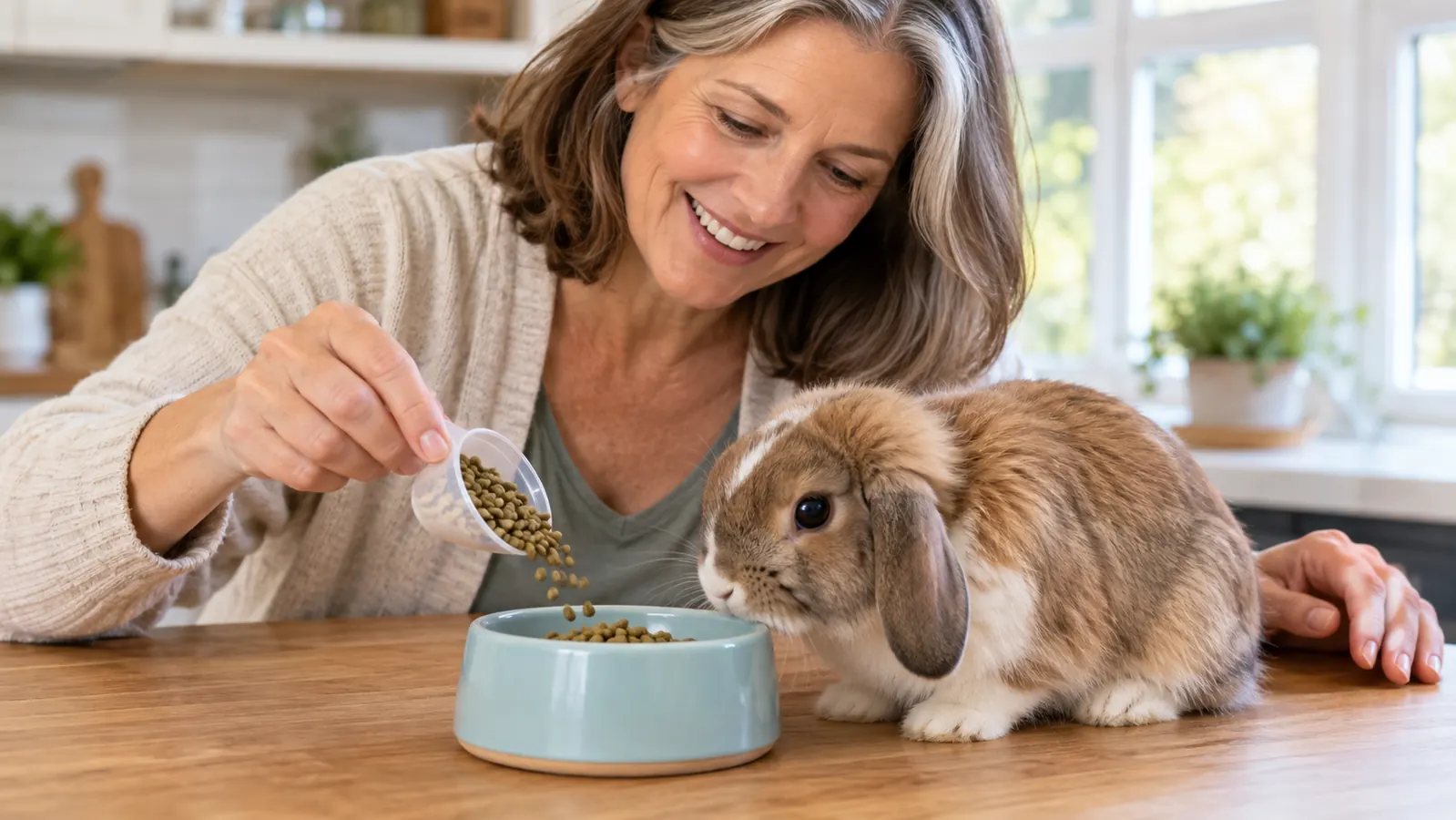
Because the pellet is balanced and complete, a little goes a long way. Clover gets a quarter cup a day, measured, and that is genuinely enough for a 4-pound adult rabbit. With richer pellets I was always second-guessing the portion. With Oxbow, the feeding guide on the bag matches what my vet recommends, and I do not have to think about it. Every morning around seven I fill the same little measuring cup, and that quarter cup weighs about thirty grams on my kitchen scale. Once a week I weigh Clover on the same scale, and her number has held steady at four pounds. That consistency is exactly what I want from a daily food, because it means I am not overfeeding or underfeeding by guesswork.
Oxbow has spent decades on small-animal nutrition
Oxbow is one of the brands veterinarians actually recommend for rabbits, and they have been at it for a long time. They make hay their centerpiece and design pellets to complement it, which matches how a rabbit should eat. When a brand's philosophy aligns with what my vet teaches, I trust the bag.
The transition is easier than owners fear
I expected a week of mixing old and new pellets and a certain amount of bunny judgment. Instead, Clover ate the Oxbow pellets from day one, and her litter habits, energy, and coat all stayed steady through the change. For an adult rabbit that has eaten alfalfa pellets for years, the transition is often simpler than owners fear. I had the mixing chart ready, the standard plan of going 75 percent old, then half and half, then all new over about ten days. Clover read the chart and ignored it, picking out the Oxbow pieces first from the very first bowl. Within a week she was eating the new pellets exclusively, and her energy stayed exactly the same, which is how I knew the change had not upset her stomach.
What I'd Skip
I would not feed a timothy-based adult pellet to a baby rabbit. Growing kits need the extra calcium and protein in alfalfa, and switching too early can leave a youngster short of what bone growth needs. I would also skip this if your adult rabbit has a medical condition that needs a specific diet; your vet's advice beats any bag on the shelf. And if your rabbit flatly refuses hay, no pellet fixes that. A timothy pellet supports a hay-based diet, it does not replace one.
Clover ate the Oxbow pellets from day one, and her litter habits, energy, and coat all stayed steady through the change.
Ready to make the switch to a timothy-based pellet?
Oxbow Essentials Adult Rabbit Food is the bag I reach for every morning. It supports healthy digestion, steady weight, and good dental wear for adult rabbits, and Clover has eaten it happily for years.
Amazon Check Today's Price on Amazon →