
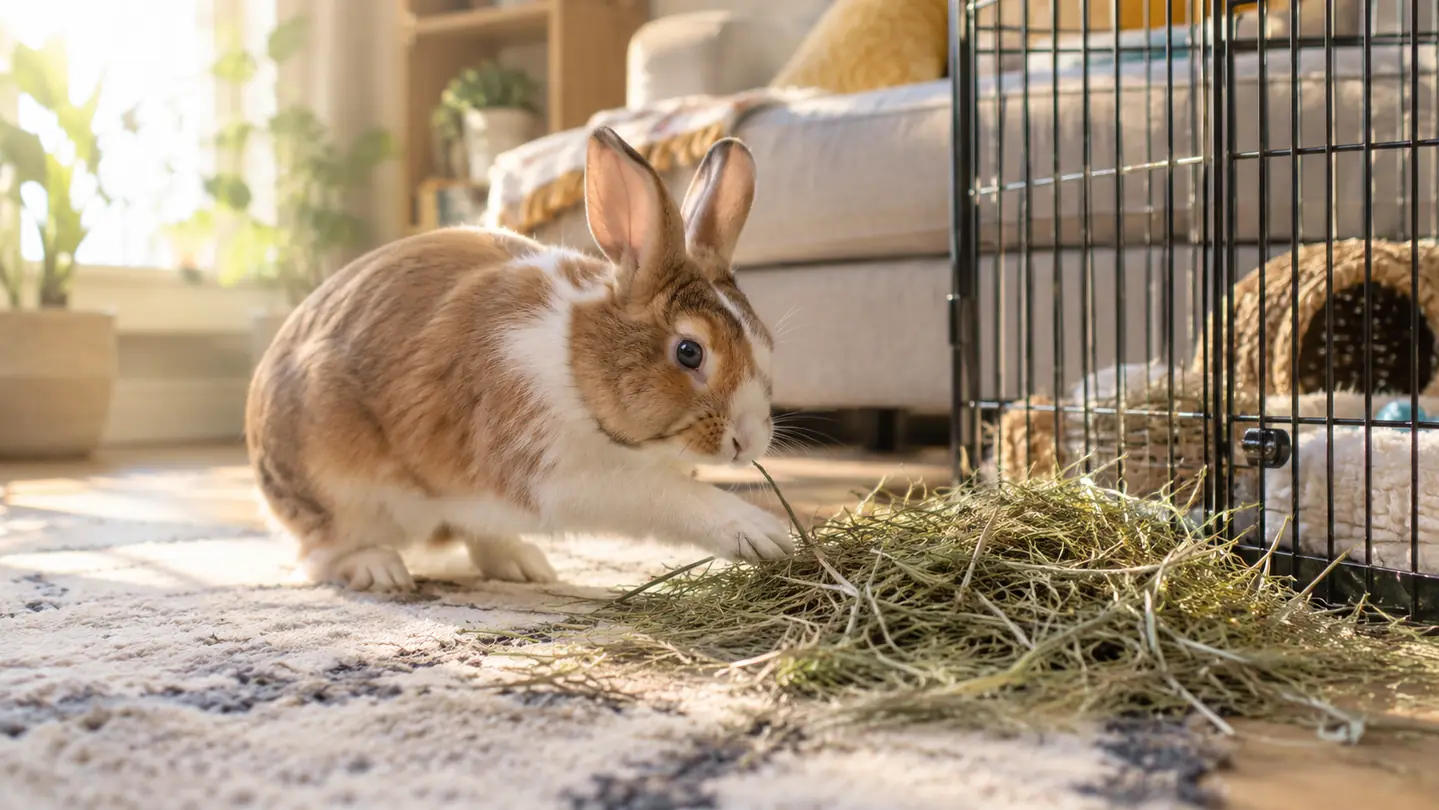
Every rabbit owner I know has a hay story. The bag that looked perfect in the store and turned out to be dust with delusions of adequacy. The brand your rabbit ate happily for a week and then rejected like a sous-chef who found a hair in the soup. The giant bale that smelled like a barn in the worst way and took six months to use up. I have been through all of it in about fifteen years of keeping house rabbits, and for the last several months my 4-year-old Holland Lop, Clover, has eaten Oxbow Western Timothy Hay every single day.
Clover is picky. Four pounds of opinion wrapped in fur. She sniffs everything before she commits, and hay that is too stemmy or too dusty gets shoved to one side while she digs to the bottom of the bowl like she is looking for buried treasure. So when a brand survives months of daily feeding in this house, that means something. This is the honest record of how Oxbow has held up in a real indoor rabbit's routine, the good parts, the annoying parts, and the parts I would change if I could.
The Quick Verdict
The most consistent hay I have fed in fifteen years of house rabbits. Clover eats it without the protest routine, it keeps its smell and texture for weeks, and the 40 oz bag lines up with about a month of daily feeding for a single rabbit. It costs more than the dusty bargain bales, and you will toss a few stems if your rabbit is a leaf-only eater. I will keep buying it.
Amazon Check Today's Price →Hay Your Picky Rabbit Will Actually Finish
After months of daily feeding, Oxbow Western Timothy Hay is the one brand Clover eats without the side-eye routine. If you are tired of throwing away half of every bag, this is worth a look.
Amazon Check Today's Price on Amazon →How I've Used It
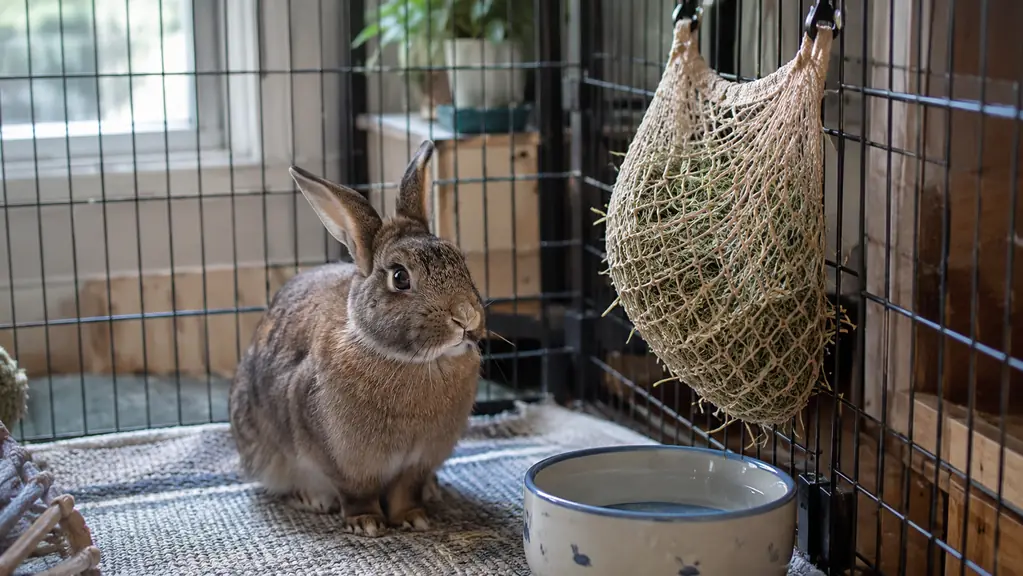
Our routine is simple and has not changed in months. Clover gets a generous handful of hay in her rack in the morning, another at dinner, and a small scatter tucked into a cardboard tube during the day so she has to work for it. The 40 oz bag lives in the pantry, and I refill a small daily container so the main bag is not opened and closed a dozen times a day. I refill that container every third morning, which is how I know the bag lasts about a month. The rack is a metal grid mounted at head height, and I stuff the hay in from the top so it does not fall out when she pulls. On the morning I started this review, I put in the usual handful, and Clover was eating within a minute, no sniffing, no circling. That has been the pattern ever since.
The first thing I noticed was how little I was throwing away. With some brands I have tried, Clover would eat the soft leaves and leave a pile of stems that looked like a tiny lumber yard. With Oxbow, the bowl is mostly empty at the end of the day. Not completely empty, she is a rabbit, and rabbits have standards. But the difference was obvious within the first week.
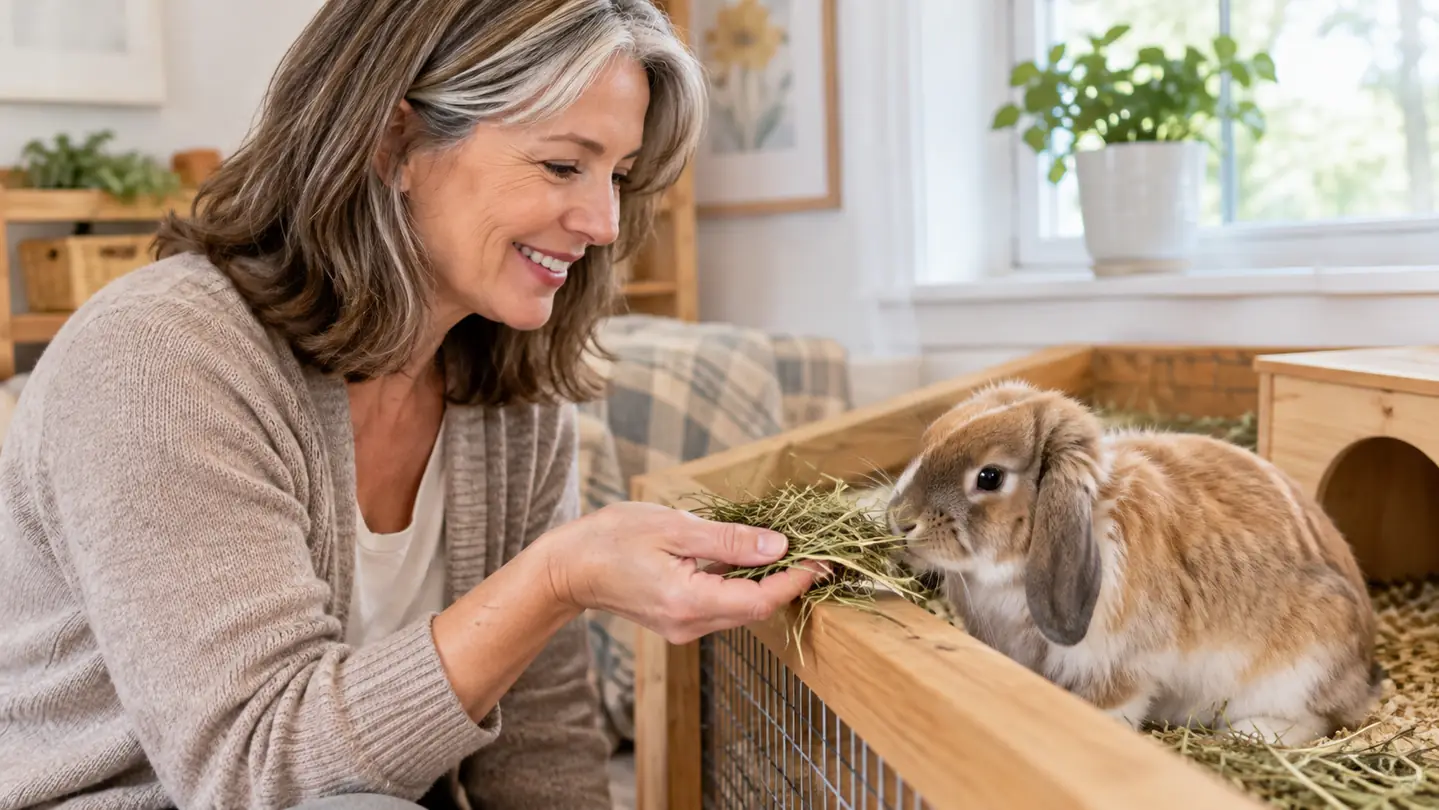
I also use hay as the top layer of her litter box. She is litter trained, and a fresh layer of hay over the litter is what keeps her using the box instead of the rug. That means hay does double duty in this house, food and litter topper, and Oxbow has handled both jobs without turning into a dusty mess.
What's in the Bag: Fiber, Texture, and the 40-Ounce Size
Oxbow Western Timothy Hay has exactly one ingredient, timothy hay, and that is the whole point. No pellets mixed in, no colored bits, no added flavoring. Rabbits need a diet built on grass hay because the fiber keeps their digestive system moving and the chewing grinds down teeth that never stop growing. I am not a vet and I do not make medical promises, but after fifteen years of rabbits I understand why hay is the foundation of everything else.
The texture is where this hay separates itself from the bargain options. The strands are mostly soft and leafy with enough stem to give her teeth a real workout, and the smell is fresh and sweet, the way good hay should smell. The cheap bales I have tried were dustier and stemmier, and Clover would pick through them like a food critic at a bad restaurant.
The 40 oz size is the right fit for a single house rabbit. The big 90 oz bags go stale before Clover can finish them, and the tiny pet-store bags cost more per ounce and run out in a week. The 40 oz bag lasts us about a month of daily feeding, which keeps the hay fresh and means I am not hauling giant bales through the living room. I know it is a month because I mark the pantry shelf with the date I open a bag, and the last three have all come in at four weeks plus a few days. The 90 oz bag I tried once lasted six weeks and the bottom quarter went dusty and dull, which is exactly the waste I was trying to avoid.
Why does fiber matter so much? Because a rabbit's digestive system is built to process roughage around the clock. When a rabbit does not eat enough hay, things can slow down, and that is a situation every rabbit owner learns to take seriously. I will leave the medical details to the vets, but I have seen the difference in Clover's energy and her litter habits when she is on good hay instead of something mediocre.
Months of Daily Feeding: How It Holds Up Over Time
The real test of any hay is not the first week. It is week three, when the novelty has worn off and your rabbit has decided whether this is worth her time. Clover made that decision early and she has not changed her mind. Months in, she still dives into the bowl headfirst instead of picking around the edges. For a rabbit that picky, that is the whole review.
Freshness is what impressed me most. Hay is a crop, so it changes with the season, and I expected some variation between bags. What I got instead was steady. The smell and texture have been consistent across the bags I have ordered, and the hay has stayed fresh for the full month it takes Clover to work through it. I keep the main bag sealed in a plastic bin, which helps, but I have had other brands go dusty in the exact same setup.
The dust level has been low. With a lot of hay, especially the cheap bales, you shake out a handful and a little cloud follows. I have not seen that with Oxbow, and it matters for an indoor rabbit who lives in the living room with us. Less dust in the hay means less dust in the air, and a cleaner hay rack at the end of the week. I checked this the way I check everything with Clover: I shook a handful over the kitchen counter in good light and looked for powder on the countertop afterward. There was a little, the same amount you would get from any dried grass, but nothing that floated up into the air. The bargain bale I bought years ago left a visible film on the counter in the same test, and Clover sneezed around it.
One thing I did not expect is how much hay a small rabbit can go through. Clover weighs about four pounds, and I still refill her rack twice a day. Hay is the bulk of her diet, and she grazes on it all day the way a cow works a pasture. The 40 oz bag looks like a lot when it arrives, and then you realize this is the everyday food, not a treat. Plan to reorder before the bag runs out.
Clover has been eating this hay for months, and she still dives into the bowl headfirst instead of picking around the edges. For a rabbit that picky, that is the whole review.
The Downsides Nobody Mentions
Let me be honest about the parts that are not perfect. Oxbow costs more than the big bargain bales at the farm supply store, and if you are feeding several rabbits, that difference adds up fast. For a single house rabbit the price is reasonable, but this is not the cheapest way to feed hay, and I would not pretend otherwise.
Texture varies a little between bags. Most have been leafy and soft, but I have opened a couple where the stems were more prominent and Clover left more of them in the bowl. She still ate the leafy parts, so nothing went to waste, but if your rabbit is extremely picky about stems, you may end up tossing a few.
The bag is not resealable, which is a small annoyance. It is a simple paper bag with a fold-over top, so you need a storage bin or a big clip to keep the hay fresh. I use a plastic bin and it works fine, but it is worth knowing before you buy.
How It Compares to the Other Hay I've Tried
I have tried a fair amount of hay over the years, both for Clover and for rabbits I kept before her. The store-brand bags are cheaper but dustier and stemmier, and I threw away more than I fed. Orchard grass is softer and some rabbits love it, but Clover is indifferent to it. Oat hay is a nice treat and she likes the texture, but it does not have the same everyday bulk that timothy provides.
Kaytee is the brand I get asked about most, and I have fed it in the past. It is fine hay and usually a little cheaper, but in my experience Oxbow has been more consistent bag to bag. For a picky eater like Clover, consistency is what keeps her eating, and that is worth the difference.
There is also the option of buying a big bale from a farm supply store, and I have done that in the past. The cost per pound is much lower, and for a multi-rabbit household it is the sensible choice. But a bale that size is heavy, it needs dry storage, and it takes a long time to use up with one rabbit. In a small house, that is a real problem. The bale I bought came wrapped in twine and took up half the hall closet, and by the third month the far end had started to smell musty no matter how I stored it. I ended up hauling most of it to a friend with three rabbits. For one rabbit, that lesson is not worth repeating. The 40 oz Oxbow bag is easier to store, easier to keep fresh, and easier to move around.
Feeding Tips for a Picky Rabbit
If you are bringing home a rabbit who turns her nose up at hay, do not switch brands every week. Rabbits learn what to expect, and constant changes make them more suspicious, not less. Offer the same hay every day, keep it fresh, and resist the urge to top up a half-empty bowl with new hay on top of old. Empty the bowl, add a clean handful, and let her see you doing it.
Hay placement matters as much as the hay itself. Clover eats more from a rack at head height and from hay scattered in a cardboard tube than she ever does from a bowl on the floor. A little hay in the litter box also encourages natural grazing while she does her business. Oxbow works well in all of those spots, which is part of why it has lasted in this house.
What I Liked
- Consistent quality across multiple bags over months of feeding
- High-fiber single-ingredient hay with no pellets or additives
- Low dust, which matters for an indoor rabbit in a shared living space
- 40 oz size matches about a month of daily feeding for one rabbit
- Clover, a genuinely picky eater, finishes it without protest
Where It Falls Short
- Costs more than big bargain bales from a farm supply store
- Texture varies slightly between bags, some more stemmy than others
- Paper bag is not resealable, so you need your own storage bin
- Leaf-only eaters may leave some stems behind
Who This Is For
Oxbow Western Timothy Hay is for the single-rabbit household where quality matters more than squeezing every penny out of the hay budget. It is for picky eaters like Clover who will not touch dusty bargain hay. It is for indoor rabbit owners who want low dust and consistent freshness, and for new rabbit parents who want a dependable baseline while they figure out what their rabbit likes. If that sounds like your house, this is a safe buy.
Who Should Skip It
Skip it if you are feeding several large rabbits and going through a 40 oz bag in a week. You will save real money buying a big bale from a farm supply store instead. Skip it if your rabbit turns out to prefer orchard grass or oat hay, some rabbits just do, and you are better off feeding what they will actually eat. And skip it if you need a resealable package, because this one requires a storage bin of your own.
The short version is this. Oxbow Western Timothy Hay has been the most dependable hay I have fed in years, and Clover agrees with me, which is the only opinion that counts in this house. It is not the cheapest option and it will not fix a rabbit who simply prefers another grass. But for a single house rabbit who needs consistent, low-dust, fresh hay every day, it has earned a permanent place in my pantry.
The Hay Clover Has Eaten Every Day for Months
If you are tired of wasting money on hay your rabbit snubs, Oxbow Western Timothy Hay is the most consistent bag I have found in fifteen years. Check today's price on Amazon and see if your rabbit agrees.
Amazon Check Today's Price on Amazon →