
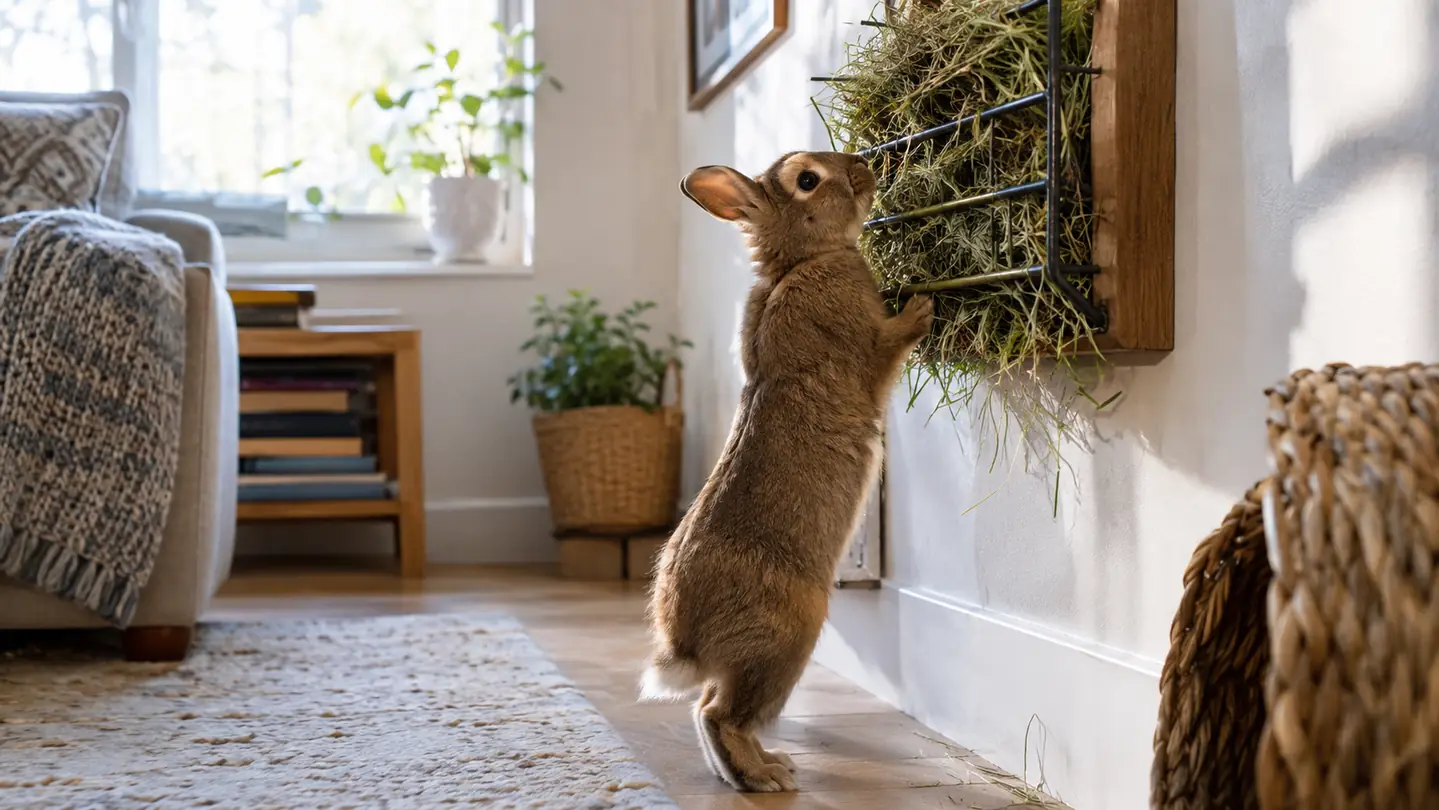
The morning I knew something had to change, Clover was sitting three feet from her bowl, staring at me like I had personally ruined her day. I had bought a fresh bag of hay from the pet store, the same brand I always grabbed, and she took exactly one sniff before walking away. For a rabbit, that is not a mood. That is a verdict.
Here is what nobody tells you when you bring home a rabbit: hay is not a side dish. It is the meal. Oxbow was the brand my vet named first when I asked what to feed a picky eater, and she said it the way vets say things that matter: hay is the main thing, everything else is the garnish. A house rabbit should work through a pile of grass hay about the size of their own body every single day, because the constant chewing keeps their teeth worn down and the long fibers keep the gut moving the way it should.
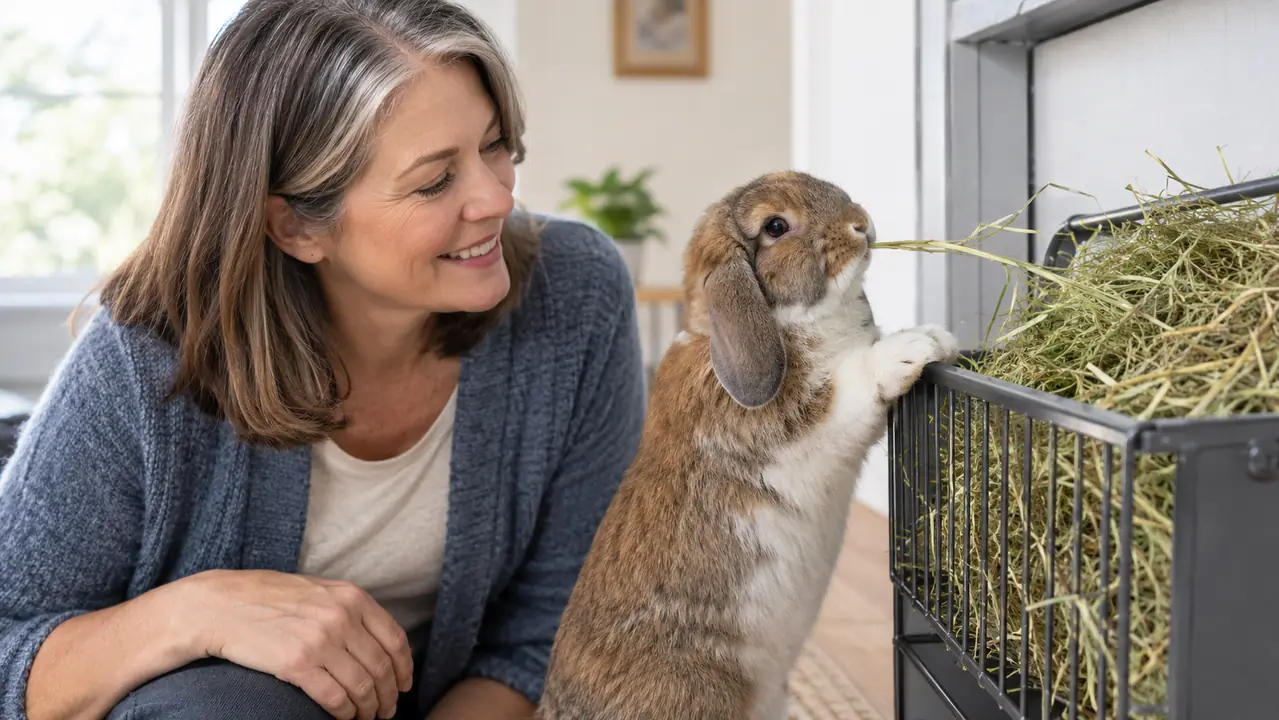
Skip the hay for even a couple of days and you will find out why vets bring it up at every visit. Rabbit teeth never stop growing, and their digestion is built around a constant flow of long fiber. I have kept house rabbits for about fifteen years, and I have learned the hard way that the hay aisle is where you do not save money. Cheap hay looks like a bargain until half the bag ends up on the floor, untouched.
So I tried the loose bales from the feed store, which smelled wonderful and were full of thick stems Clover refused to touch. I tried a cheaper bag from a big-box store, so dusty I could see it hanging in the air when I shook it. I tried a brand with a cartoon rabbit on the front, and Clover ate the printing off the back of the bag before she touched the hay. Rabbits are honest critics.
Then a friend who has kept rabbits for years handed me a bag of Oxbow Western Timothy Hay and told me to stop being cheap about the one thing my rabbit eats more than anything else. I was skeptical. It is just dried grass, I thought. How different can one pile of dried grass be from another? That week I found out.
The first thing I noticed was the smell. Not the sharp, dusty smell of hay that sat in a warehouse too long. This smelled like a summer field, sweet and dry and clean. The second thing I noticed was that the stems were long and whole, not crushed into the powder that settles at the bottom of a bad bag. I filled Clover's rack, and she was in it before I had my hand out of the way.
Clover had ignored the last three bags of hay I brought home. This one she was buried in within a minute.
Good hay is the cheapest vet bill you never pay
If your rabbit has turned picky, the hay is usually the problem, not the rabbit. Oxbow Western Timothy Hay is the bag Clover actually finishes, and the first bag she has ever emptied on schedule.
Amazon Check Today's Price on Amazon →Over the next few weeks, I watched her work through the whole bag. She ate the leafy bits first, the way she always has, but then she kept going. She chewed the stems, which is the part rabbits need to keep their teeth from overgrowing. Her litter habits settled down, her weight stayed steady, and at her checkup the vet said her teeth looked great. I also stopped throwing away half-finished bags, which means the good hay actually costs me less than the cheap hay ever did.
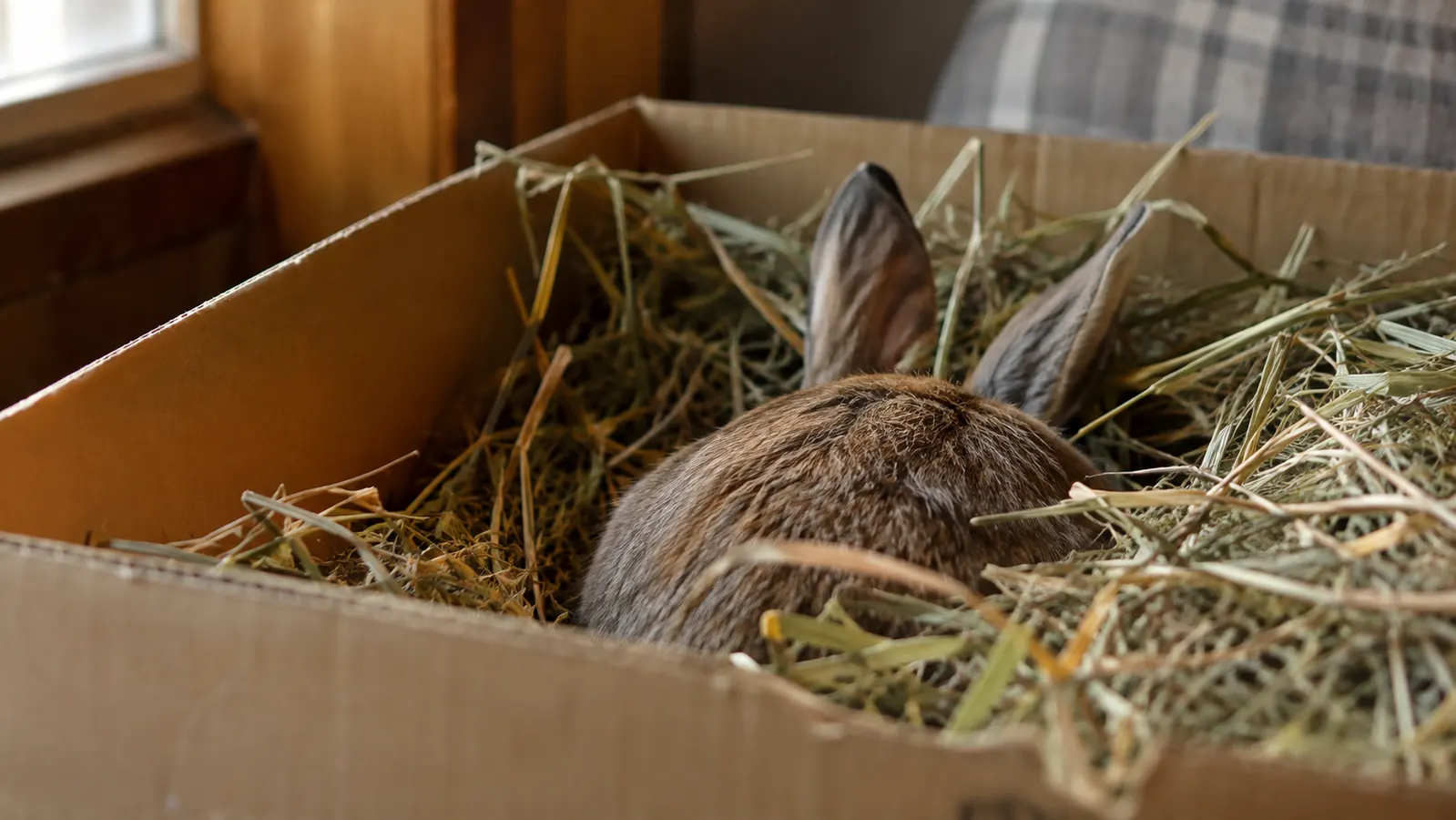
I should be clear about what Oxbow did not do. It did not fix her attitude. She still thumps when I am ten minutes late with breakfast. She still flips her bowl when she is feeling dramatic. But mealtime went from a daily negotiation to the easiest part of my day, and for a picky rabbit that is a genuinely big deal.
I keep a fresh bag in a sealed bin in the hall closet, refill the rack twice a day, and toss anything that lands on the pen floor before Clover decides it is a bathroom. Clover is a four-year-old Holland Lop, about four pounds, and she free roams the living room during the day and sleeps in her pen at night. The hay rack is the one thing in that pen she never ignores. Hay is a simple thing, but it is the one thing I do not cut corners on anymore.
I will be honest about one more thing. The first bag went so well that I assumed every bag would be identical, and I got sloppy. I left the second bag open on the counter for a week, and by the time I refilled the rack, it had gone flat and dusty and Clover let me know. Now I close the bin every time, and I buy a fresh bag before the old one runs out, not after. Hay is perishable, and rabbits can tell.
What I'd Tell You If We Were Sitting at My Kitchen Table
If you were sitting at my kitchen table, I would tell you this. When a rabbit stops eating hay, that is the first phone call to the vet, not the third. Their teeth and their gut both depend on the constant grinding of long fibers, and both can go wrong fast. I have seen it happen with rabbits I have kept before, and it is the scariest two days I have spent as an owner.
So buy the freshest hay you can find, in a bag that smells clean and does not shed dust when you open it, and give your rabbit a big pile every single day. Oxbow is the bag I reach for now, but the advice is simpler than any brand: good hay, every day, in a rack they can pull from easily. Toss anything that gets peed on or sits on the floor too long, keep the rest sealed so it stays fresh, and never let the rack sit empty. A hungry rabbit is not a picky rabbit. A hungry rabbit is a problem.
The other thing I would tell you is to stop stressing about the perfect setup. You do not need the fancy hay dispenser or the designer bowl. You need good hay, in reach, every day, and a rabbit who is allowed to be a rabbit. Clover still makes a mess. She still throws hay around like she is decorating. But she eats it, and that is the whole job.
Try the hay Clover actually finishes
A bag of Oxbow Western Timothy Hay lasts Clover about a month, and mealtime has gone from a daily negotiation to the easiest part of my day. Check today's price on Amazon and see what your rabbit thinks.
Amazon Check Today's Price on Amazon →