
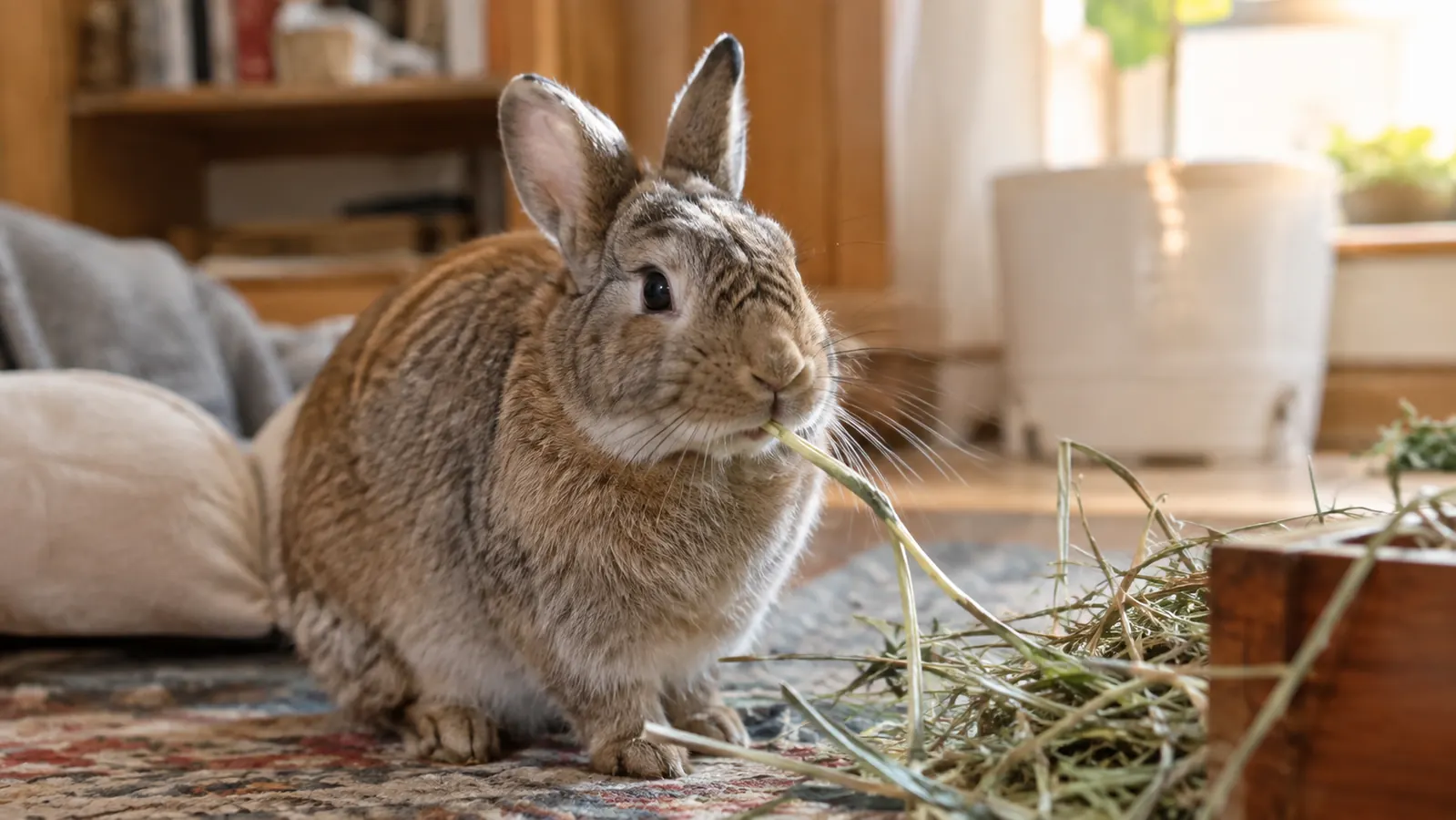
When I brought Clover home four years ago, I did what most new rabbit owners do. I bought a bag of pellets, a water bottle, and a cage the pet store promised was plenty. What I did not buy was enough hay. The first vet visit fixed that in a hurry. She asked one question before anything else: what does she eat? When I listed pellets and the occasional carrot, she handed me a pamphlet and a pointed look. Hay is not a side dish for a rabbit, she said. It is the main course.
These days the hay bin in my living room is an Oxbow Western Timothy Hay box, and Clover has opinions about it. Strong opinions. She will yank out a strand, toss it over her shoulder, and come back for a better piece. Picky eaters are the best hay critics, and she has kept this brand in steady rotation for over a year. Here are the ten reasons timothy hay belongs in every rabbit's diet, starting with the one that matters most.
The hay box that ended my picky-eater battles
Oxbow Western Timothy Hay has stayed in steady rotation in my house for over a year. Clover eats it, the vet approves, and the litter box confirms it is working. It is the 40 oz box I reach for when the bin runs low, and the one I recommend to anyone who asks what hay to buy.
Amazon Check Today's Price on Amazon →The 10 Reasons Timothy Hay Earns Its Place
Fiber Keeps a Rabbit's Gut Moving
Rabbits are grazers by design. Their digestive systems expect a steady trickle of fiber all day long, and timothy hay is mostly insoluble fiber, the kind that keeps things moving in the right direction. When I switched Clover to a hay-first diet, the change showed up in the litter box within days. That is not glamorous, but it is the whole point. A rabbit whose gut stalls can be in serious trouble fast, and hay is the cheapest insurance I know.
It Grinds Down Teeth That Never Stop Growing
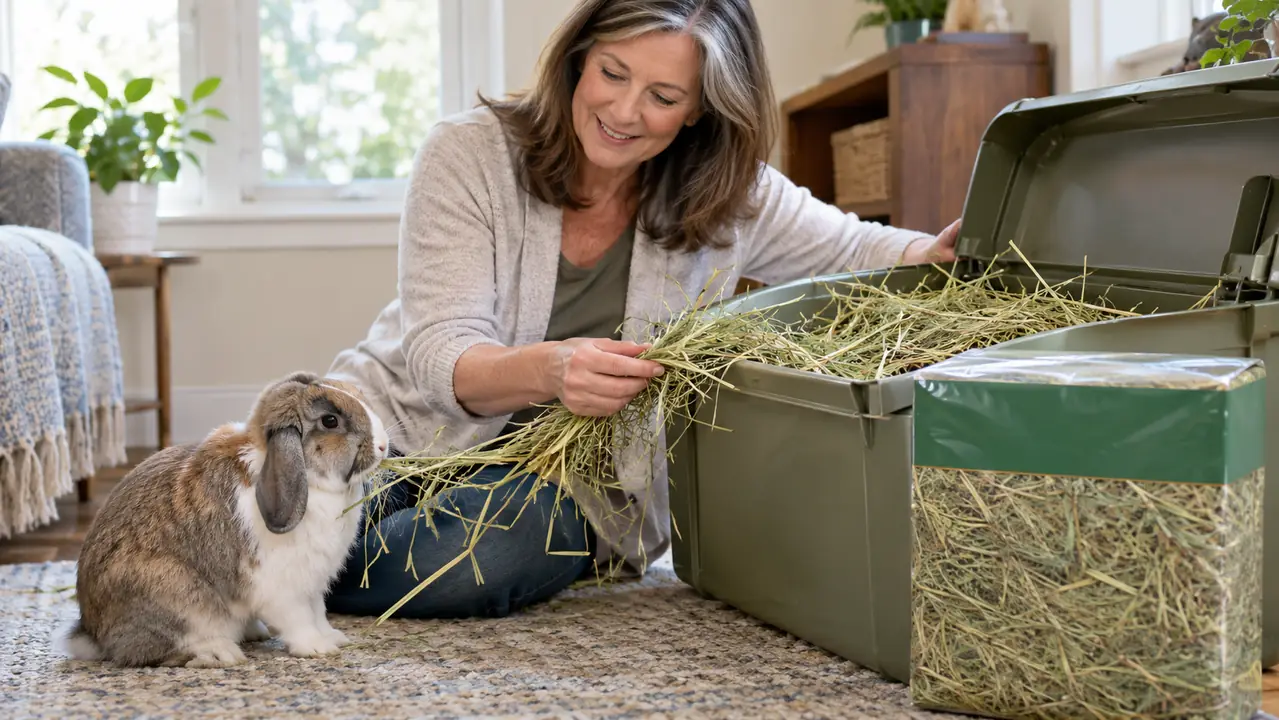
A rabbit's teeth grow continuously, about a quarter of an inch a month. If they do not wear down, you end up with overgrown molars, drooling, and a vet bill you did not plan for. Chewing long, tough strands of timothy is the natural way to wear them down. Pellets do not do the job, and carrots certainly do not. My vet says the rabbits she sees with healthy teeth are almost always the ones eating plenty of hay.
It Keeps Weight in Check
Pellets are calorie-dense, and a rabbit can put on weight fast if they are the main course. Hay is the opposite: high in fiber, low in calories, and safe to eat all day. Clover free-feeds on hay and stays at a healthy four pounds, because she has to chew through a lot of stalk to get much energy out of it. Grazing on hay satisfies the urge to eat without packing on the pounds, and it keeps her satisfied between meals.
Pellets Are a Supplement, Not a Staple
I learned this the backwards way. The pellet bag said complete nutrition, so I assumed that was the meal and hay was a treat. The vet corrected me gently: pellets should be a small measured portion, and hay should be available around the clock. A good rule of thumb is a pile of hay about the size of the rabbit's body every day. Clover gets a handful of pellets morning and night, and hay whenever she wants it.
It Doubles as Entertainment
Watch a rabbit with a fresh box of hay and you will see a small creature having the time of her life. Clover digs, burrows, tosses strands over her shoulder, and rearranges everything to her liking. For an indoor rabbit, that is enrichment, not mess. Hay gives her a job to do, and a busy rabbit is a happy rabbit. I think of the hay bin as her sandbox.
It Is the Best Litter Training Tool I Know
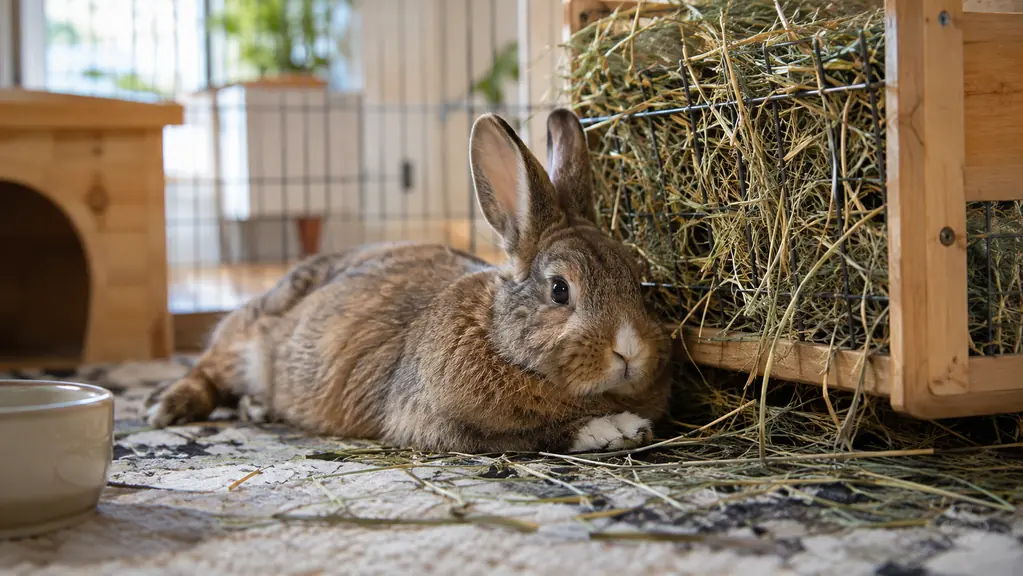
Rabbits naturally eat and poop at the same time. That instinct is why the classic setup is a litter box with a hay rack mounted right over it. Clover learned her litter habits fast because the hay was right there. When she hops in to eat, she does her business in the same spot. A clean litter routine starts with putting the hay where you want the poops to go, and it saves me time every single day.
Amazon Set up your hay rack with Oxbow timothy hay on Amazon →
It Keeps the Poops Normal
This is the unglamorous metric every rabbit owner learns to read. Healthy rabbit poops are round, dry, and plentiful. Small, misshapen, or stringy poops are a warning sign that something is off with the diet. When Clover goes through a picky stretch and eats less hay, I see it in the litter box within a day or two. More hay, and things return to normal. Hay is the easiest dietary lever you can pull.
It Gives Indoor Rabbits a Safe Job
A rabbit with nothing to do will find something to do, and it is usually your baseboards. Chewing is not naughty behavior; it is instinct. Hay gives that instinct a safe outlet. When Clover has a steady supply of timothy to sort and chew, she leaves the furniture alone. The days I let the hay bin run low are the days she finds trouble. The fix is simple: keep the hay coming.
Quality Hay Means Less Waste and Dust
Not all hay is the same. I have bought hay that was dusty, brown, and clearly sitting in a warehouse too long. Clover turned her nose up and I threw half of it away. The Oxbow box has been consistently fresh-smelling with long strands she actually eats. When the hay is good, the rabbit eats it, and less of your money ends up in the compost bin. Quality is not a luxury when your rabbit is a picky eater.
It Is the Foundation of a Long, Healthy Life
Every rabbit-savvy vet I have talked to over fifteen years says the same thing. Hay first, then greens, then a measured amount of pellets. Rabbits that eat hay all day tend to have better digestion, healthier teeth, and steadier weight. Clover is four now, and the vet calls her the picture of a healthy house rabbit. I credit the hay bin more than anything else in her setup.
What I'd Skip
If you are new to rabbit care, a few hay products are better left on the shelf. Alfalfa hay is too rich in calcium and protein for adult rabbits. It is meant for babies and nursing mothers, and adults can develop bladder sludge on a steady diet of it. I also skip anything labeled hay with treats baked in, and those tiny checkout-aisle bags that are usually dusty and stale by the time you get them home. Cheap hay is not a bargain if the rabbit will not eat it.
And I would skip making pellets the main dish. Pellets have their place, and Clover gets a measured portion twice a day. But a bag of pellets is a supplement to hay, never the other way around. If your rabbit is eating more pellets than hay, that is the ratio to fix first. Your hay bill will go up a little, and your vet bills will thank you.
Chewing long strands of timothy hay is the only natural way a rabbit grinds down teeth that never stop growing.
Ready to fill the hay bin?
If your rabbit is running low on hay right now, this is the box to grab. It is the same 40 oz Oxbow Western Timothy Hay I have bought for over a year, and Clover still comes running when the box opens. Fill the bin, and let her do the rest.
Amazon See Oxbow Timothy Hay on Amazon →