
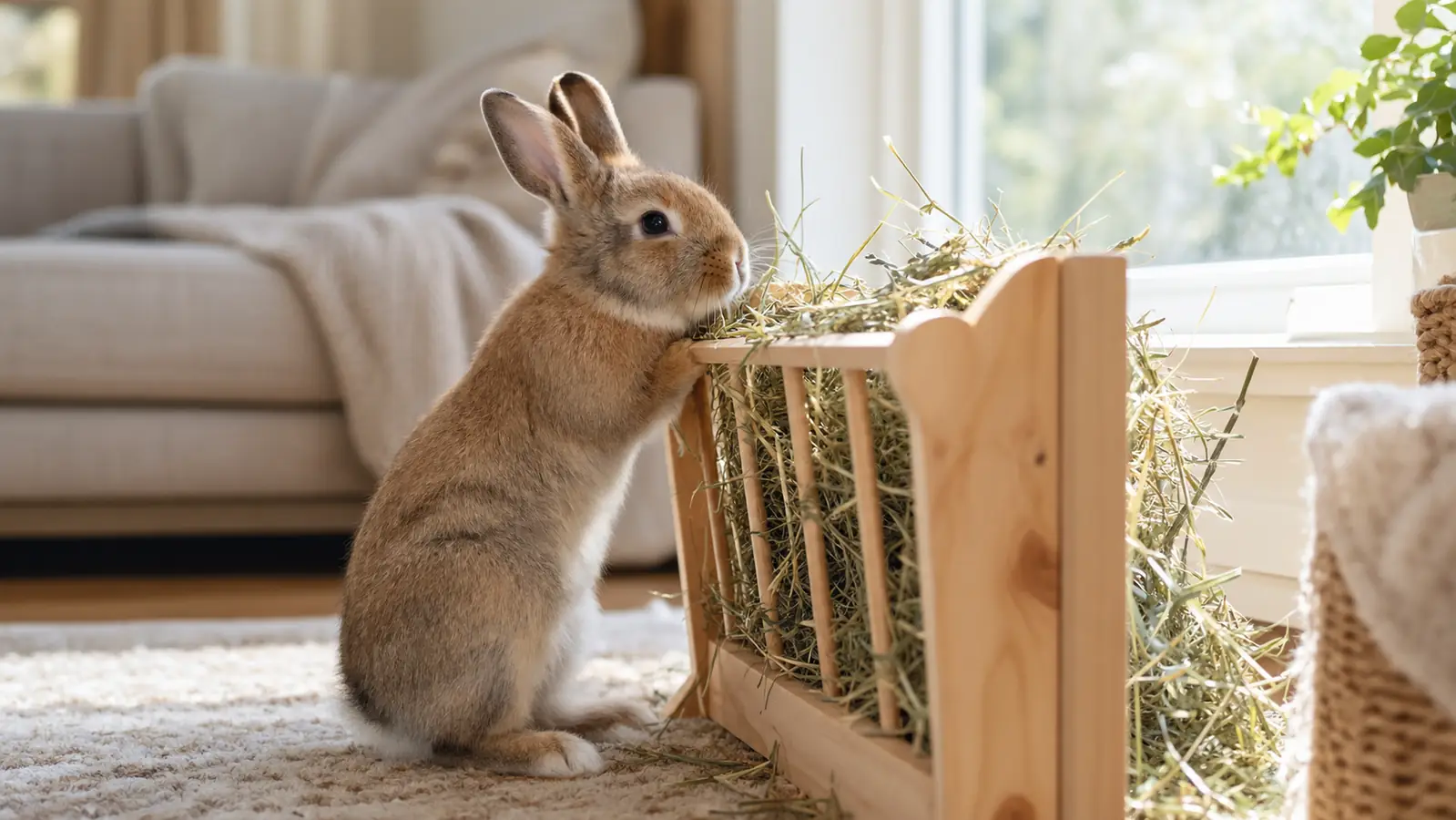
You bring home a fresh bag of timothy hay, cut it open, and your rabbit takes one sniff and walks away. You try again the next week. Same result. Now you have a half-rejected bag, a rabbit staring at you like you brought home the wrong thing, and a nagging feeling that you are missing something every other rabbit owner seems to get. It is a scene I see described in rabbit groups all the time, and the advice is usually the same: try a better hay. I have lived that exact scene more times than I can count with my Holland Lop, Clover, who has very strong opinions about hay and has never once been shy about expressing them.
After about fifteen years of house rabbits and more bags of hay than I can remember, here is the short version. Oxbow Western Timothy Hay is the more consistent, more reliable hay, and it is the one I buy for Clover. Kaytee Timothy Hay costs less and is easier to find at big-box stores, and for a rabbit who will eat almost anything, it can be perfectly fine. The difference shows up when your rabbit is picky, or when a Kaytee bag arrives pale and full of stems. If you have a rabbit like mine, consistency is the whole game.
How I Compared Them
To make this fair, I ran a side-by-side test over a month. Clover got a full week on one brand, then a full week on the other, then we swapped again so her mood could not rig the results. I watched which bag she ate without sorting, which one she picked around, and which one left the most waste in her litter box. Rabbits have good days and bad days, so a single fussy afternoon did not count. I was looking for a pattern across four weeks, not one dramatic tantrum, and the pattern came through clearly.
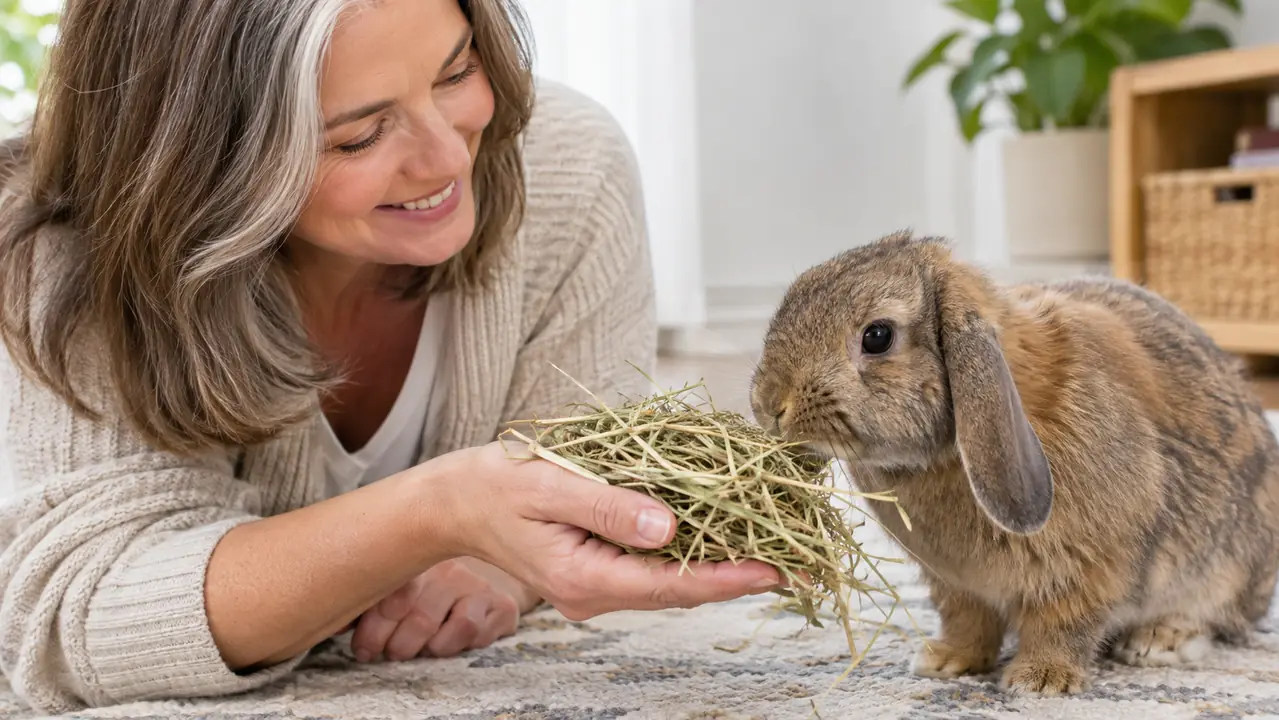
I judged the hay itself before Clover ever saw it. Good timothy hay should be green rather than yellow or brown. It should smell sweet, like cut grass on a warm afternoon. It should be leafy, with more leaf than stem, and it should not be dusty, moldy, or damp. I checked every bag for color, smell, leafiness, dust, and how much of it the rabbit actually ate. On several of those points, the two brands were not even close, and the table below lays out what I found.
What to Look For in Any Timothy Hay
Before I get into the head-to-head, it helps to know what makes hay good in the first place. Timothy hay is the standard daily hay for adult rabbits because it is high in fiber and lower in protein and calcium than alfalfa. The fiber keeps a rabbit's gut moving, and the chewing wears down teeth that never stop growing. A good bag should be mostly leaves, because leaves are where the nutrition and the flavor live. Stems are fine in small amounts, but a bag that is mostly stems is a bag your rabbit will sort through and reject. Alfalfa is for babies, and feeding it to an adult rabbit is one of the fastest ways to end up with a chubby rabbit and a worried vet.
Freshness matters just as much. Hay that has been stored too long turns yellow, loses its smell, and goes dusty, and most rabbits can tell the difference instantly. When you open a bag, you should smell hay, not must. If it smells like a damp basement, put it back. If it is brown or has clumps of mold, do not feed it at all. These are the basics I use on every bag from every brand, and they are the same standards I applied in this comparison.
| Oxbow Western Timothy Hay | Kaytee Timothy Hay | |
|---|---|---|
| Consistency | Every bag I have opened looked and smelled like fresh hay | Varies more; some bags are excellent, others pale and stemmy |
| Leafiness | Soft, leafy second cut that Clover eats without sorting | Coarser, with more stems and seed heads in most bags |
| Smell | Sweet and grassy, like a hay loft | Milder, and dusty when the bag has sat on a shelf too long |
| Cost | Costs more per bag | Costs less, especially in the biggest bags |
| Availability | Easy to order online and stocked at most pet specialty stores | On the shelf at nearly every big-box store and feed store |
| Picky eaters | Clover eats it right away; I rarely see her sort through a bowl | Sometimes refused; I have had bags Clover would only pick around |
| Best for | Single house rabbits and owners who want predictable quality | Easygoing eaters and households that go through hay fast |
Where Oxbow Wins
The biggest difference is consistency, and with a picky rabbit, consistency is everything. Every bag of Oxbow I have opened looked and smelled like fresh hay. The color was a steady green, the smell was sweet and grassy, and the texture was soft and leafy. Clover ate it without sorting through her bowl, which for her is the highest compliment a hay can get. It also broke apart easily in her mouth, which sounds like a small thing until you watch a rabbit give up on hay that is too tough to chew. When your rabbit eats the whole serving instead of flinging stems across the floor, you waste less, clean up less, and stop feeling like every trip to the pet store is a gamble.
Oxbow also controls the process from the field to the bag. The company has been making food and hay for small pets for a long time, and the hay is grown in the United States. That shows up in the bag-to-bag consistency. I have ordered Oxbow many times over the years, and I cannot remember a bad bag. With Kaytee, I have to check each bag before I buy. With Oxbow, I cut it open and know what I am getting, and that peace of mind is worth something when your rabbit is counting on you to bring home food she will actually eat.
Where Kaytee Wins
Kaytee wins on cost and convenience, and I do not want to bury that. It is a budget-friendly timothy hay that sits on the shelf at nearly every big-box pet store, which matters when you run out on a Sunday and need hay that afternoon. The Kaytee bags are also a familiar sight at feed stores, which is convenient if you buy other small animal supplies there. For a rabbit who will eat almost anything, Kaytee is a perfectly reasonable everyday hay. I have bought it plenty of times over the years, and rabbits I have kept before did just fine on it. If your rabbit is not picky, you can feed Kaytee and never think twice about it.
The tradeoff is variability. Some Kaytee bags are green, leafy, and totally fine. Others are pale, stemmy, and dusty, the kind of bag a rabbit sorts through and then abandons. If you shop Kaytee, it helps to look at the bag before you buy. Check for a green color and a sweet smell, and skip anything that looks brown, dusty, or full of thick stems. When you get a good Kaytee bag, it is a solid hay. You just have to accept that not every bag will be a good one, and that is a much bigger deal with a picky eater than with an easygoing one.
The hay that ends the nightly standoff
When a rabbit refuses hay, every mealtime becomes a negotiation. Oxbow Western Timothy Hay is the bag Clover eats without sorting, and it is the one I keep reordering. Check today's price on Amazon.
Amazon Check Today's Price on Amazon →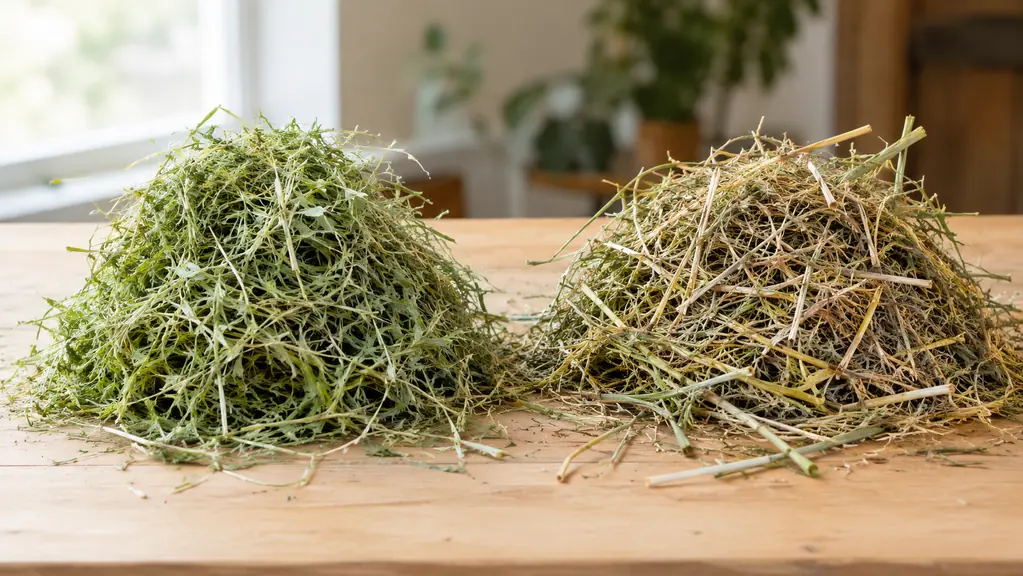
Who Should Buy Which
Buy Oxbow if your rabbit is picky, if you have a single house rabbit, or if you are tired of throwing away half-eaten hay. The higher cost per bag is easier to swallow when your rabbit actually eats what you bring home. You will waste less, clean up less, and stop wondering whether this week's bag will be the one that gets refused. For one rabbit, a bag lasts a good while, so the cost difference matters less than it looks like at the register, and the peace of mind is worth the difference.
Buy Kaytee if your rabbit will eat anything, if you have multiple rabbits who go through hay fast, or if your budget is the deciding factor. It is real timothy hay, and an easygoing rabbit will do perfectly well on it. Just buy it somewhere you can see the bag first, and be ready to sort through stems if you bring home a rough one. There is nothing wrong with choosing the budget option when your rabbit does not care about the difference. The best hay is the hay your rabbit will actually eat, and for some rabbits that is the cheaper bag.
How I Feed Hay in This House
Since Clover is a picky eater, I do a few things that keep the hay fresh and appealing. She has free run of the living room during the day and goes into her pen at night, and hay is available in both places. I use a hay rack attached to the side of the pen and a heavy ceramic bowl in the living room, because a light bowl just becomes a toy. I top it up twice a day, morning and evening, and I throw out anything that has been sitting and getting dusty. I also fluff the hay when I top it up, because a flat, packed bowl is less interesting than a loose pile that smells like something. A rabbit will eat more hay when it is fresh, and fresh is how it should be served.
Hay is about 80 percent of what Clover eats, so the quality of the hay is really the quality of her whole diet. She gets a small measured amount of pellets twice a day and a few fresh greens, but the hay is the main event. That is why I do not mind the higher cost for a bag I know she will finish. When hay goes uneaten, the cost per bag stops mattering, because the waste is the real expense. A bag she finishes is cheaper than a bag she refuses, no matter what either one costs at the store, and that math has settled every debate in this house.
What About Other Hays?
If your rabbit turns up her nose at every timothy hay you try, it is worth knowing that timothy is not the only option. Orchard grass is similar in fiber and is often softer and a little sweeter, which wins over some picky rabbits. Oat hay has wider leaves and a different texture that some rabbits love. Botanical hay blends in a little chamomile or marigold and can tempt a rabbit who is bored with plain grass. I have tried all of these with rabbits I have kept before, and they are all fine additions to the rotation.
The reason I still land on timothy as the daily hay is that it is the standard for a reason. It has the right fiber for an adult rabbit's digestion, it is widely available, and most rabbits will eat it happily. Oxbow makes several of these other hays too, so if you want to experiment, you can stay within the same brand and keep that same consistency. But for a first-time rabbit owner comparing the two big names, start with plain timothy and see how your rabbit does before you add anything fancy.
The Bottom Line
Neither brand is bad hay. Both are real timothy hay that will keep your rabbit chewing and keep her digestion moving the way it should. But if you are asking which one is better for a typical house rabbit, I would say Oxbow, because the quality is predictable in a way that Kaytee is not. With a picky eater like Clover, predictable is worth the extra cost. The best hay in the world is the hay your rabbit will actually eat, and in this house, after years of testing, that has been Oxbow. If you are still deciding, that is the direction I would point you. Whichever you choose, buy the freshest bag you can find, store it somewhere dry, and offer it generously.
Start with the bag that wastes the least
If you are torn between the two, start with Oxbow Western Timothy Hay and see how your rabbit reacts. If she eats it without sorting, you are done shopping. Check the current price on Amazon.
Amazon Check Today's Price on Amazon →