
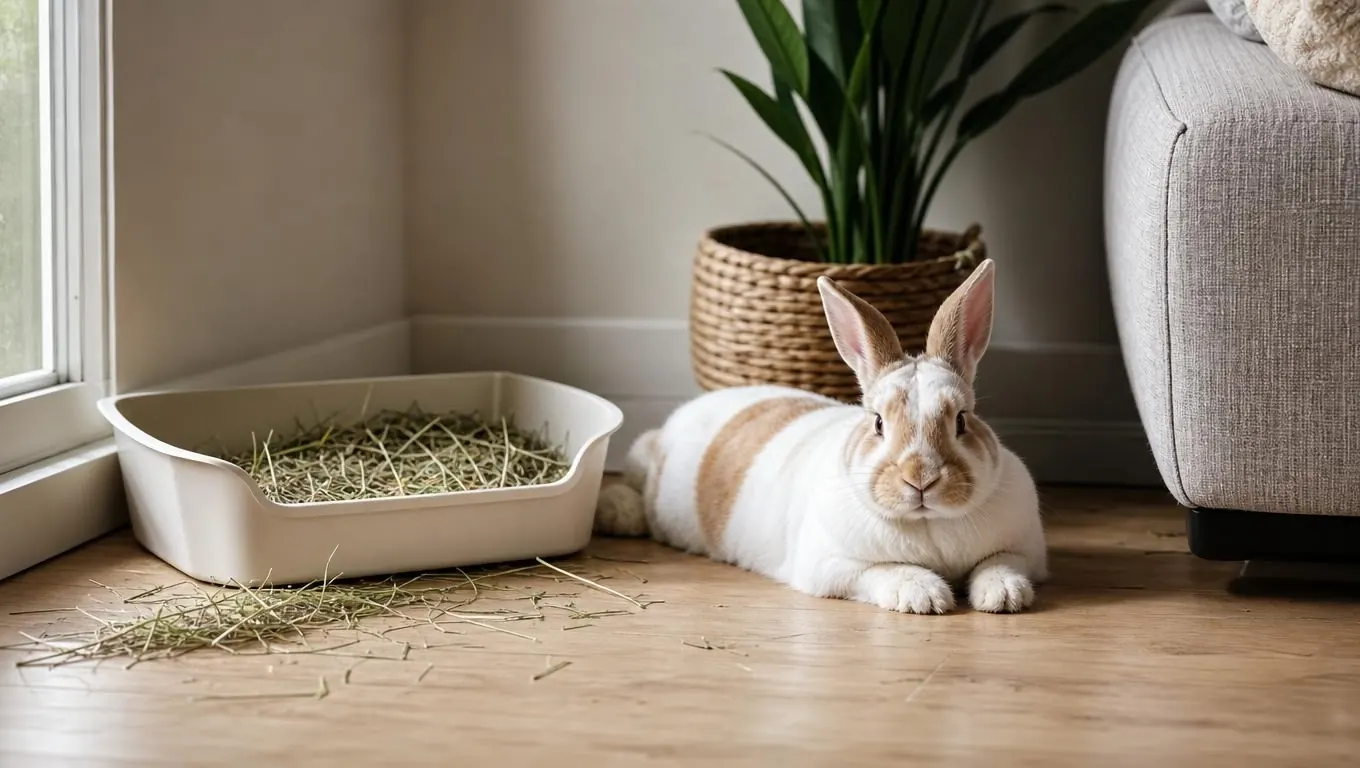
Here is the part of rabbit ownership that the pet store never mentions: your rabbit wants a bathroom. Not a corner of the living room. A designated bathroom. House rabbits are naturally tidy animals, and when one moves indoors, the instinct to pick one spot and keep it clean is already there. What stops that instinct from becoming a usable habit is usually the setup, not the rabbit. Get the setup right and most rabbits train themselves faster than you expect.
When I brought Clover home, I braced myself for weeks of patient training. It took four days, and two of those were me figuring out that the box was in the wrong corner. The difference between a rabbit who uses the box and a rabbit who decorates the baseboards comes down to a handful of details: box size, box placement, and what you fill it with. In fifteen years of keeping house rabbits, I have found that paper pellet litter like Small Pet Select Recycled Paper Pellets makes the whole job easier, from the first day of training to the weekly deep clean. This article walks through the exact setup I use, in the order it matters.
Start with the right litter and half the training is done
Small Pet Select Recycled Paper Pellets soak up urine, lock down odor, and stay put when your rabbit digs. That is the short version of why I keep a bag in the house. See today's price and current availability on Amazon, then come back for the step by step.
Amazon Check Today's Price on Amazon →Step 1: Put the box where your rabbit already goes
Watch your rabbit for a day before you buy anything. Rabbits are creatures of habit, and most of them have already picked a favorite corner before you start training. Clover chose the corner by the back wall, two feet from the hall door. That spot made no sense to me. It was the corner I never would have picked. It did not matter. Rabbits win these arguments, and they win them early, so watch before you arrange anything.
When you find the corner, put the litter box there, not somewhere you think is more convenient. If the box is in the wrong place, your rabbit will keep using the right place and the box will stay empty. Move the box to the spot your rabbit already chose and you are working with the instinct instead of against it. This single change is the difference between a four day training run and a four week standoff.
Size matters more than people expect. The box should be big enough for your rabbit to turn around in completely, with a high back wall to catch urine. For a rabbit about the size of Clover, roughly four pounds, I use a medium corner pan with a raised back. If you have a bigger rabbit, go bigger. A cramped box is a box your rabbit will refuse to use, and a box that gets refused is just an expensive decoration.
Step 2: Fill it with paper pellet litter, not wood shavings
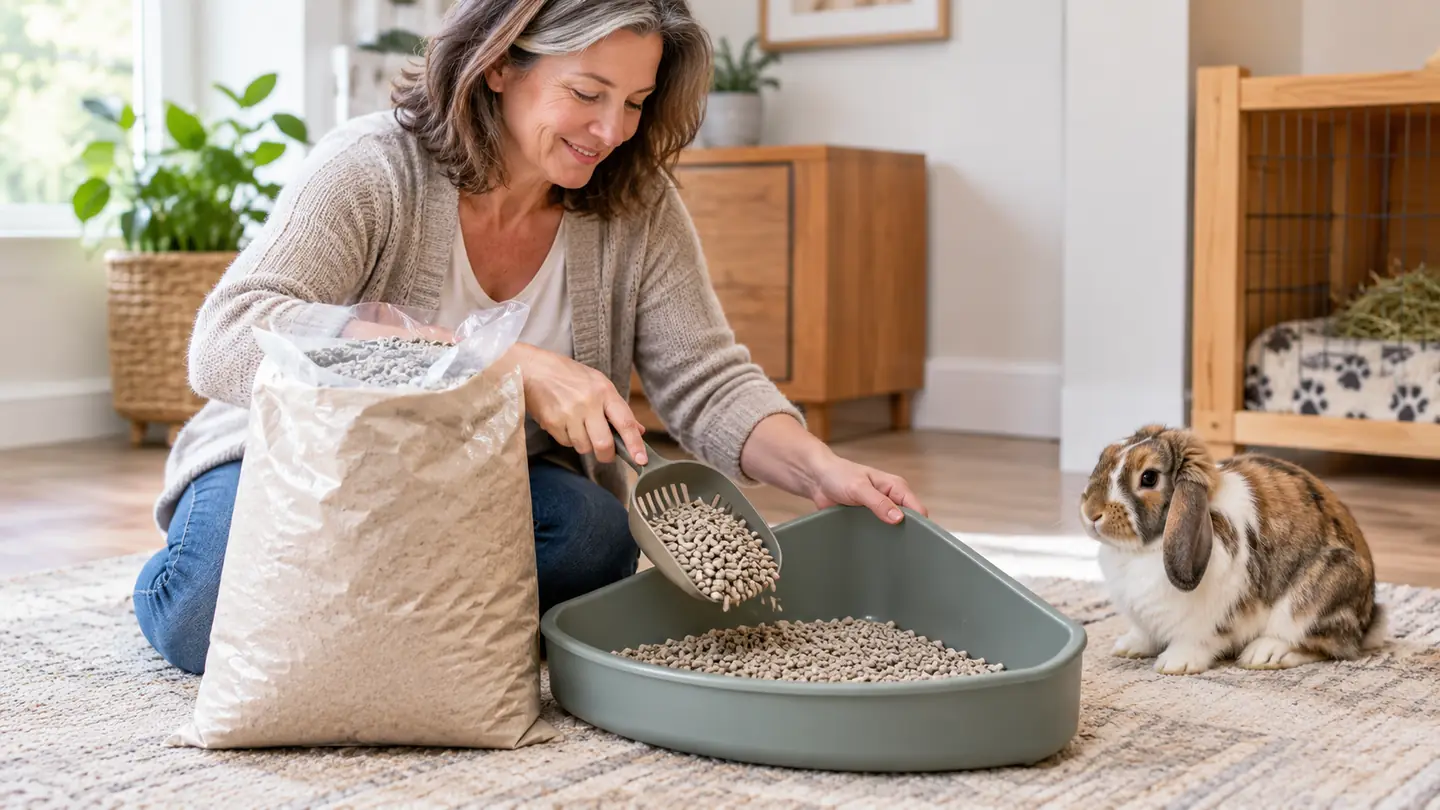
The litter you choose does most of the work. I have tried most of what the pet aisle offers, and I keep coming back to paper pellets. Small Pet Select Recycled Paper Pellets absorb urine well, they do not carry the sharp smell of pine or cedar, and they are safe if your rabbit decides to taste them, which a rabbit will absolutely do at least once. The pellets also hold their shape when wet, so the daily scoop is quick and the box stays tidy.
Skip clay litter entirely. It clumps, it is dusty, and if a rabbit ingests it, it can cause a blockage that ends with a vet visit. Wood shavings from the hardware store are not much better. The phenols in pine and cedar can irritate a rabbit's respiratory system, and the dust bothers sensitive noses. Paper pellets avoid both problems, which is why they are the default recommendation from rabbit rescues and the veterinarians I have talked to over the years.
Pour a layer about an inch to an inch and a half deep across the bottom of the box. You do not need a mountain of it. Too much litter just gets kicked out when your rabbit digs, and rabbits do dig. A modest layer absorbs what needs absorbing, and you top it up when you clean. If you are starting with a fresh pan, aim for the shallow end of that range and add more if your rabbit is a heavy drinker.
Step 3: Put hay in the box
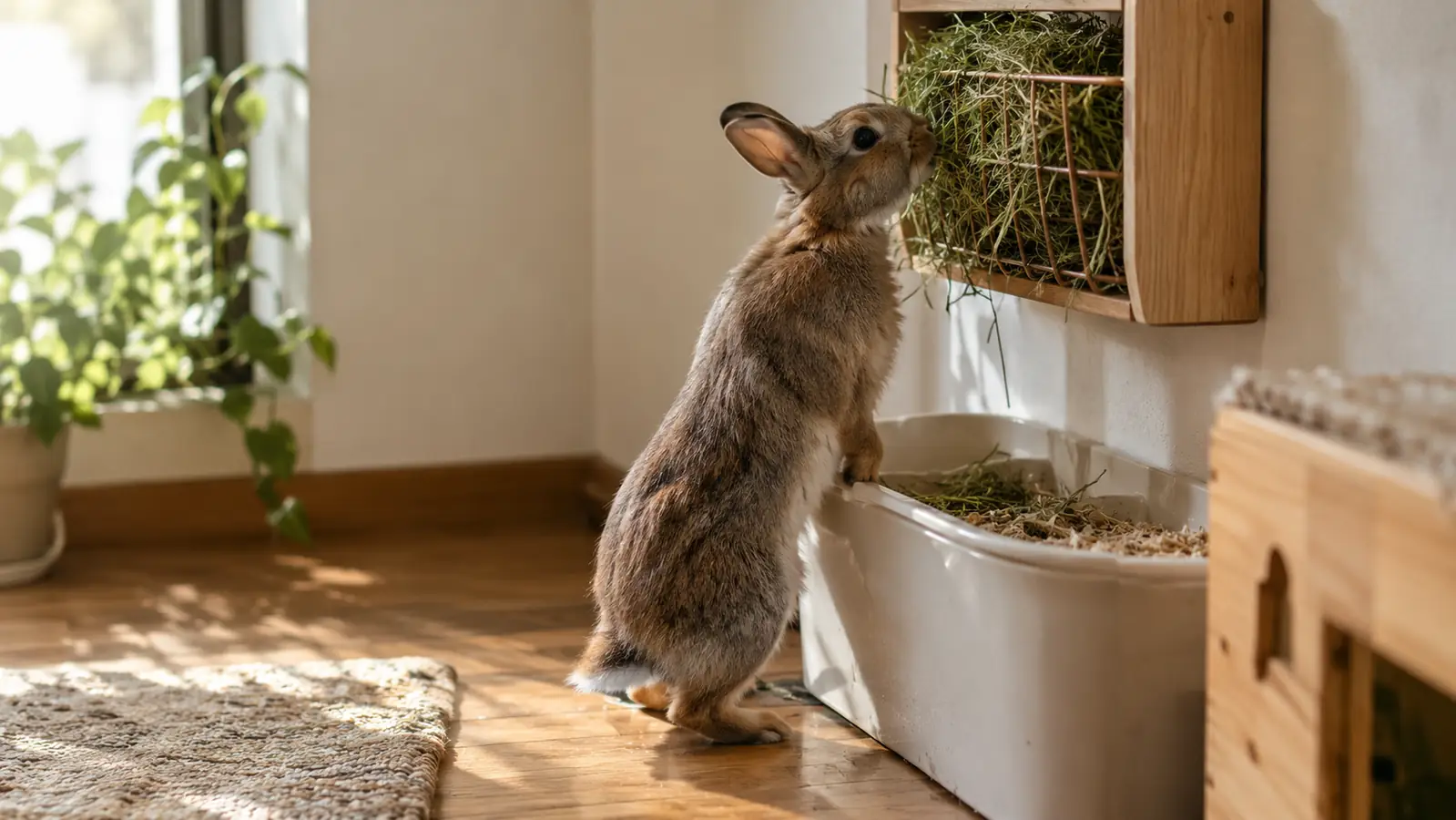
This is the trick that did more work than I did. Rabbits eat and eliminate at the same time. It is a biological thing, and you can fight it or use it. Put a handful of fresh hay in the corner of the litter box, or hang a small hay rack right over the box, and your rabbit will hop in, eat, and take care of business while it is already there. Every time the hay runs out, your rabbit has a reason to visit the box again.
Clover gets a fresh handful of timothy hay in the corner of her box every morning. She hops in, rearranges it, eats her breakfast, and handles her business in the same visit. The hay does two jobs: it draws her into the box several times a day, and it keeps her digestive system moving, which matters more for rabbits than most new owners realize. A rabbit who eats hay steadily is a rabbit with fewer digestive problems and a much easier litter box to manage.
If you use a hay rack, hang it low enough that your rabbit can eat comfortably while standing in the box. If you put the hay loose in the corner, expect some of it to get peed on. That is normal. You toss the soiled hay when you clean and add fresh. The cost of a little wasted hay is worth the training shortcut, because the hay is what keeps bringing your rabbit back to the box all day long.
Step 4: Keep your rabbit in a small space until the habit sticks
You cannot litter train a rabbit who has the run of a whole house on day one. The area is too big, and the rabbit will find a corner you cannot see. Start with one room, or a pen with a solid floor, and keep the litter box in that space. Once the box is used consistently for a week, open up a little more space. Expand slowly, and keep the box where it has always been so the habit travels with the rabbit.
When Clover first came home, she had the living room with a pen for nights. The box went in her chosen corner, and for the first week she did not have access to the rest of the house. That sounds strict, but it is kinder than letting her fail in a hallway and then wondering why she keeps missing. Small spaces build confidence. A rabbit who succeeds in one room is a rabbit who can be trusted in two.
Reward the behavior you want. When you see your rabbit use the box, say something calm and happy and offer a tiny piece of a safe treat, like a slice of banana or a few pellets. Do not punish accidents. A rabbit does not connect a scolding to a puddle from ten minutes ago. They only learn that you are unpredictable, which makes them nervous and less likely to use the box when you are watching. Patience here is not softness. It is strategy.
Step 5: Clean the box on a schedule your nose can live with
Paper pellets make the cleaning part genuinely easy. Because the pellets soak up urine and hold it, you do not have to dump the whole box every day. Once a day, scoop out the soiled pellets and the hay that got peed on, then top up the litter. Every two to three days, dump the box, rinse it with hot water and a mild soap, dry it, and refill. The whole reset takes about five minutes, which is less time than I spend making coffee.
Clover's box gets the daily scoop in the morning when I change her hay. The full reset happens every three days, and it takes about five minutes. The test I use is simple: if I can smell the box from the couch, I am late. With Small Pet Select paper pellets, I almost never smell it before the three day mark. That matters in a small house, because a litter box that smells is a litter box that makes everyone miserable.
When you clean, skip the ammonia based cleaners and the bleach. They smell like predator urine to a rabbit, which is confusing and can actually make the rabbit mark the box more, not less. Hot water and a little vinegar work fine, and vinegar also breaks down the mineral deposits that build up in the corners of a plastic pan. Dry the pan well before you refill it, because trapped moisture is what makes the next cleaning harder.
What Else Helps
A few extra things made the difference between a trained rabbit and a rabbit who is mostly trained. If your rabbit lives in more than one room, put a second litter box in the other room. Rabbits will not always travel to find a box, especially mid nap, and a second box costs very little compared to the cost of scrubbing a rug. For a closer look at how this litter holds up over months of daily use, my Small Pet Select paper litter review has the long version.
If your rabbit is not spayed or neutered, that is the biggest single step you can take for litter habits. Unspayed females and unneutered males mark territory, and no amount of litter training fully overrides hormones. Every rabbit I have kept has been spayed or neutered, and it made toilet habits dramatically more reliable. If your rabbit is young, talk to your vet about the right age for the procedure.
For the first few weeks, put a washable mat or a puppy pad under the box. Even a well trained rabbit misses sometimes, especially if the box is full or the rabbit is startled. The mat protects your floor and turns the occasional miss into a two minute cleanup instead of a carpet emergency. If you are comparing brands, my Small Pet Select litter versus Fresh News comparison covers the differences that matter.
One more thing: keep the hay fresh. Rabbits will ignore hay that smells stale or has been sitting in a damp corner, and if the hay in the box stops being interesting, the rabbit stops visiting the box. I buy hay in smaller batches and store it in a dry spot, and I refresh the box hay every morning. It is a small habit with an outsized effect on the training outcome.
Clover went from corner puddles to a reliably clean box in four days, and the hay in the box did more work than I did.
The litter that makes daily cleanup a five minute job
If you are setting up your first litter box, start with Small Pet Select Recycled Paper Pellets and skip the trial and error I went through. They absorb well, they do not smell like a sawmill, and they are safe for the rabbit who insists on tasting everything. Check today's price on Amazon and grab a bag before you set up the box.
Amazon Check Today's Price on Amazon →