
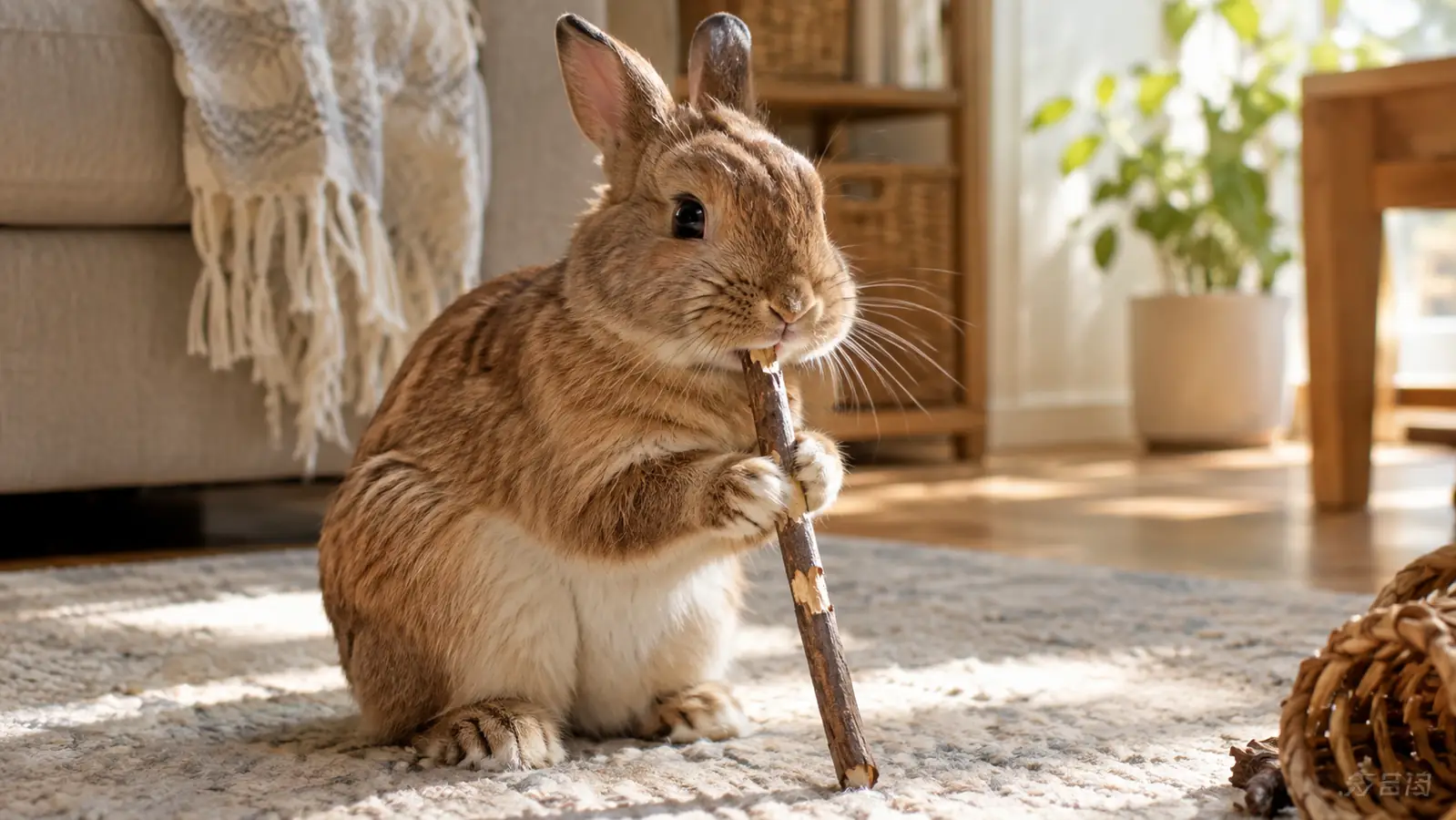
Rabbits do not stop chewing, and nobody told Clover otherwise. My 4-year-old Holland Lop weighs about four pounds, eats like a bird, and chews like a beaver. Hay keeps her digestion moving and her back teeth grinding, but hay alone does not keep her busy. That is where Kaytee Apple Orchard Sticks come in. A ten-count bag of apple twigs has been the most dependable chewing project in our house for months. Clover works on one stick for days, drops it, circles back, and starts again. These are the ten reasons I keep buying them.
Some of these reasons are about teeth, some are about behavior, and a couple are just about keeping the baseboards alive. If you share your house with a rabbit, you already understand all three. Here is what a month of daily sticks taught me.
Give your rabbit a chewing job it can't finish in one evening
Kaytee Apple Orchard Sticks are the first chew I reach for with Clover. A ten-count pack keeps her busy for weeks and points the chewing instinct somewhere you can live with.
Amazon Check Today's Price on Amazon →They give front teeth a real job
Rabbit front teeth grow almost constantly, which is why every rabbit is a chewer. Soft food like pellets and banana does not wear those teeth down, but a firm apple twig does. Clover anchors the stick with both front paws, tilts her head, and grinds the wood off in strips. That is a serious chewing motion, the kind that keeps the front teeth busy for twenty minutes at a stretch. It will not fix an existing dental problem and it does not replace a vet check, but as daily maintenance for a healthy rabbit, it does real work.
The bark is the part rabbits love
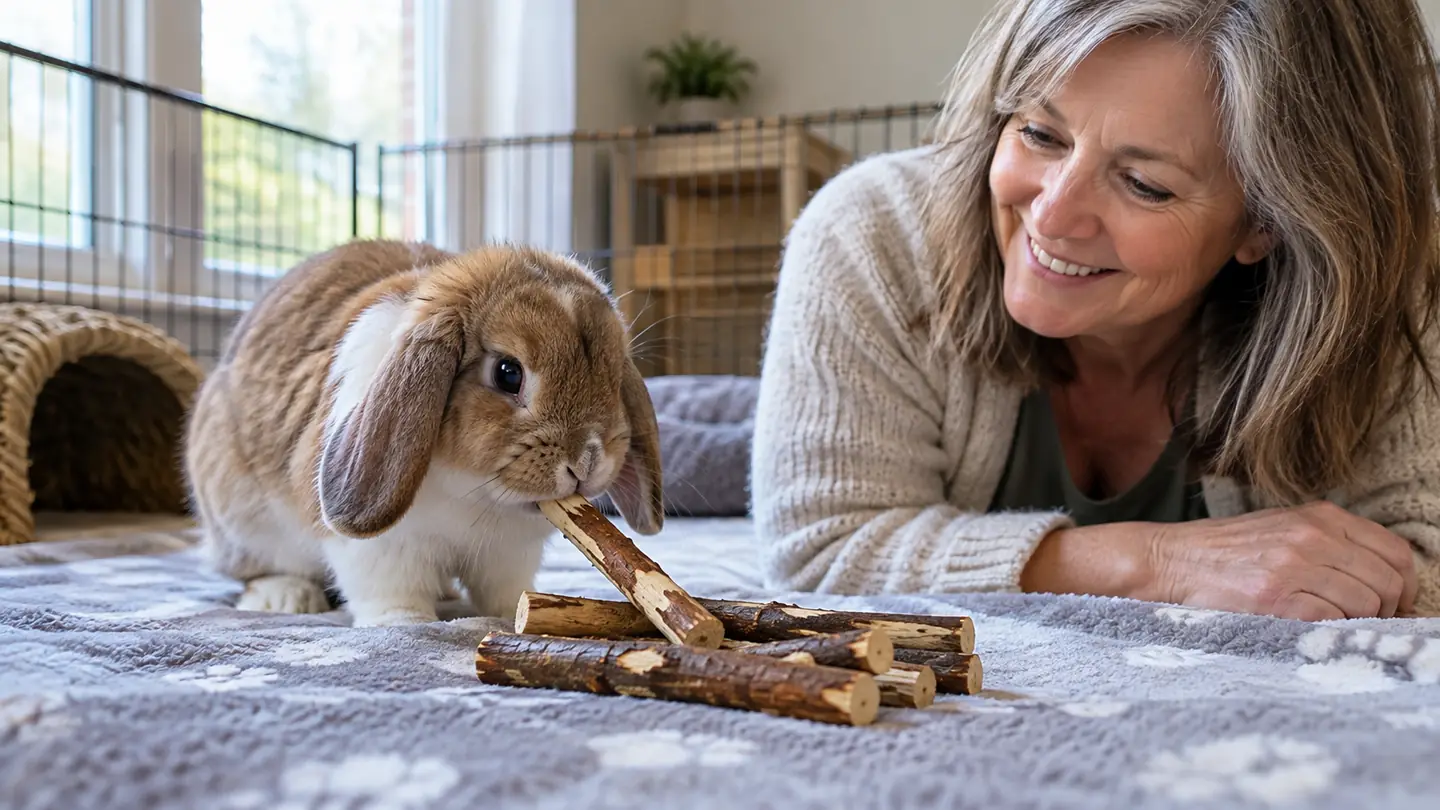
A wild rabbit strips bark off twigs because that is what rabbit mouths are built to do. Clover will not touch a bare stick until she has peeled every bit of bark off it, then she goes back and works the wood underneath. That two-stage job is what keeps her busy. She shreds bark into little pieces, drops them on the rug, and sometimes re-chews them later. The peeling is half the entertainment, and it is also the part that keeps her teeth moving against something firmer than a hay stem.
One stick lasts for days, not minutes
A carrot is gone in four bites. A piece of banana is a blink. A Kaytee apple stick, on the other hand, can keep Clover busy for the better part of a week. She works it in sessions, puts it down, comes back an hour later, and picks up right where she left off. For an indoor rabbit who is awake and curious for hours every day, that staying power is exactly what you want. One ten-count pack has lasted us well over a month, and we are only halfway through it.
It gives the back teeth something to grind on
The front teeth get all the attention, but rabbits grind with their back molars too. Chewing on a firm stick makes Clover move her jaw side to side in a way that soft food never asks for. I am not a vet and I will not promise any dental outcomes, but the motion is plainly different from eating pellets. Every time she tackles a stick, her whole jaw gets a workout. For a rabbit whose diet is mostly hay, a firm chew adds a different kind of chewing to the day.
It saves the baseboards
Clover free roams the living room, and before the sticks arrived she had strong opinions about the doorframe. Rabbits chew furniture because chewing is what rabbits do, not because they are being difficult. Now when she gets that look, I hand her a stick and she settles down to work on it instead. Redirecting the behavior onto something she is allowed to destroy has saved our trim, our rug corners, and our patience. A legal chewing target beats a forbidden one every single time.
It is a boredom fix for an indoor rabbit
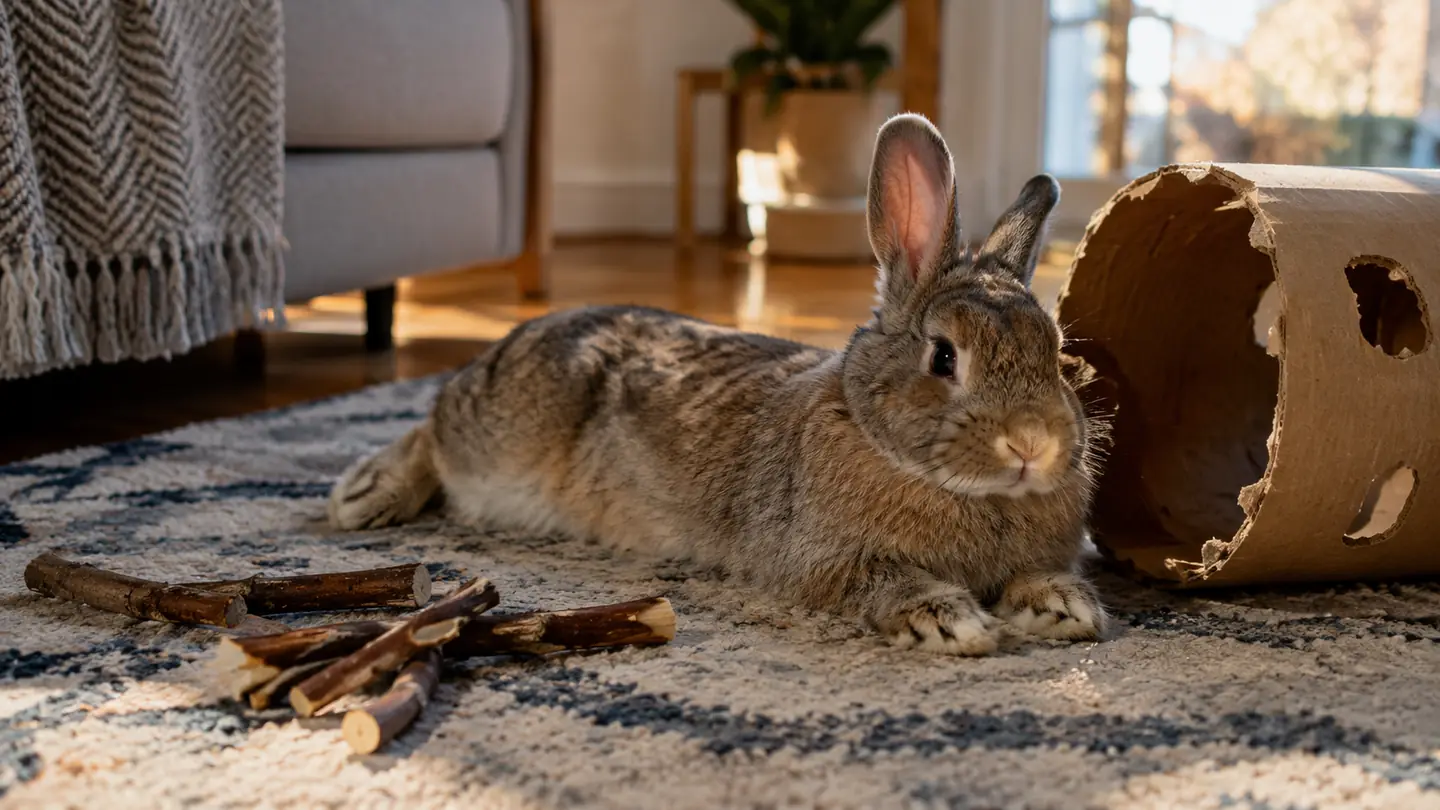
An indoor rabbit does not have a field to explore, a burrow to dig, or a dozen other rabbits to argue with. Boredom comes out as nibbling, rug digging, and water bowl tipping. A fresh apple stick is a project with a beginning, a middle, and an end. Clover treats a new stick like a small event. She circles it, sniffs it, rolls it once, and then gets down to business. Twenty minutes of focused chewing is twenty minutes of enrichment that costs nothing extra.
Ten sticks means you can rotate
Rabbits love novelty, and a stick that sat in the cupboard for a week smells interesting again when it comes out. Because the pack holds ten sticks, I always have one ready and a couple resting. When Clover starts ignoring the current stick, I swap in a fresh one and the old one goes back in the bag for next time. Rotation keeps the chewing project interesting without buying anything new. One pack covers the rotation for a month or more, which is a lot of busy chewing from a single purchase.
Apple wood takes the guesswork out of safe chewing
Not every branch from the yard is safe for a rabbit. Some woods are toxic, and wood from a treated tree can carry residue you cannot see. Kaytee apple orchard sticks are grown and dried for small animals, so I know exactly where they came from and what is on them: nothing. For a first-time bunny parent, that certainty is worth a lot. I do not have to identify a tree, dry the wood myself, or worry about what the neighbor sprayed on it. The sticks arrive ready to chew.
It is a treat without the sugar load
Rabbits go wild for dried fruit, but dried fruit is mostly sugar and should stay a rare treat. Apple wood gives Clover the same excited reaction without the sugar. The flavor is mild and the texture is what she is actually after. She gets the fun of a treat and I get the peace of mind of knowing it is just wood. That makes apple sticks a daily option instead of a once-a-week one, which is exactly how a chew should behave in a house rabbit home.
It gives you a daily check-in moment
Every evening I hand Clover a stick and watch her work at it. That quiet routine is when I notice if she is eating normally, moving normally, and acting like herself. A rabbit who turns down an apple stick is a rabbit worth a closer look, and that early warning has served me well with rabbits I have kept before. The sticks keep her teeth busy, but they also give me a daily reason to sit still and pay attention to her. That might be the best reason of all.
What I'd Skip
This pack is not for every rabbit. If your rabbit already has a steady supply of safe woods and a full hay rack, you may not need more chew options. Apple sticks are a supplement to a good hay-based diet, never a replacement for it. And if your rabbit is dropping food, drooling, or eating less than usual, a chew stick is not the answer; that is a vet visit. One more note: Clover ignored her first apple stick for two days before she tried it. A picky rabbit may need patience before the sticks earn their keep.
One Kaytee apple stick keeps a four-pound rabbit busy for days, and Clover still does a little binky when a fresh one lands on the rug.
Chewing is a rabbit being a rabbit
Give yours a safe job to do with Kaytee Apple Orchard Sticks. They have kept Clover's teeth busy, saved our baseboards, and given us a daily excuse to sit and watch her work.
Amazon Check Today's Price on Amazon →