
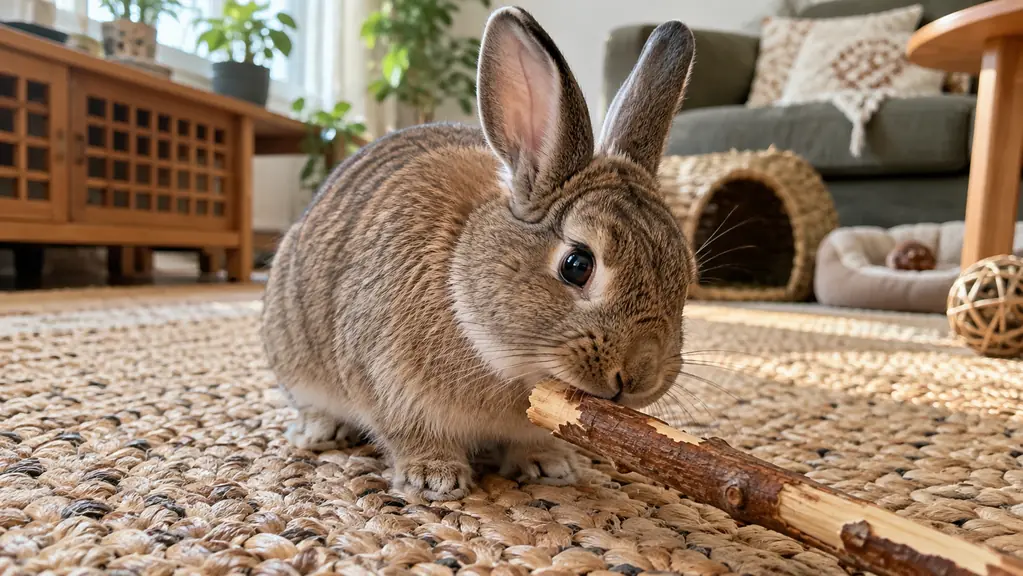
The first time I handed Clover a Kaytee Apple Orchard Stick, she gave it one sniff, grabbed it with her teeth, and thumped off to her corner like she had won a prize. That was about six weeks ago. The stick is still there, half eaten, and it has become the one chew item in this house that actually gets used.
I have kept house rabbits for about fifteen years, and I have bought every chew toy marketed to them. Most get ignored. The Kaytee sticks are different, and I think every indoor rabbit owner should know why.
The Quick Verdict
A simple apple wood chew that most rabbits actually use. It will not fix dental problems on its own, but it is the most reliable boredom buster I have found in years.
Amazon Check Today's Price →Give your rabbit something worth chewing
Kaytee Apple Orchard Sticks are the first chew my picky rabbit has finished in years. See today's price on Amazon and find out if your bunny agrees.
Amazon Check Today's Price on Amazon →How I've Used It
Clover is a four year old Holland Lop, about four pounds, and she has free run of my living room during the day. She is also the pickiest eater I have ever lived with. She turns her nose up at half the treats I bring home, and she has destroyed two sofa corners because the chew toys I offered her were simply not interesting enough.
When I opened the box of Kaytee Apple Orchard Sticks, I did not expect much. Ten sticks, each about the length of my hand, made from apple wood and held together with a little natural binding. I put one in her litter box area, one near her water bowl, and one in her cardboard tunnel. The tunnel one disappeared first.
Six weeks later, I am still on the same box. Clover works on a stick for a few minutes each evening, and a single stick lasts her several days because she rotates between three or four of them. She has not touched the sofa since.
Why Rabbits Need to Chew (and Why Apple Wood Works)
Rabbits have teeth that never stop growing. The front incisors grow constantly, and the molars in the back do too. If a rabbit does not wear them down, the teeth can overgrow, dig into the gums, and cause the kind of pain that makes a rabbit stop eating. That is one of the most common reasons rabbits end up at the vet.
Hay does most of the work in my house. Clover gets unlimited timothy hay, and that is the single most important thing for her teeth and digestion. But hay alone is not enough for a serious chewer. Rabbits also need something to gnaw on, and apple wood is one of the safest options because it is hard enough to wear the teeth without being so hard that it damages them.
The Kaytee sticks are made from real apple orchard wood, which means they have a slightly sweet smell that rabbits seem to notice. Clover can find one from across the room. I cannot promise every rabbit will react the same way, but I have yet to meet a rabbit that ignored these entirely.
The way I think about it is that hay keeps the teeth worn down in the back, while chew sticks help with the front teeth and give the jaw a workout. A rabbit's jaw moves side to side when it chews, and apple wood encourages that motion. Clover spends more time working on a stick than she ever did with a flat cardboard box.
The First Few Days
The first morning, Clover sniffed the stick and walked away. I thought that was the end of it. Then I heard a scraping sound from under the coffee table, and she was stretched out on her side, holding the stick between her front paws and pulling at the bark like it was the best thing she had ever found.
By day three, she had stripped most of the bark off one stick and started on the wood underneath. The second stick, the one near her water bowl, barely had a mark on it. That is the thing about rabbit chewing: it is not predictable. They chew what they want, when they want.
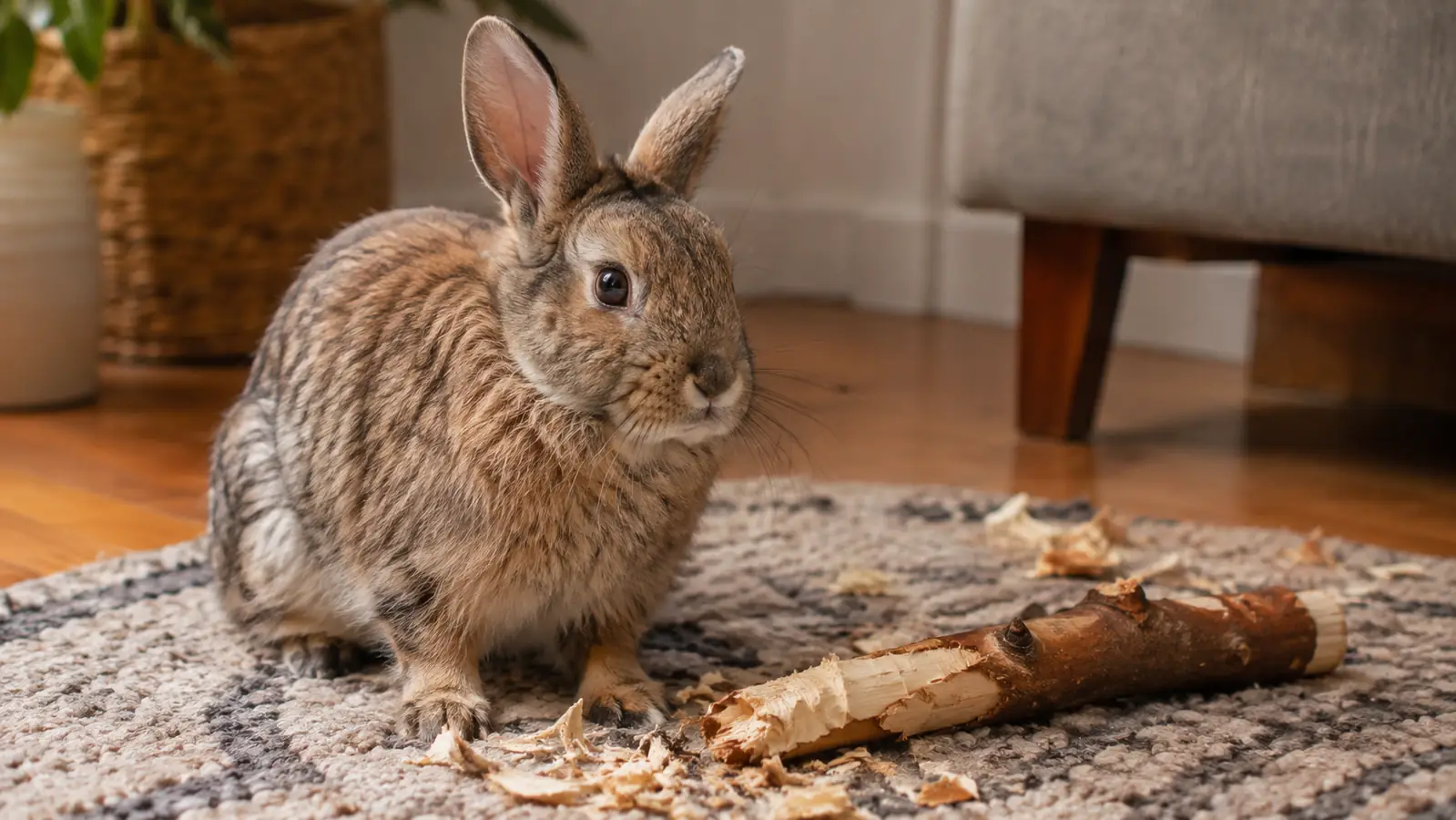
I found a few small wood pieces near her favorite chewing spot, but nothing that looked dangerous. The pieces were soft and splintered into tiny bits, not sharp shards. Still, I checked on her the first few times she chewed a new stick, just to be sure.
One thing that surprised me was how quiet the chewing was. I expected crunching and snapping, but the apple wood is dry and fibrous, so it makes a soft scraping sound. I can hear it from across the room, but it does not drive me up the wall the way some plastic toys do.
What These Sticks Are Actually Like Over Time
The first thing I noticed is that the sticks are not uniformly sized. Some are thicker, some are thinner, and a few have small knots. That is a good thing. The variety gives Clover something to work on, and the thinner ones are easier for her to hold while the thicker ones take more effort to strip.
The sticks also do not make a huge mess. I expected wood shavings all over the rug, and there are some, but it is nowhere near the mess of a pine cone or a cardboard box. Clover chews off small pieces and most of them stay on the rug where she sits. I vacuum once a week anyway.
One stick in her litter box area lasted nearly a week. She chews it in short bursts, walks away, comes back later. That is exactly what I want from a chew item: something that keeps her occupied without me having to supervise every second.
I also noticed that the sticks smell like apple, not like chemicals. Some chew toys for small animals have a strong artificial scent, and Clover avoids those. The Kaytee sticks smell mild, like the inside of an apple crate, and that may be why she keeps coming back.
The Tradeoffs Nobody Mentions
No chew item is perfect, and I would not write an honest review if I pretended otherwise. The biggest tradeoff with Kaytee Apple Orchard Sticks is that they are not a complete solution for a rabbit with serious dental problems. If your rabbit's teeth are already overgrown, no chew stick will fix that. You need a vet who specializes in rabbits.
The second tradeoff is that some rabbits lose interest quickly. I have heard from owners whose rabbits chewed one stick and then ignored the rest. My own experience has been good, but your rabbit's personality matters. A rabbit that prefers soft cardboard may not care about apple wood.
The third thing is that the sticks are not edible in the way a treat is. A rabbit will gnaw on the wood and swallow tiny pieces, but it is not food. If your rabbit is not a natural chewer, you may need to offer the stick at the end of a string or wedge it somewhere so it is more interesting.
One more thing worth knowing: the sticks are not uniform, and a very determined rabbit can work through a thin one in a single evening. Clover is a light chewer, so she makes a box last. If you have a larger rabbit or a heavy chewer, expect to go through them faster and budget accordingly.
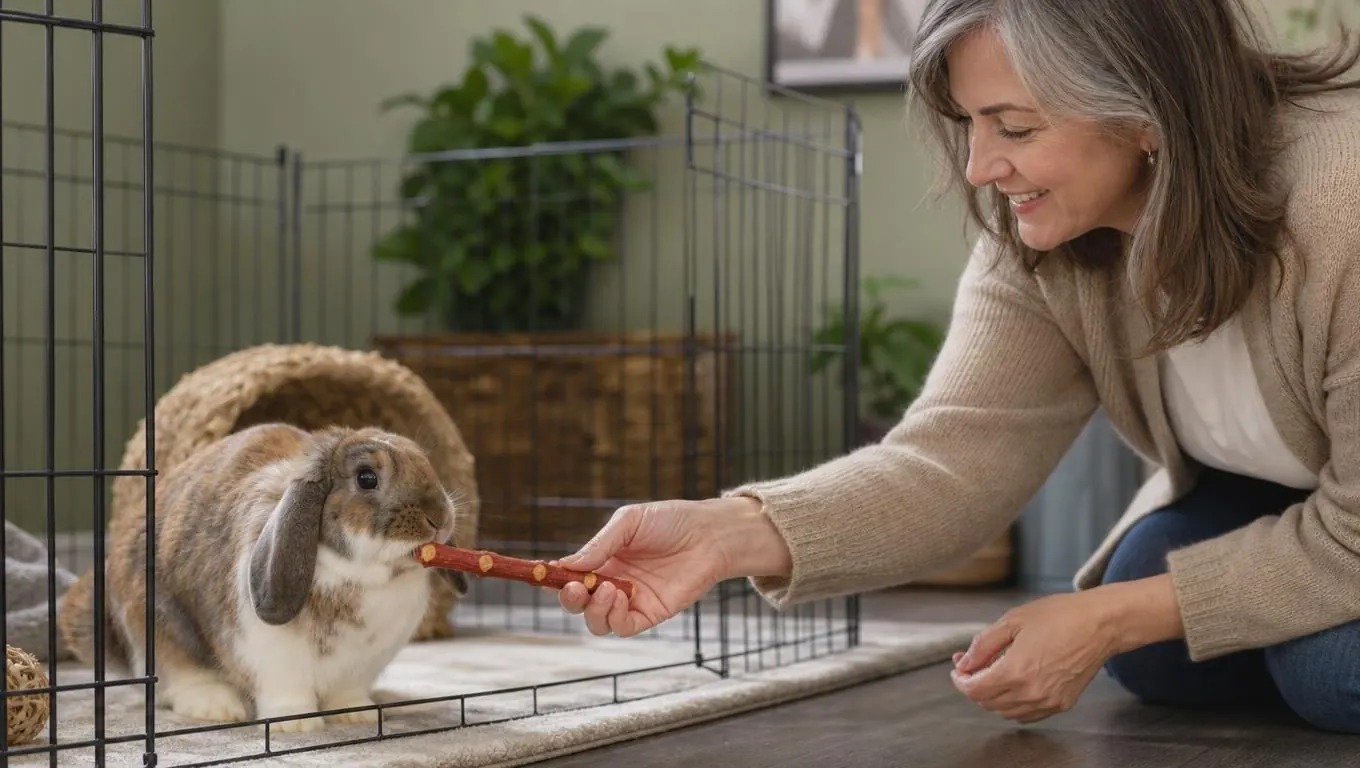
Any chew item, no matter how safe, deserves a little supervision at first. I gave Clover her first stick while I was sitting on the floor next to her. I watched how she held it, how she bit into it, and whether any pieces came off too fast. After a few sessions, I trusted her enough to leave a stick in her pen.
The sticks are made for small animals, and I have not seen any sharp splinters with Kaytee. But every rabbit is different, and a rabbit that chews aggressively can break off a chunk. If you see that, take the piece away and offer a thinner stick instead. Supervision is not about being paranoid. It is about learning your rabbit's habits.
I also keep the box out of reach when I am not using it. Clover is smart enough to open a cardboard box if she really wants to, so I store the extra sticks in a cabinet. That way I control how many she gets, and a fresh box lasts for weeks instead of days.
Alternatives I Considered (and Why These Won)
I have tried willow balls, woven grass mats, cardboard tunnels, and plain wooden blocks from the craft store. Willow balls were a hit for about a day, then they sat in the corner. Cardboard tunnels were too much fun, and Clover shredded them into confetti that ended up everywhere. Wooden blocks from a craft store are risky because not all wood is safe for rabbits.
Kaytee Apple Orchard Sticks won because they hit the middle ground. They are interesting enough that Clover keeps coming back, they are made from a wood that is safe for rabbits, and they are long enough that she can hold them while she chews. I also like that they come in a ten count, because I can put one in every room she uses.
If you are comparing chew options, the most important thing is to look for wood that is specifically sold for small animals. Apple, willow, and aspen are generally safe. Pine and cedar are not, because the oils can be irritating. Always read the label before you offer anything new.
I will also mention that I tried a similar apple stick from another brand a few years ago, and the main difference was the size. Some of those sticks were too thin to hold Clover's interest. The Kaytee sticks are thick enough that she can grip them, which makes a bigger difference than I expected.
What I Liked
- Real apple wood that most rabbits actually chew
- Ten sticks per box, so you can scatter them around the house
- Long lasting; one stick lasted Clover the better part of a week
- Made for small animals, with safe wood and no added flavoring
- Helps wear down constantly growing teeth between vet visits
Where It Falls Short
- Not a fix for existing dental problems; see a rabbit vet
- Some rabbits lose interest and prefer softer chews
- Thinner sticks can be eaten quickly by a determined chewer
- Small wood pieces end up on the rug, so plan to vacuum
A single stick lasted Clover the better part of a week, and she has not touched the sofa since the first one went into her tunnel.
Who This Is For
Kaytee Apple Orchard Sticks are for anyone who has a rabbit that loves to chew and needs something safe to gnaw on. If your rabbit has already discovered that sofa legs, baseboards, and carpet corners are fun, these sticks give them a better target. They are also great for rabbits that get bored in a pen while you are at work.
I recommend them most strongly for indoor rabbits, because indoor rabbits are surrounded by things they should not chew. Clover has free roam of the living room, and without a steady supply of apple wood, she will find her own entertainment. A few sticks scattered around the room keep her busy and keep my furniture safe.
They are also a good first chew for a new rabbit owner. There is no complicated setup. You open the box, hand your rabbit a stick, and let them figure it out. Most rabbits do.
If you are not sure whether your rabbit is a chewer, watch what they do with cardboard boxes. A rabbit that shreds a box in a day will almost always enjoy an apple wood stick. A rabbit that ignores cardboard may need a softer chew or a different texture.
Who Should Skip It
If your rabbit has been diagnosed with dental disease, or if you suspect the teeth are overgrown, do not rely on chew sticks. Book an appointment with a rabbit savvy vet first. A chew stick cannot fix a tooth root abscess or a spur on the molar. It is a maintenance tool, not a treatment.
If your rabbit refuses every woody chew you have ever offered, these may not change that. Some rabbits simply prefer grass mats, hay cubes, or cardboard. Before you buy a ten count, try a single apple wood stick and see how your rabbit reacts. You can also offer one stick at a time to avoid wasting the box.
Finally, if you have a very young rabbit, watch closely. Baby rabbits are curious and may try to eat a whole stick too fast. There is nothing wrong with the wood itself, but any new chew should be introduced gradually and supervised until you know your rabbit's style.
I also would not give these to a rabbit that is recovering from gut surgery or that has a history of eating things it should not. If your rabbit is prone to swallowing large pieces of anything, talk to your vet before introducing a new chew. The wood is safe, but every rabbit is different.
Bottom Line
After six weeks of daily use, I keep coming back to the same conclusion. Kaytee Apple Orchard Sticks are not the fanciest chew on the shelf, and they will not solve every rabbit problem. But they are simple, safe, and they work for the rabbit I live with. That is a better record than most chew toys I have bought.
If your rabbit is a chewer, these are worth trying. If your rabbit ignores them, at least you know and you have not lost much. But if your rabbit is anything like Clover, you will be buying a second box before you finish the first.
I have bought a lot of rabbit supplies over the years, and most of them end up in the donation pile or the trash. The Kaytee Apple Orchard Sticks are one of the few things that earned a permanent spot in Clover's routine. I plan to keep a box in the cabinet at all times.
Stock up before your furniture pays the price
Kaytee Apple Orchard Sticks are the chew my rabbit actually uses, and a ten count lasts weeks in this house. Check today's price on Amazon and keep a few sticks on hand.
Amazon Check Today's Price on Amazon →