

Every rabbit owner hits this moment eventually. You come home with a bag of pellets from the pet store, the kind with colorful bits and seed-like pieces mixed in, and your rabbit acts like you've brought them buried treasure. They dive in, they toss pieces around, they make a mess, and honestly, it's cute. You can see it in their eyes: this is the best day of their life. Then you read the label, or your vet mentions it at a checkup, and it sinks in: that mix is closer to a treat blend than a balanced daily food. For a rabbit who eats pellets every single day of their life, that distinction matters a lot more than it sounds.
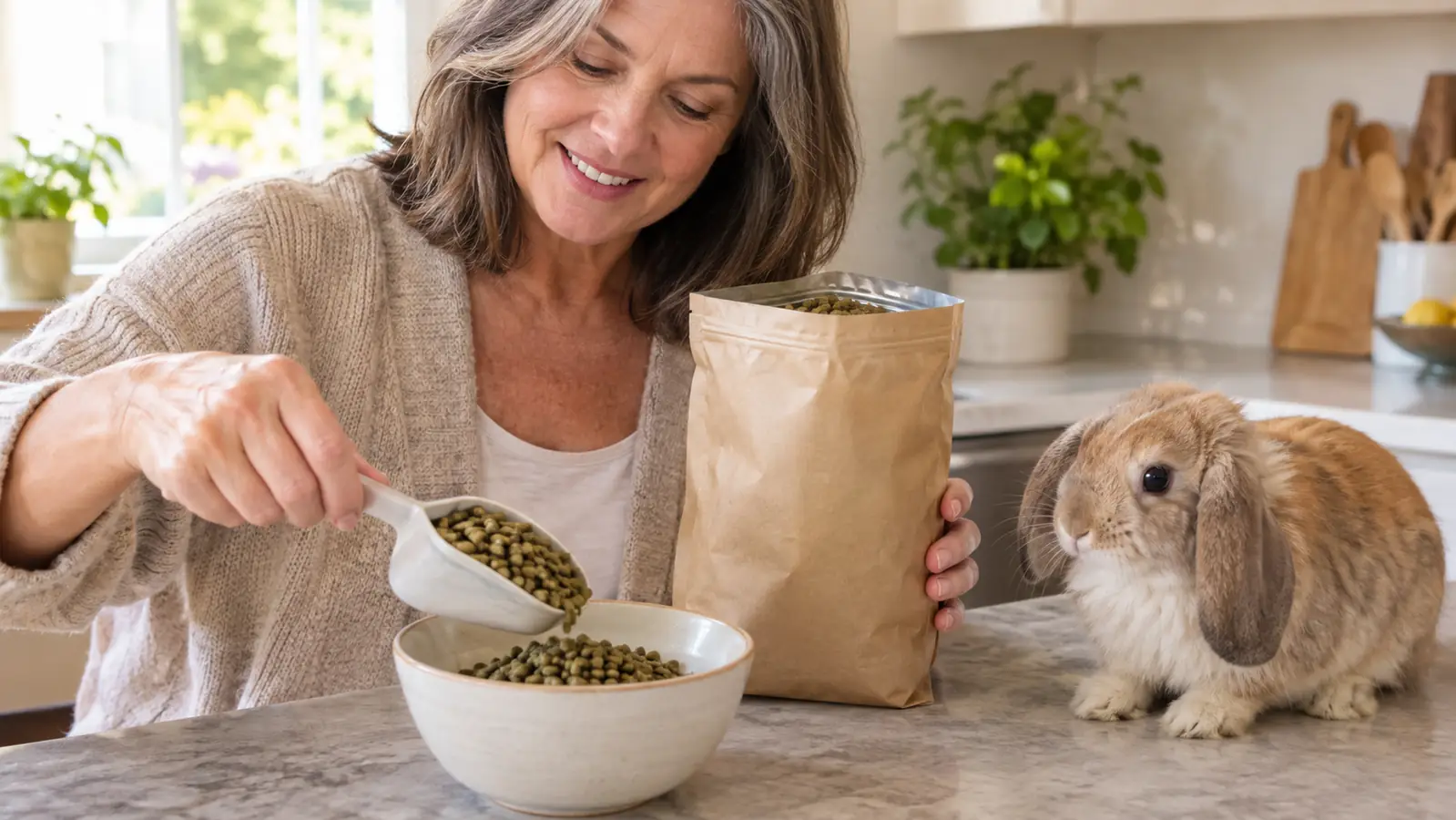
Switching to a timothy-based pellet is the change most vets suggest for adult rabbits, and Oxbow Essentials Adult Rabbit Food is the bag I reached for when I made this switch with my 4-year-old Holland Lop, Clover. Here's the part nobody warns you about: you can't just swap the bowls overnight. A rabbit's digestive system is built for a steady, high-fiber diet, and a sudden change in food can slow their gut down fast. I've transitioned rabbits onto new pellets more than once over the fifteen years I've kept them, and Clover is the pickiest eater of the bunch, which made her the perfect test case. This is the exact process that worked for us, step by step, with no upset stomachs and no emergency vet visit. A slow switch protects the gut, and protecting the gut is the whole job.
A Safer Pellet Switch Starts With the Right Bag
Oxbow Essentials is a plain timothy pellet with no seeds, no fillers, and more than 11,000 reviews averaging 4.8 stars. It's the bag I used for Clover's transition, and it's the one I'd start with if you're making the same change for your rabbit.
Amazon Check Today's Price on Amazon →Step 1: Measure What Your Rabbit Actually Eats Now
Before you buy anything, spend two or three days watching how much your rabbit really eats. I know it sounds like homework, but the whole transition hinges on this number. You need to know their current pellet portion, their hay intake, and their water habits, because those three things tell you whether a switch is going to be smooth or rocky. Rabbits hide discomfort well, so your best clues are in the bowl and the litter box. Take notes if you have to. I keep a small notebook on the counter, and it has saved me more than once when something seemed off.
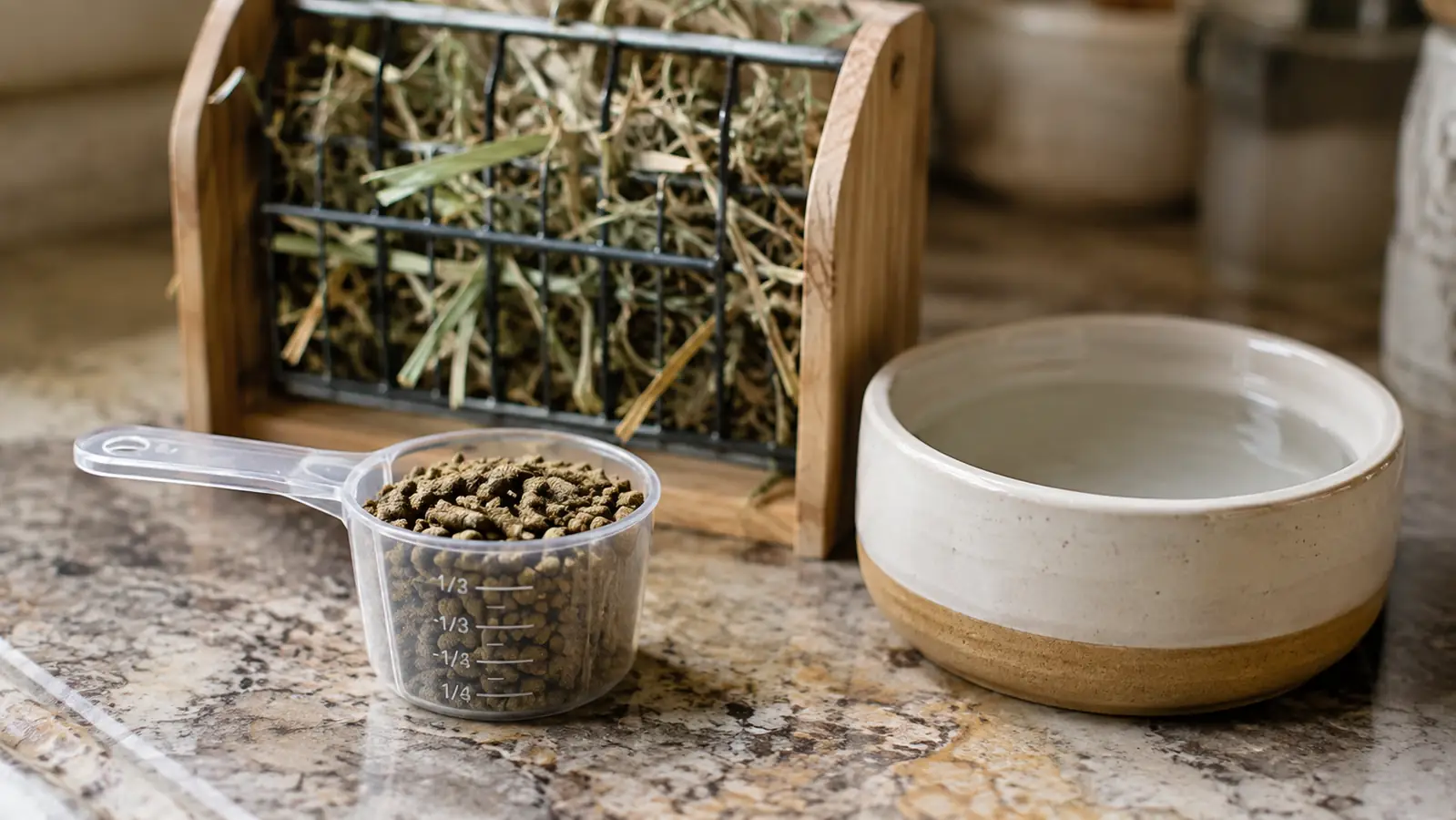
Clover gets about two tablespoons of pellets in the morning and two at night, which comes to roughly a quarter cup a day for her four pounds of attitude. That's the portion her vet approved for her age and activity level. Your rabbit's number may be different, so weigh them if you can and ask your vet what's right for their size. The point of this step is not to change the portion. It's to know the baseline so you can spot problems later.
While you're at it, note how much hay they eat and what kind. A rabbit who is already eating plenty of timothy hay will take a pellet switch in stride. A rabbit who mostly picks at their hay is a rabbit you'll want to move more slowly, because hay is the main food and pellets are the supplement. When the hay habit is already solid, the pellet change is a much smaller event in your rabbit's day.
Step 2: Start With a Healthy Rabbit and a Plain Pellet
Timing matters more than any other single factor. Only start the switch when your rabbit is healthy, eating normally, and acting like themselves. Don't start during a move, right after a new pet arrives, during a stretch of hot weather, or in the middle of recovery from an illness. A rabbit's gut is easily thrown off by stress, and stacking a food change on top of stress is asking for trouble. If your rabbit has had a bout of GI stasis before, talk to your vet before you change anything at all. That history deserves extra caution.
Then choose the right pellet. Oxbow Essentials is a timothy-based pellet made for adult rabbits over a year old, and it's plain on purpose. No colorful pieces, no yogurt drops, no seeds. Those extras are exactly what makes a pet-store mix so appealing to a rabbit and so hard on their digestion. A plain pellet delivers the fiber and nutrients an adult rabbit needs without the sugar spikes, and that matters more than whether the bag looks exciting.
I'll be honest: Clover was not impressed on day one. She sniffed the new pellet, gave me a look that could curdle milk, and went back to her hay. That's normal. Rabbits are creatures of habit, and a picky rabbit will test your patience before she tests the food. I left a small pile of the new pellets in her bowl next to the old ones and let her get curious on her own schedule. She ignored them for a full day, then nibbled one, then decided they were acceptable after all.
Step 3: Mix Old and New, Then Shift the Ratio Slowly
The safe transition runs seven to fourteen days, and here's the ratio I use. Days one through three, mix about 75 percent old pellets with 25 percent new. Days four through six, go to half and half. Days seven through nine, flip it to 25 percent old and 75 percent new. If everything looks good by day ten, you can serve 100 percent of the new pellet and toss whatever is left of the old bag. I use two small scoops, one for each bag, so the ratio stays honest.
Some rabbits breeze through this in a week. Some need closer to three weeks. Clover took ten days, and the last two days were the trickiest because she figured out her old pellets were disappearing and staged a brief hunger strike. I held the line, kept her hay full and fresh, and made sure her water bowl was clean. By day ten she was eating the Oxbow pellets without a second thought, and the old bag went into the compost bin.
The most important rule is to stay flexible. If at any point your rabbit stops eating, produces fewer poops, or seems off in any way, pause the transition. Go back a step, or back to the old pellets entirely, and give them a day or two to settle. A transition that takes three weeks and goes smoothly beats a transition that takes five days and ends at the emergency vet. There is no prize for finishing fast. Patience wins every time.
Step 4: Watch the Poops and Keep the Hay Coming
I know this sounds like a strange thing to say out loud, but your rabbit's poop is the best health report you will ever get. During a food transition, check their litter box twice a day. Healthy rabbit poops are round, firm, dry, and surprisingly numerous. If they stay that way through the switch, your rabbit's gut is handling the new food exactly the way it should. If you've never thought about rabbit poop this much, get ready. You will.
The warning signs are smaller poops, misshapen poops, fewer poops, or anything mushy or wet. Any of those means slow down. Drop back to the ratio that worked, offer extra hay, and make sure they're drinking. If things don't improve within a day, call your vet. You are not being paranoid. A gut that stops moving is the most dangerous thing a rabbit can face, and catching it early is everything.
Through the whole transition, hay stays the main event. Clover goes through a generous pile of timothy hay every day, and I kept it topped off constantly during her pellet switch. A rabbit with a full hay feeder is a rabbit whose digestion keeps moving, which is exactly what you want while their stomach adjusts to a new pellet. The hay does the heavy lifting, and the pellet just fills in the gaps.
Step 5: Lock In the Portion and Check Their Weight
Once your rabbit is eating the new pellet happily, resist the urge to celebrate by pouring a bigger bowl. Pellets should stay a measured part of the diet, not a free-for-all. Clover's quarter cup a day hasn't changed since the switch, and that's the whole point. The food changed, the portion didn't, and her weight has stayed steady through the whole process. A measured portion is also easier on the wallet, because a bag lasts longer when you're not free-feeding.
Weigh your rabbit every couple of weeks for the first month after the switch. A kitchen scale works fine for a smaller rabbit, and a baby scale is even easier. You're looking for stability. A little fluctuation is worth noting, but a steady trend in either direction is a reason to talk to your vet about adjusting the portion. Rabbits gain weight easily when pellets are overdone, and an adult rabbit on timothy pellets does not need a lot.
Store the bag properly too. Keep it sealed in a cool, dry spot, and check the use-by date before you buy a fresh bag. Stale pellets lose their appeal fast, and a rabbit who suddenly turns up her nose at food she loved last week might just be telling you the bag sat too long. A fresh, properly stored pellet keeps the transition from ever needing to happen twice.
What Else Helps
Switching pellets is only one piece of the rabbit care puzzle, and a few other habits make the whole process easier. Water matters as much as food. Clover drinks from a heavy ceramic bowl rather than a bottle, because bowls let rabbits drink more naturally, and I refill it twice a day. A rabbit who drinks well digests well, and good hydration smooths out any food change. I notice a real difference in how alert she is when her water bowl has been full all day.
Hay variety is another quiet helper. I keep timothy hay as the staple, but I'll add a handful of orchard grass now and then to keep things interesting. A rabbit who is excited about hay is a rabbit whose digestion is running smoothly. Variety keeps a picky eater interested, and an interested rabbit is a rabbit who stays out of trouble. And if your rabbit is on the picky side, a plain pellet like Oxbow Essentials makes it easier to keep their diet consistent without the temptation of sugary mix-ins. Clover still gets her daily treat allowance, but it comes from fresh greens and the occasional slice of banana, not from the pellet bowl.
Finally, keep a routine. Rabbits are creatures of habit, and Clover eats better when her meals arrive at the same times every day. Morning pellets, evening pellets, hay topped off in between. The routine is part of the comfort, and a comfortable rabbit is a rabbit who handles change well.
Ten days of slow mixing and shifting ratios, and Clover ate the new pellets without a single soft stool. The boring, gradual way works, and it works every time.
Make the Switch at Your Rabbit's Pace
The transition is simple when you take it slow: measure the baseline, mix the ratios, watch the poops, and keep the hay flowing. Oxbow Essentials is the plain timothy pellet that got Clover through it, and it's the one I'd reach for again tomorrow.
Amazon Check Today's Price on Amazon →