
The first thing the shelter told me when I adopted my first house rabbit was that hay should be the main thing the rabbit eats. Not pellets, not treats. Hay. Unlimited, all day, every day. I nodded along, bought a bag of whatever was on the shelf, and then spent the next three weeks watching that expensive hay sit in the rack untouched while my rabbit demanded pellets. Fifteen years later, with a picky four-year-old Holland Lop named Clover thumping at my feet as I write this, I have figured out the part nobody explains clearly: how you actually get a rabbit to eat hay, keep it fresh, and make it the center of the day. This guide is that part.
For the last year and a half, the hay in this house has been Oxbow Western Timothy Hay. I want to show you the exact setup I use, why Oxbow works for a picky eater like Clover, and the mistakes I made in my first years with rabbits so you do not have to make them. If you have ever stood in the pet aisle wondering why your rabbit ignores a full hay rack, this is for you.
The hay that finally ended my rabbit's picky streak
Oxbow Western Timothy Hay is the bag I reach for every single week. It smells like a summer field, the strands are long and green, and Clover eats it down to the last crumb. Check today's price on Amazon and see if your rabbit agrees.
Amazon Check Today's Price on Amazon →Step 1: Put the hay rack where your rabbit already spends time
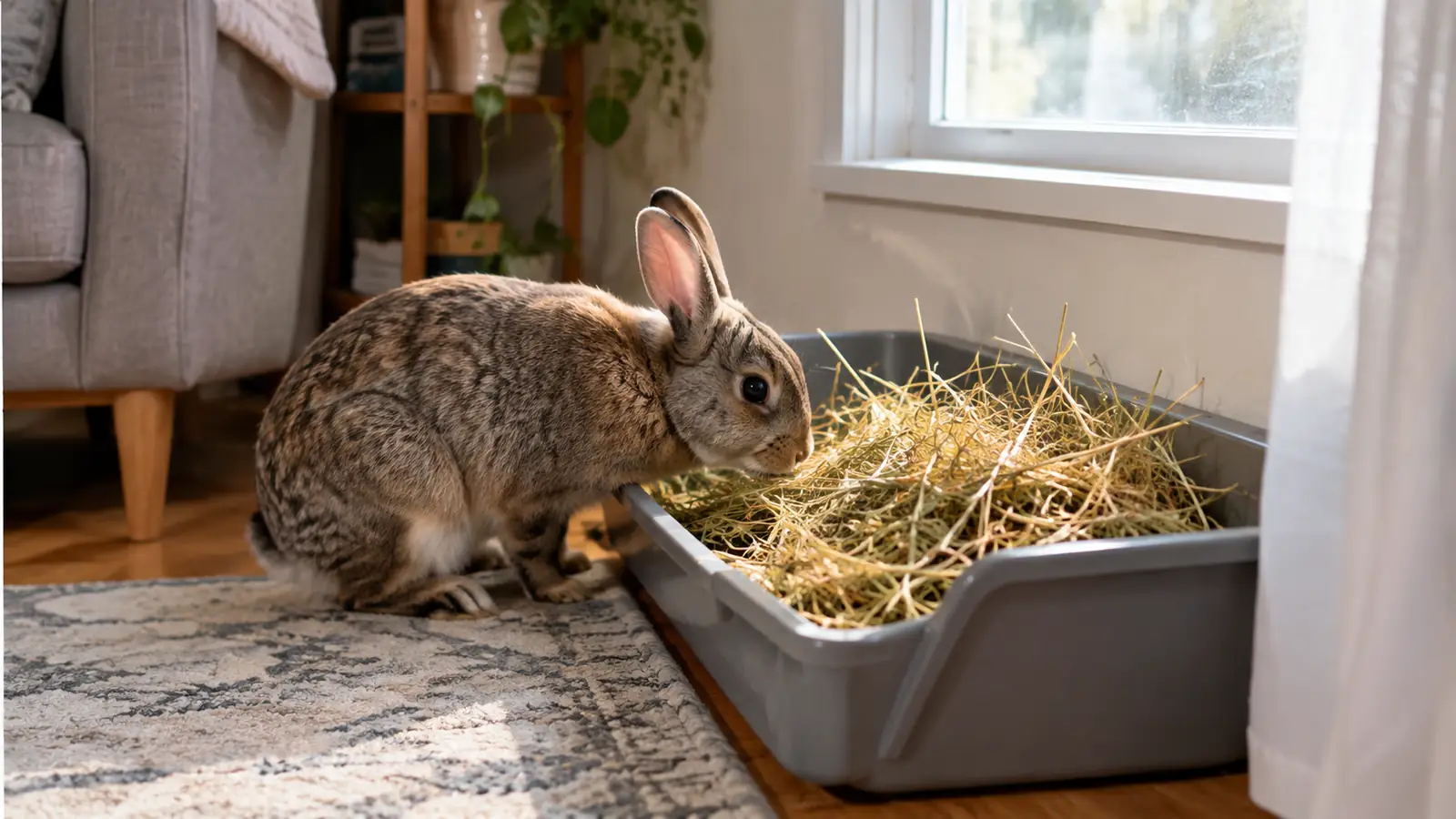
Rabbits are creatures of habit, and Clover is the most stubborn creature of habit I have ever lived with. When I first brought her home, I hung a nice hay rack on the wall of her pen, the kind you clip to the bars. She ignored it completely. I moved it next to her water bowl. Still ignored. Then I set a pile of hay directly into the corner where she already liked to sit and do her business, and she started eating within minutes.
The lesson stuck with me: hay should be where the rabbit already is, not where you think a hay rack should go. For most indoor rabbits, that means the litter box. Rabbits like to eat and poop at the same time, it is a natural instinct, and putting hay right next to the litter box, or even in it, turns the whole routine into one easy stop. Clover's setup is a corner litter box with a generous pile of Oxbow timothy hay at one end. She hops in, eats, does her business, and hops out. No fuss.
If you prefer a rack, hang it low, at head height for the rabbit, and place it within a hop of the litter box. The goal is to remove every step between your rabbit and the hay. A rabbit that has to work to reach hay will often decide it is not worth the effort, especially if pellets are closer.
Step 2: Fill it like you mean it, and refill before it gets low
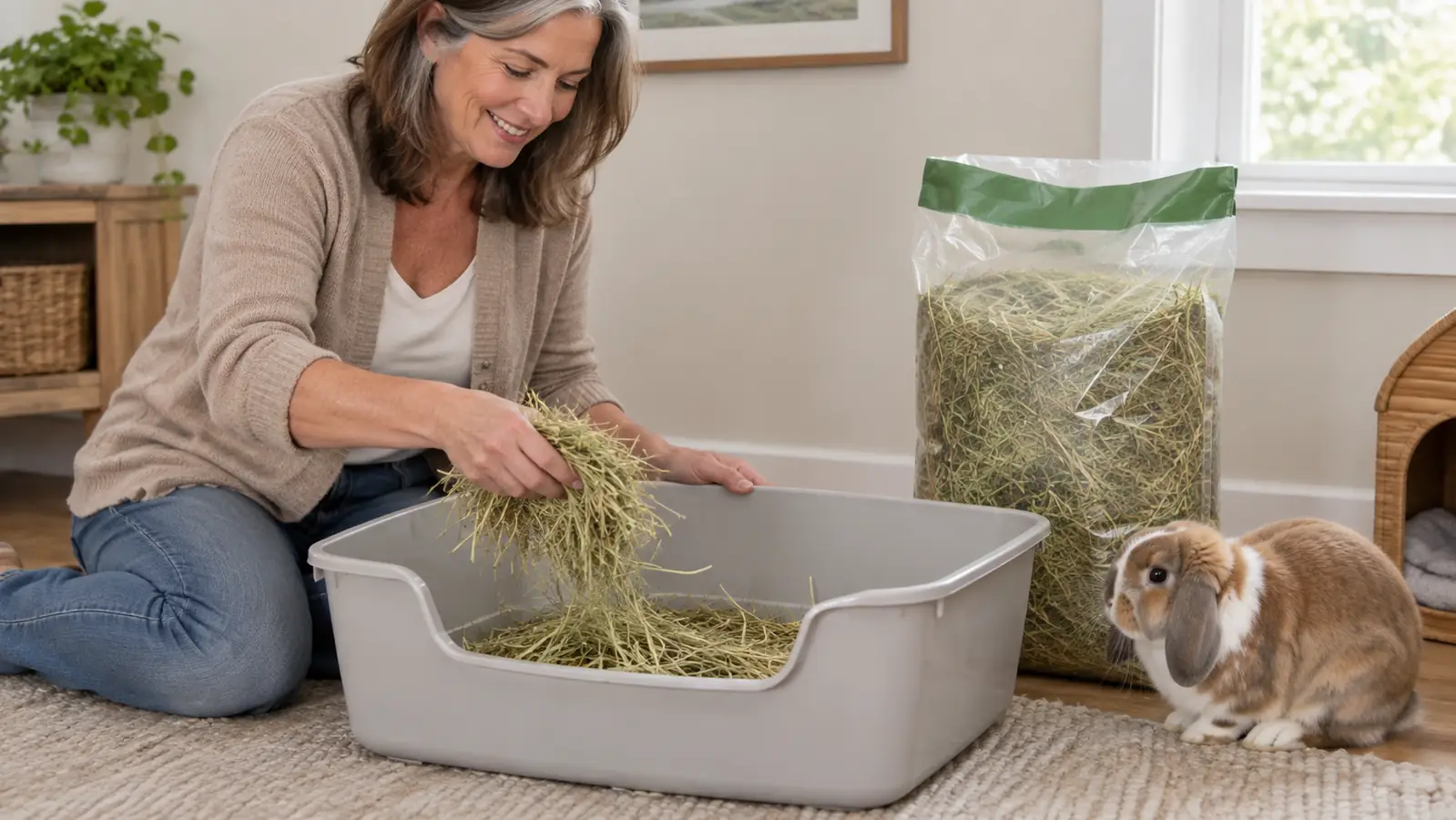
Here is the number that changed how I feed hay: a rabbit the size of Clover, about four pounds, should eat a pile of hay roughly the size of her body every single day. That sounds like a lot, because it is a lot. Rabbits are grazers, their digestive systems are built to process fiber almost constantly, and when hay runs out for even a few hours, everything about their digestion slows down.
When I switched to Oxbow Western Timothy Hay, the first thing I noticed was how much Clover actually ate. The strands are long and fragrant, and she would sit in her litter box and methodically work through a pile that I would have sworn was too big for a four-pound rabbit. I now fill her hay area twice a day, once in the morning and once before bed, and I top it off in the afternoon if she has cleared it out. The rule I use is simple: if I can see the bottom of the hay area, it is time to refill.
One warning from my early years: do not dump a full week's worth of hay in at once. Hay that sits in a litter box gets peed on, trampled, and dusty, and a rabbit will stop eating hay that tastes like the litter box. Small, fresh piles refilled often beat one giant pile that goes stale. I keep the Oxbow bag in a nearby cabinet and do a quick top-up every time I walk past.
Step 3: Keep the hay dry, clean, and away from the wet corner
Rabbits are fastidious animals. Clover will not eat hay that has touched a wet spot, and honestly, I do not blame her. The fastest way to turn a good hay eater into a hay refuser is to let the hay sit in a damp corner of the litter box. When I first started keeping rabbits, I would scatter hay all over the box, the rabbit would pee in the middle of it, and by the afternoon the whole pile was ruined.
Now I put the hay at the opposite end of the box from where Clover usually backs up to pee, and I use a litter box that is big enough for her to separate the two zones. She gets a fresh layer of paper-based litter on the wet side, and a clean pile of Oxbow timothy hay on the eating side. In the morning, I spot-clean the wet corner, add fresh litter, and move any soiled hay to the compost bucket.
A hay rack solves this problem for a lot of people, because the hay stays above the litter and out of the wet zone. If you go that route, look for a rack with wide openings, some of them have narrow slots that only let a rabbit pull out a few strands at a time, and that turns eating into frustrating work. Clover has used both setups and she eats more from a wide-open pile on a clean surface than from a tight rack.
Step 4: Use a good hay feeder to keep waste down
Let me tell you about the hay tornado. That is what I call the mess Clover makes when I just pile loose hay directly on the floor of her pen. She eats, she digs, she flings, she sits in the middle of it like a queen, and within an hour there is hay everywhere except in her mouth. Loose hay on a hard floor also gets peed on, which wastes most of it.
The fix in this house is a simple, heavy ceramic bowl that Clover cannot tip over, filled with a generous pile of Oxbow timothy hay and placed inside the pen next to her litter box. A bowl is easier for her to eat from than a hanging rack, it does not trap her whiskers, and it keeps the hay contained enough that the mess stays in one corner instead of across the whole living room. Some people swear by hay feeders that hang on the side of a pen, and those work well too, as long as the openings are big enough for the rabbit's whole head.
Whatever feeder you choose, the test is simple: does the rabbit actually eat from it, and does most of the hay end up in the rabbit instead of on the floor? If the answer to either is no, try a different setup. I have gone through hanging racks, woven baskets, and cardboard boxes, and the bowl still wins in this house.
Step 5: Store the hay so it stays fresh for the whole bag
Oxbow timothy hay comes in a sturdy bag that does a decent job on its own, but I learned the hard way that hay left in a warm, humid spot goes stale fast. Stale hay loses its smell, and a rabbit that picks hay by smell will turn up her nose at it. Clover once refused a whole bag that had sat in a sunny laundry room for three weeks, and I had to admit she was right to refuse it.
I keep the current bag in a large plastic storage bin with a lid, in a cool, dry corner of the house, and I open it only long enough to refill the bowl. If you buy the bigger bags to save trips to the store, split the hay into smaller bins or heavy paper bags so you are not opening the whole supply every time. Hay that stays dry and dark keeps its color, its smell, and its appeal for weeks.
One more storage tip: do not store hay in the garage or a shed unless you are certain it stays dry. I made that mistake once with a different brand and ended up throwing out half the bag. Oxbow arrives fresh and well-packaged, and it deserves better than a damp shelf.
What Else Helps
Unlimited hay is the foundation, but a few extras make the whole system work better. First, fresh water within a few hops of the hay. Rabbits drink more when they eat more hay, and Clover goes through her water bowl faster on heavy hay days. Second, a daily handful of fresh leafy greens, which adds variety without replacing hay. Third, keep pellets to a measured amount. A rabbit that can fill up on rich pellets all day will ignore even the best timothy hay, so I give Clover a small measured portion once a day, and the hay stays the main event.
I also weigh Clover once a month on a kitchen scale, a rabbit that suddenly stops eating hay is the earliest warning sign of a gut problem, and catching it early has saved me more than one vet bill. Hay intake is the single best health meter I have for her, and Oxbow Western Timothy Hay keeps that meter where it should be.
Clover eats more hay from a fresh pile of Oxbow timothy than she ever did from the bags I bought in my first years with rabbits. The smell and the long green strands make the difference.
The 24-Hour Rule That Changed Everything
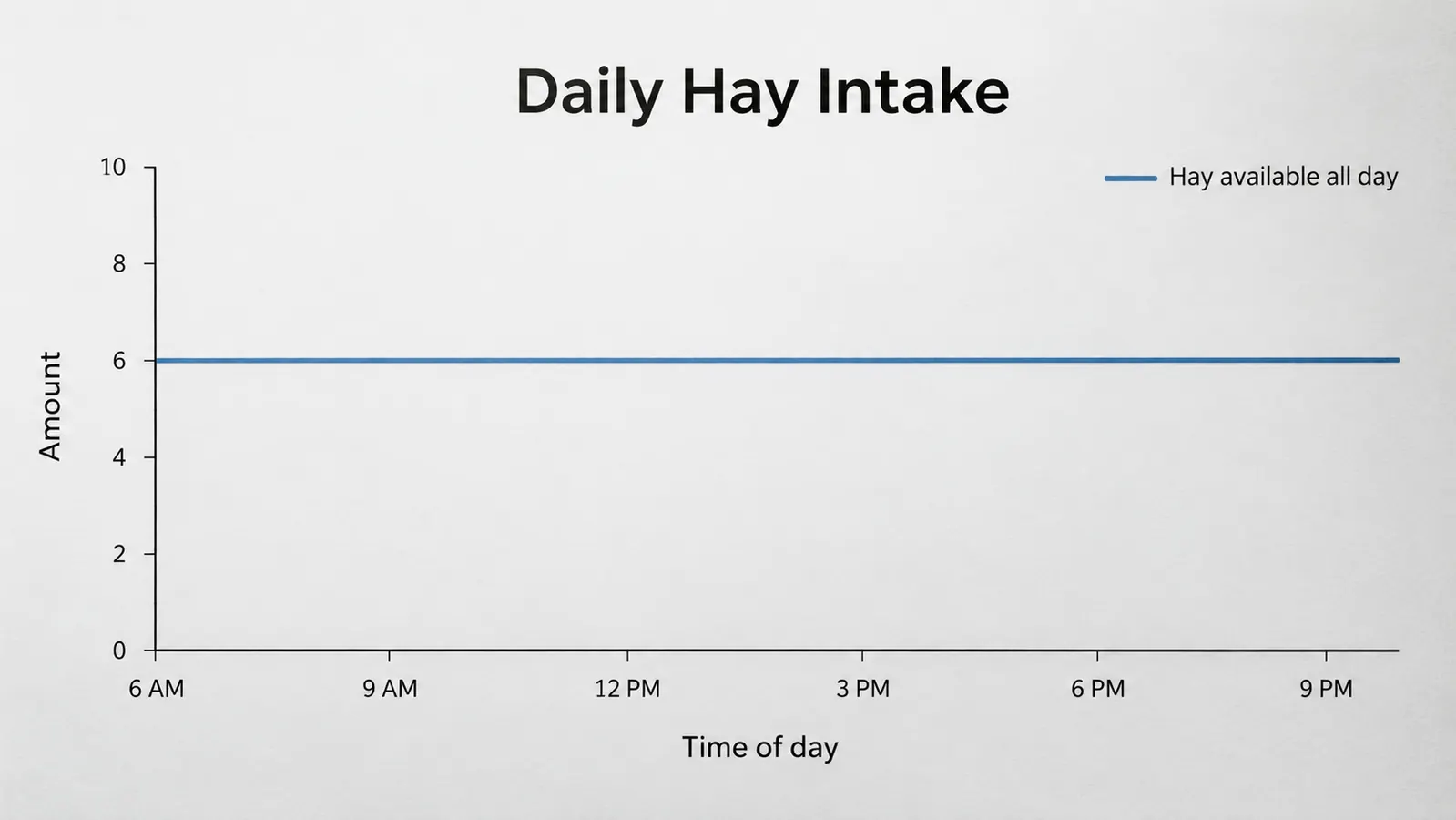
If you take only one thing from this guide, make it this: hay should never run out. I check Clover's hay before I pour my morning coffee and again before I turn off the lights, and I top it off every time I notice the bowl looking low. A rabbit that learns hay is always there stops stress-eating pellets and settles into a steady, healthy rhythm. It took me years to trust that a picky eater would eventually choose good hay when it was always available. Oxbow proved me right, and I think your rabbit will surprise you too.
Set your rabbit up for a lifetime of good hay days
A bag of Oxbow Western Timothy Hay, a clean bowl, and a twice-daily refill habit are all it takes to start. Your rabbit gets the fiber she needs, and you get the peace of mind that comes from knowing the most important part of her diet is handled. Check today's price on Amazon.
Amazon Check Today's Price on Amazon →