
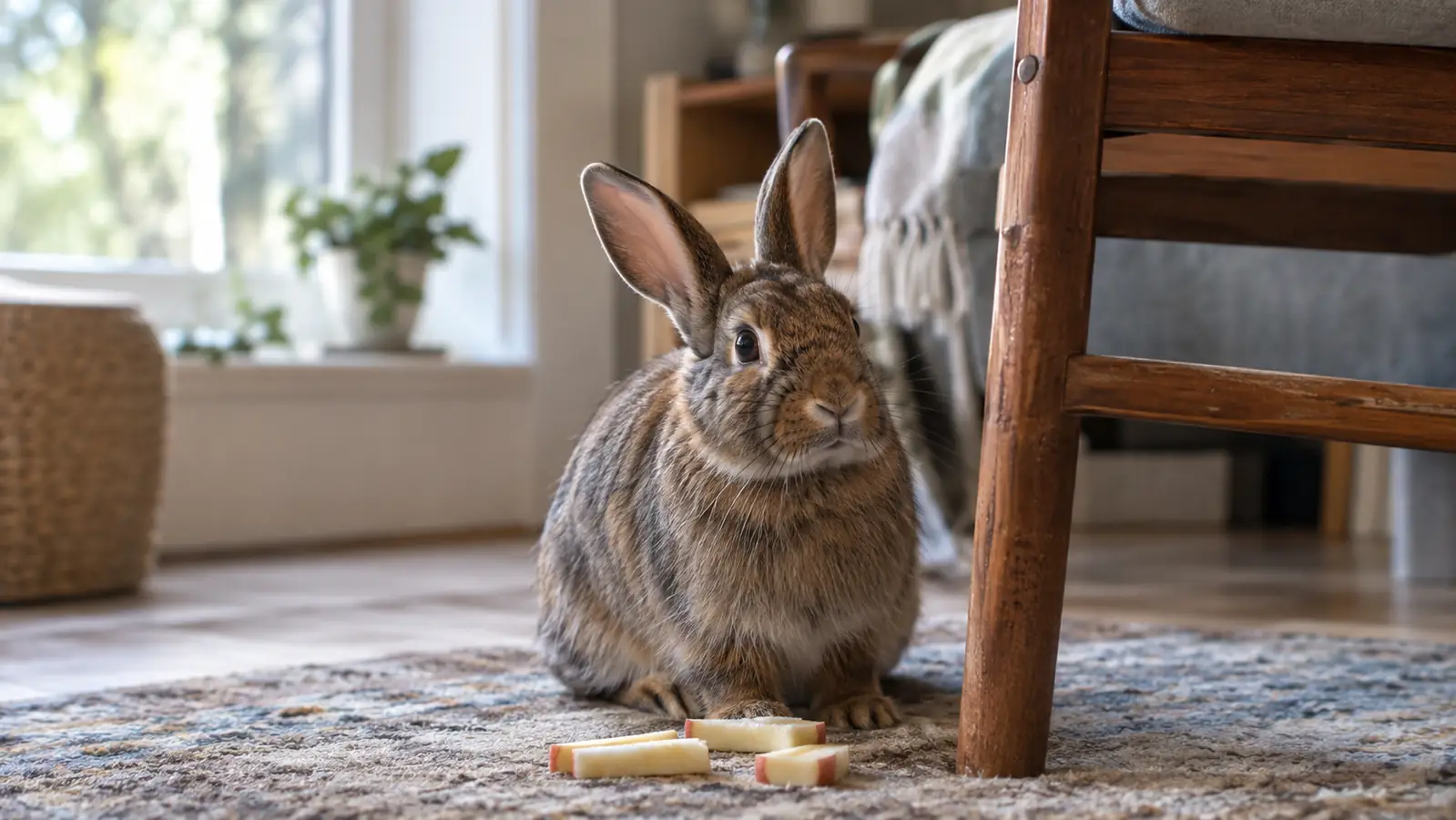
Every rabbit owner I know has the same story. You bring home a sweet little bunny, set up a nice pen, and within a week you find teeth marks on the leg of your favorite chair. Clover, my four-year-old Holland Lop, has cost me two baseboards and the corner of a bookshelf. She is not being naughty. She is being a rabbit.
A rabbit's front teeth grow constantly, and chewing is how they keep them at the right length. You cannot train that instinct out of them, and you should not try. What you can do is give them something better to chew than your furniture. That is the whole idea behind Kaytee Apple Orchard Sticks. They are a safe, natural chew that gives Clover something to work on, and they have saved a lot of corners in my living room.
Give Your Rabbit a Better Job to Do
Kaytee Apple Orchard Sticks give your rabbit a safe, natural chew that protects your furniture. See today's price on Amazon.
Amazon Check Today's Price on Amazon →Why Rabbits Chew in the First Place
Rabbits chew for three reasons: dental health, boredom, and the simple fact that wood feels good on their teeth. Their teeth grow about two to four inches a year in the wild, and they need tough plant material to wear them down. A house rabbit living on soft pellets and hay still has the same drive. If you do not give them something to chew, they will find their own project.
That is why the furniture takes the blame. Chair legs, baseboards, table edges, and even drywall all look like perfectly good chewing material to a rabbit. They do not know that the corner of your sofa costs money to repair. They only know that it is the right shape, the right height, and it is right there.
The good news is that chewing behavior is predictable. Once you understand why your rabbit is chewing, you can set up the room so the furniture is not the most appealing option. It takes a little observation and a little patience, but it is very doable.
Why Apple Sticks Work So Well
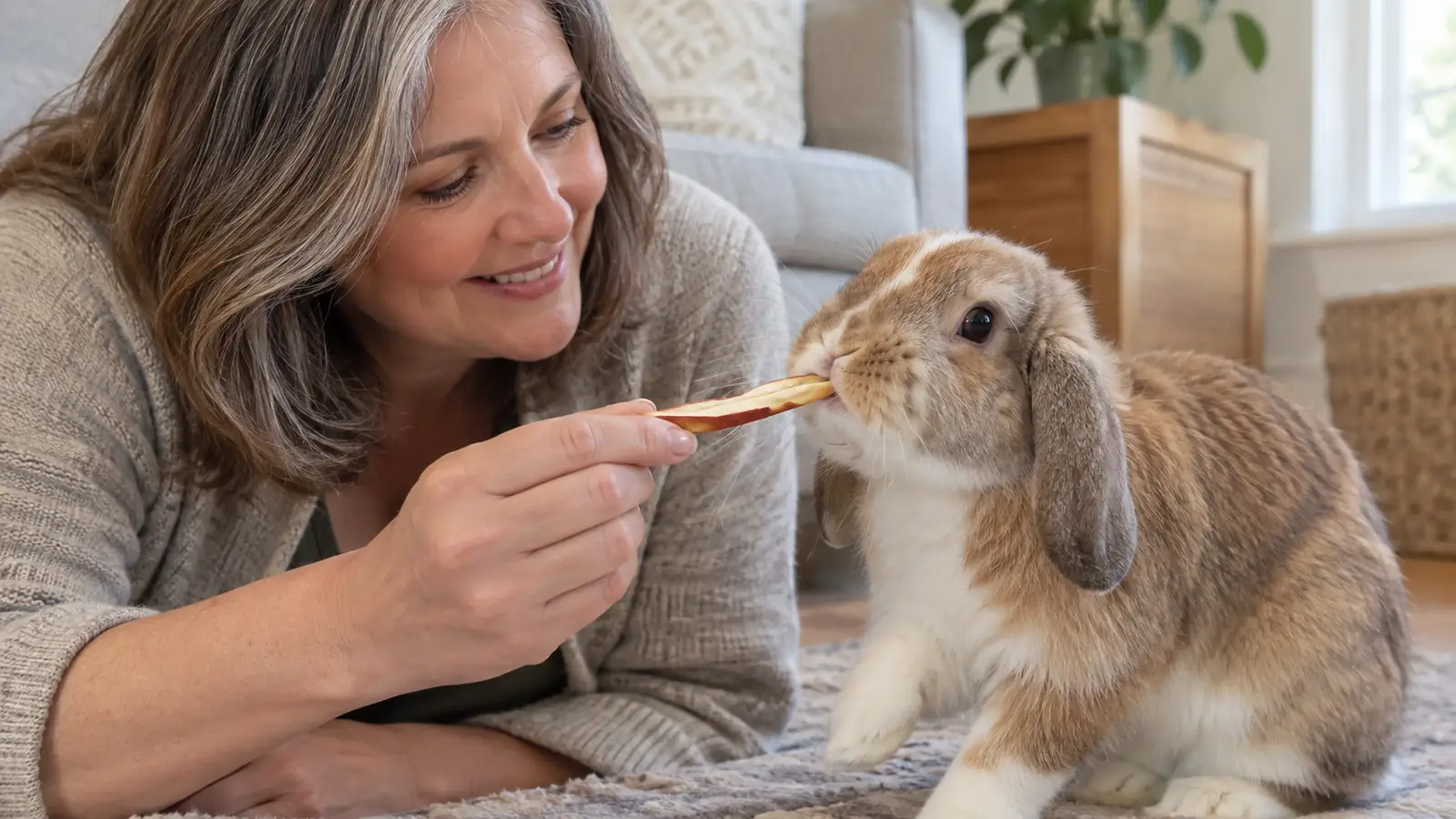
Apple wood has been a favorite chew for rabbit owners for a long time, and for good reason. The wood is firm enough to give the teeth a real workout, but not so hard that it damages them. The texture is satisfying to gnaw on, and most rabbits seem to like the mild taste. I have tried other chews over the years, and none of them got the same enthusiastic reaction from Clover.
Kaytee Apple Orchard Sticks come in a convenient pack of ten, which means I always have a fresh one ready. They are sized for rabbits and other small animals, so they are easy for Clover to pick up and hold. The sticks are also simple to place around the house, and because they are a natural product, I do not worry about her chewing them in her pen or in the living room.
Step 1: Put the Sticks Where the Chewing Already Happens
Start by watching where your rabbit chews. Not where you expect them to chew, but where you actually find tooth marks. For Clover, it is the left side of the bookcase and the corner of the coffee table near the couch. Those are her favorite spots, and no amount of telling her no has ever changed that.
So I put a Kaytee Apple Orchard Stick right next to those spots. One stick leaned against the baseboard, another on the floor by the table leg. The idea is to make the chew toy easier to reach than the furniture. When Clover goes to investigate the corner, she finds the stick first.
You might need to try a couple of placements before it clicks. Rabbits have their own opinions about where things belong. Give it a few days and watch what happens. If a stick keeps getting ignored, move it a few inches. The goal is to make the right choice the easy choice.
Step 2: Make the Sticks the Easiest Thing in the Room to Chew
A rabbit will usually pick the most convenient chew. If the furniture is right in front of them and the apple stick is across the room, the furniture wins. So keep the sticks close to their favorite hangouts, and refresh them often. A stick that has been sitting in the same spot for a week is less interesting than one that just appeared.
I keep a small bowl of sticks on a low shelf in the living room. When Clover wanders over, she can grab one without any help from me. I also tuck a stick into her pen at night. She chews on it while she settles down, and it keeps her busy during the hours when I am not watching.
It also helps to offer the stick at the exact moment your rabbit starts to investigate something they should not touch. I keep one in my pocket when Clover is free roaming. The second she looks at the baseboard, I put a stick on the floor a few feet away. Nine times out of ten, she goes for the stick.
Step 3: Protect the Corners That Tempt Them Most
While you build the chewing habit, protect the spots that are getting the most damage. I used a few simple barriers for the places Clover loves most. A small section of smooth plastic corner guard, or even a piece of cardboard taped around the base of a table leg, can break the habit before it becomes a routine.
The key is to make the furniture taste or feel unpleasant without hurting your rabbit. Some owners use a bitter apple spray made for pets. You can also cover the corner with something flat and hard, because rabbits prefer a little grip when they chew. A smooth surface is much less appealing than a wooden edge.
This is not about punishment. It is about making the wrong choice less rewarding while the right choice gets more rewarding. Once Clover has been going for the apple sticks for a couple of weeks, I can remove some of the guards. The habit has already shifted.
Step 4: Build a Daily Chew Routine
Rabbits are creatures of habit. If chewing an apple stick becomes part of their daily rhythm, they will start to seek it out on their own. For Clover, the routine looks like this: a fresh stick in the morning before I leave, another one when she gets her evening hay, and one more if she seems restless during the evening.
You do not need to give them unlimited sticks. One or two a day is plenty for most rabbits, and you can break a stick in half to make it last longer. The important thing is consistency. When the rabbit learns that a fresh stick shows up every day, they will start to check the usual spots on their own.
I have also noticed that Clover chews more when she is bored than when she is relaxed. If she has had a long run around the room and some time to explore, she is less interested in chewing everything in sight. So the routine includes playtime, not just chew time. A tired rabbit is a rabbit that is not redecorating your house.
Step 5: Watch for Boredom and Switch It Up
No matter how good a chew is, a rabbit can get bored with it. That is why I keep a few different textures in the house. Kaytee Apple Orchard Sticks are the everyday favorite, but Clover also gets the occasional cardboard tube, a plain wicker ball, or a fresh branch from a safe tree. Variety keeps her interested and keeps the furniture safe.
Watch how your rabbit responds over a few weeks. If they suddenly stop chewing the sticks and go back to the table leg, it might be time to change the location, the time of day, or the texture. Sometimes just moving the stick to a new spot is enough to make it interesting again.
You should also check the sticks themselves. A stick that has been chewed down to a small nub is less satisfying. Replace it with a fresh one. If the old one has been lying around for weeks and your rabbit is ignoring it, throw it out and start again. Fresh always wins.
How Long Until the Furniture Is Safe?
The honest answer is that it depends on your rabbit. Clover started reaching for the apple sticks within the first couple of days because she already loved anything that came from a tree. But the habit of ignoring the furniture took longer to build. It was about two weeks before I stopped finding fresh teeth marks on the baseboards, and a full month before I felt comfortable leaving her alone in the living room for an evening.
Young rabbits and newly adopted rabbits may take longer, especially if they have already practiced chewing the wrong things. Be patient and consistent. Every time your rabbit chooses the stick over the furniture, the habit gets a little stronger. And if you have a particularly determined chewer, keep the barriers up for a few extra weeks. It does not mean the sticks are not working. It means your rabbit is still learning.
What Else Helps
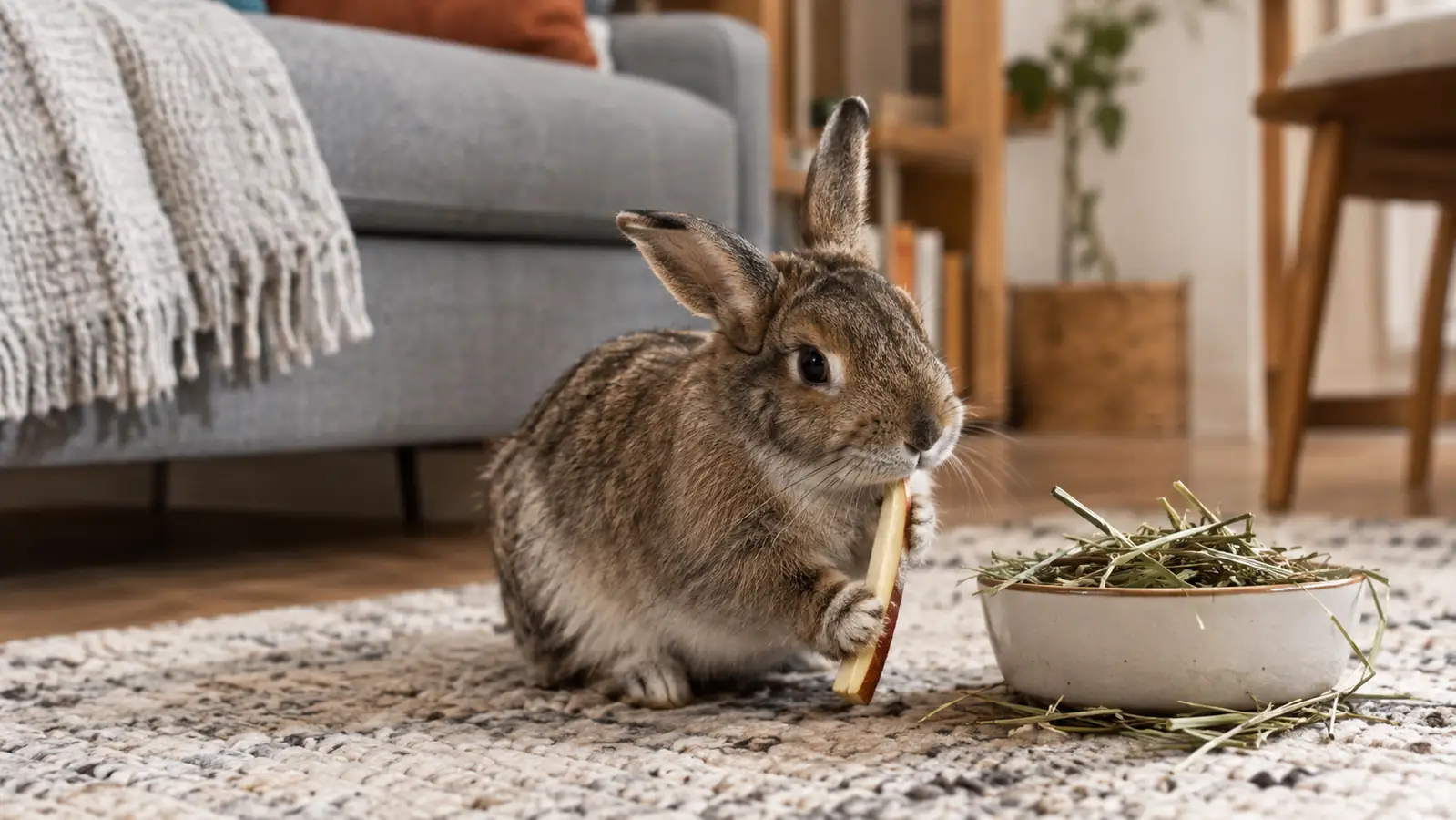
Apple sticks are the workhorse, but they work best as part of a bigger setup. Make sure your rabbit always has good quality hay, because hay is the most important part of dental health and digestion. Add a few safe toys and a little daily exercise. Keep an eye on their teeth during regular grooming, and ask your vet to check them at least once a year. If you ever notice your rabbit drooling, dropping food, or suddenly refusing to chew, that is a reason to call the vet, not a reason to add more sticks.
I also rotate Clover's toys every few days so she does not lose interest in her whole setup. A cardboard box with a hole cut in it, a paper bag, and a few apple sticks on the floor can keep a rabbit busy for a long time. The more interesting the environment, the less likely your rabbit is to treat the sofa as entertainment.
What Not to Do
Do not punish your rabbit for chewing. Yelling, tapping their nose, or chasing them away from the furniture will only make them nervous, and a nervous rabbit is more likely to chew out of stress. I have made that mistake with rabbits I kept before Clover, and it never fixed the behavior. It just made them hide when they wanted to chew.
Do not remove all chewing options and hope for the best. A rabbit with nothing to chew will find something, and it will usually be something you care about. The answer is almost always more acceptable chewing material, not less. That is why I keep a steady supply of Kaytee Apple Orchard Sticks and a few other safe chews around the house at all times.
One more thing: keep the sticks off the floor in places where they get stepped on or covered in dust. I keep a couple of spares in a sealed container and only put out what Clover will chew in a day or two. That way every stick she finds is fresh, clean, and worth investigating.
Once I put the sticks in the spots Clover already loved, the baseboards stopped getting new teeth marks within about two weeks.
Ready to Protect Your Furniture?
Kaytee Apple Orchard Sticks are a simple way to give your rabbit the right thing to chew. Check today's price on Amazon.
Amazon Check Today's Price on Amazon →