
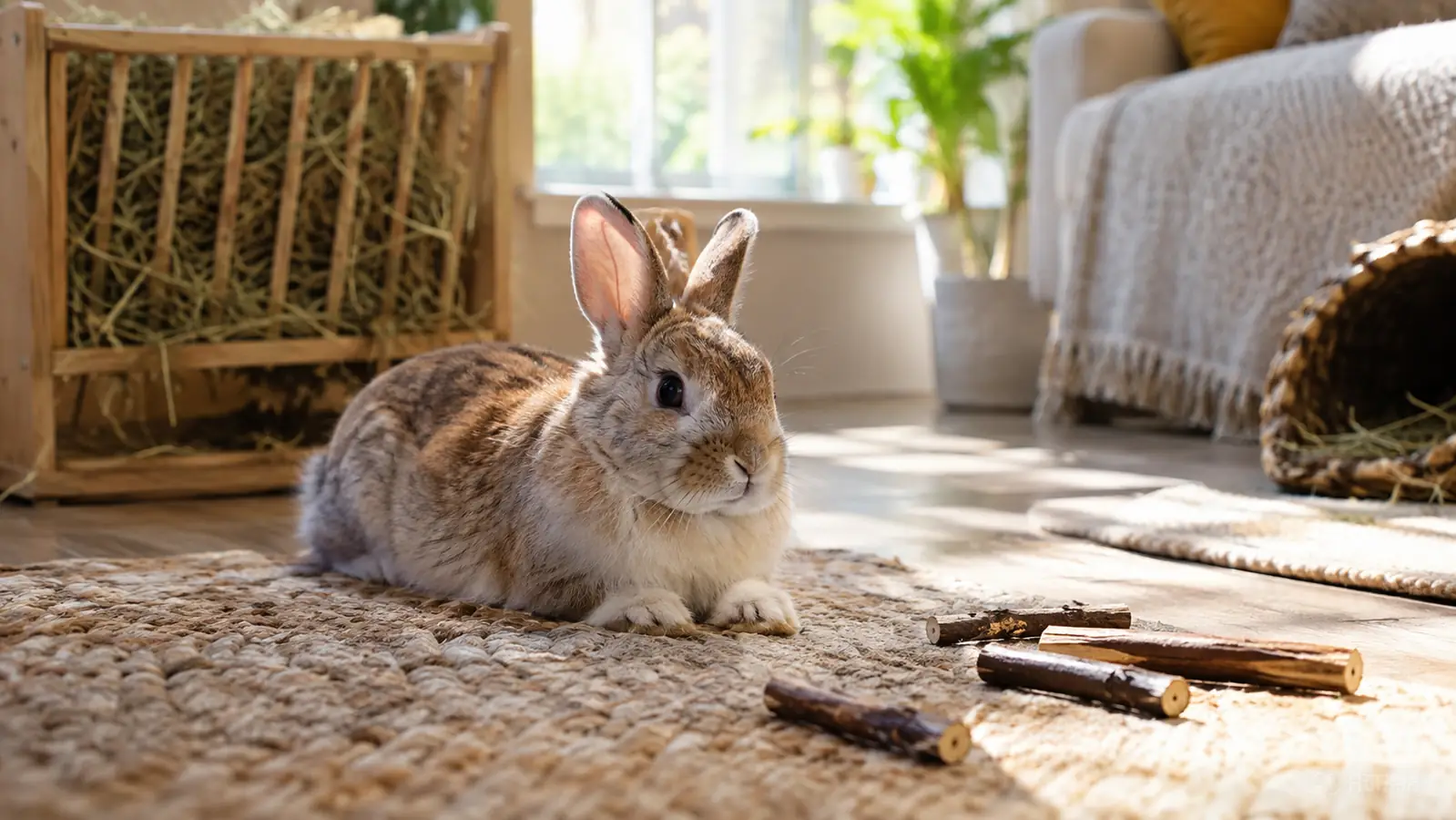
Nobody warned me that the first bag of apple sticks I brought home would still be mostly full a week later. Not because my rabbit devoured them. Because she ignored them. I am telling you this right at the top because the product photos make Kaytee Apple Orchard Sticks look like the easiest chew in the rabbit aisle, and the reality with a picky indoor rabbit is rarely that simple. This is my honest review after buying this exact bag more times than I can count.
A little context before we get into the details. My name is Hazel Brightwater, I live in a small house outside Sacramento, and I have kept house rabbits for about fifteen years. Right now I share my living room with Clover, a four-year-old Holland Lop who weighs about four pounds and chews like it is her job. She is also the pickiest eater I have ever owned, which makes her a useful test subject for any chew marketed to rabbits. If she approves of something, it earns a permanent spot in this house. If she ignores it, I learn something too. I am also going to be honest about what this review is not. These sticks are not the most exciting thing in my rabbit supply drawer, and I am not going to pretend they are. They are a small, useful product that does a small, useful job. My hope is that this review helps you decide whether that job is one you need done, so you do not waste money on a bag of twigs your rabbit treats as furniture.
The Quick Verdict
Safe, plain apple wood at a fair price, and most rabbits will eventually chew it. Just know the sticks are thin, they do not last long with a serious chewer, and a picky rabbit may need a few tries before they show interest.
Amazon Check Today's Price →A safe, simple chew that is worth trying
Kaytee Apple Orchard Sticks are plain apple wood with no added flavoring or dyes, which is exactly what I want to hand my rabbit. If your rabbit chews at all, this is a low-risk thing to put in the cart. I keep a bag in the pantry.
Amazon Check Today's Price on Amazon →How I've Used It
I have been through this particular bag at least six times over the last few years, which is the difference between an honest review and a first impression. My routine is simple. Clover gets one stick in the evening when she settles into her pen for the night, and I tuck a second one into her hay rack in the morning so she finds it while she eats breakfast. Some days she works on a stick for an hour. Some days she picks it up, carries it to the corner of the rug, and ignores it for two days. Both reactions are completely normal for a rabbit.
I also handed these sticks to rabbits I have kept before, because I wanted to compare reactions across different personalities, and to a friend's guinea pig, because the bag claims it is fine for small animals and I wanted to see if that held up. The guinea pig chewed through one in about twenty minutes and looked mildly insulted when I offered a second. The rabbits treated the sticks as a casual snack rather than a long project. That distinction matters, and I will come back to it.
One note on how I did not test them. I did not sit in a chair timing how fast a rabbit could destroy a stick while ignoring everything else, because that is not how real rabbits live. Real rabbits chew between naps, snacks, and staring matches with the vacuum cleaner. My impressions come from ordinary days, not a laboratory, and I think that makes them more useful, not less.
What Nobody Tells You About the Size
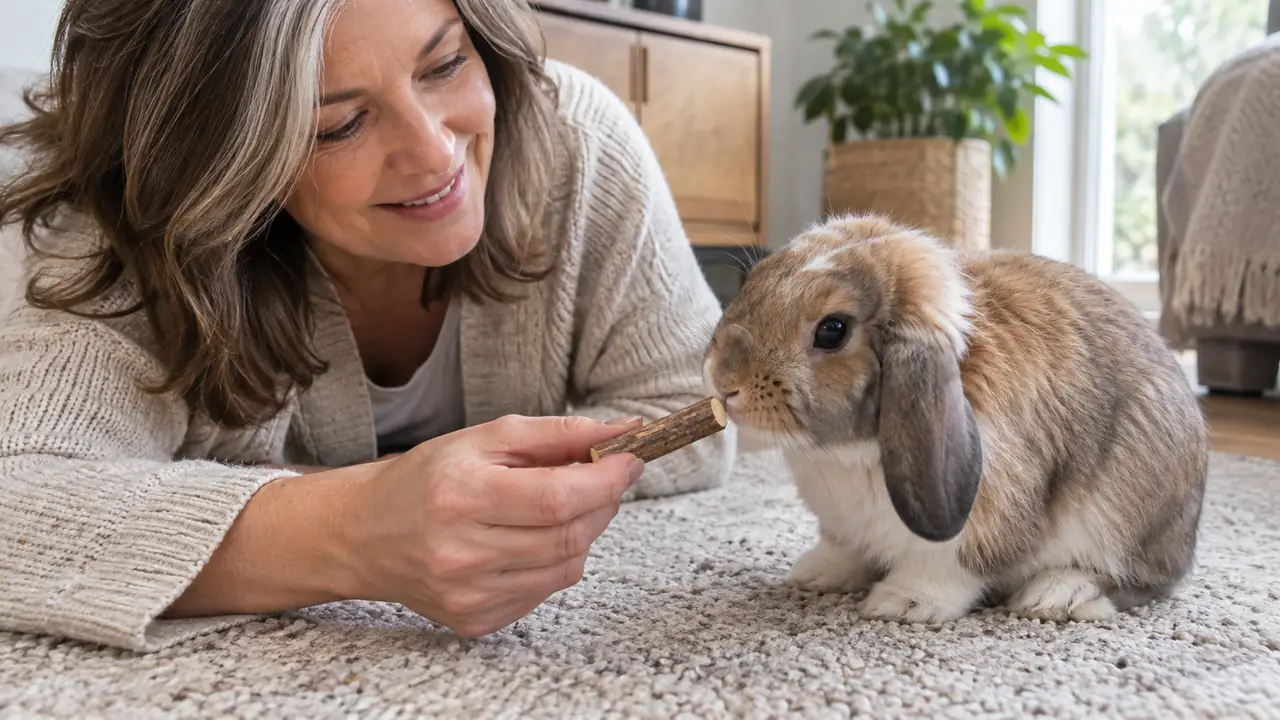
The honest thing that most reviews do not mention is that these sticks are thin. Not flimsy, exactly, but closer to a thick pencil or a slim marker than the branch your rabbit might drag in from outside. The listing says ten sticks per bag, and that number is accurate. What it does not prepare you for is how quickly a determined chewer can reduce one stick to a pile of splinters.
That is not a complaint, because the splinters are safe and even satisfying for a rabbit to gnaw. Apple wood is one of the woods commonly recommended for small animals, and the shredding action is exactly what exercises the front teeth. But if you are expecting a chew that keeps your rabbit busy for a whole evening, adjust your expectations now. A serious chewer can go through one stick in a single sitting, and a bag of ten will not last a fortnight in a house with an enthusiastic rabbit.
There is also natural variation between sticks, which is true of any real wood product. Some sticks in the bag are thicker, some are thinner, and a few arrive with the bark already peeling at the ends. None of that makes them unsafe. It just means the bag is not as uniform as the product photo suggests, and I would rather tell you that up front than have you wonder whether you received a bad batch.
The Truth About Apple Wood and Rabbit Teeth
Here is the part that matters most, and the part that marketing rarely says clearly. Apple wood sticks are good for a rabbit's front teeth, the incisors, because chewing wears them down. But the heavy lifting for dental health is done by hay. A rabbit that eats unlimited grass hay keeps its back teeth in check through the grinding motion of chewing, and no chew stick can replace that.
I say this because every so often a new rabbit owner writes to me convinced that a bag of sticks will fix a rabbit whose teeth are already overgrown. It will not. If your rabbit is drooling, dropping food, or losing weight, that is a vet visit, not a shopping list item. The sticks are enrichment and light dental maintenance for a healthy rabbit. They are not a treatment, and anyone who tells you otherwise is selling something.
The good news is that for a healthy rabbit, plain apple wood is a genuinely low-risk chew. It is natural, it has no added flavoring or dyes, and the pieces that get chewed off pass through the digestive system the way other plant fiber does. That is more than I can say for some plastic toys that claim to be chew toys, and it is the main reason I keep coming back to this brand.
One more thing I want to add here, because it surprised me when I first learned it. Rabbits need to chew even when their teeth are perfectly healthy. It is part of how they explore the world and relieve boredom. A rabbit that has nothing safe to chew will find something unsafe to chew, and that is how baseboards, cords, and chair legs get destroyed. Apple sticks are a cheap insurance policy against that.
When a Rabbit Decides They Don't Like Them
I need to be straight with you about the first bag. Clover ignored it completely for about a week. She sniffed a stick, nudged it with her nose, and then sat on it like it was a very small bench. I watched this happen and wondered whether I had wasted money on glorified twigs. It is a humbling experience to be ignored by a four-pound rabbit, and I have had it more times than I like to admit.
Then I tried a few things I have learned over years of living with picky rabbits. I wove a stick into her hay rack so she had to pull at it to reach the hay. I broke one into smaller pieces and scattered them in her litter box, which sounds odd but rabbits love to sort through things while they do their business. I also rubbed a tiny smear of banana on the end of one stick, let it dry, and offered it again. The banana trick worked within a day. After that, the sticks needed no help at all.
The lesson is that rabbits have opinions, and those opinions are not always instant. A rabbit that has never seen apple wood may need a few days to understand that it is food. That is normal, and it is not a reason to give up on the bag. It is also worth knowing that some rabbits simply never care for wood chews, and no amount of banana will change that. If that is your rabbit, spend the money on hay and a good cardboard tunnel instead.
What You Get in the Bag, Honestly
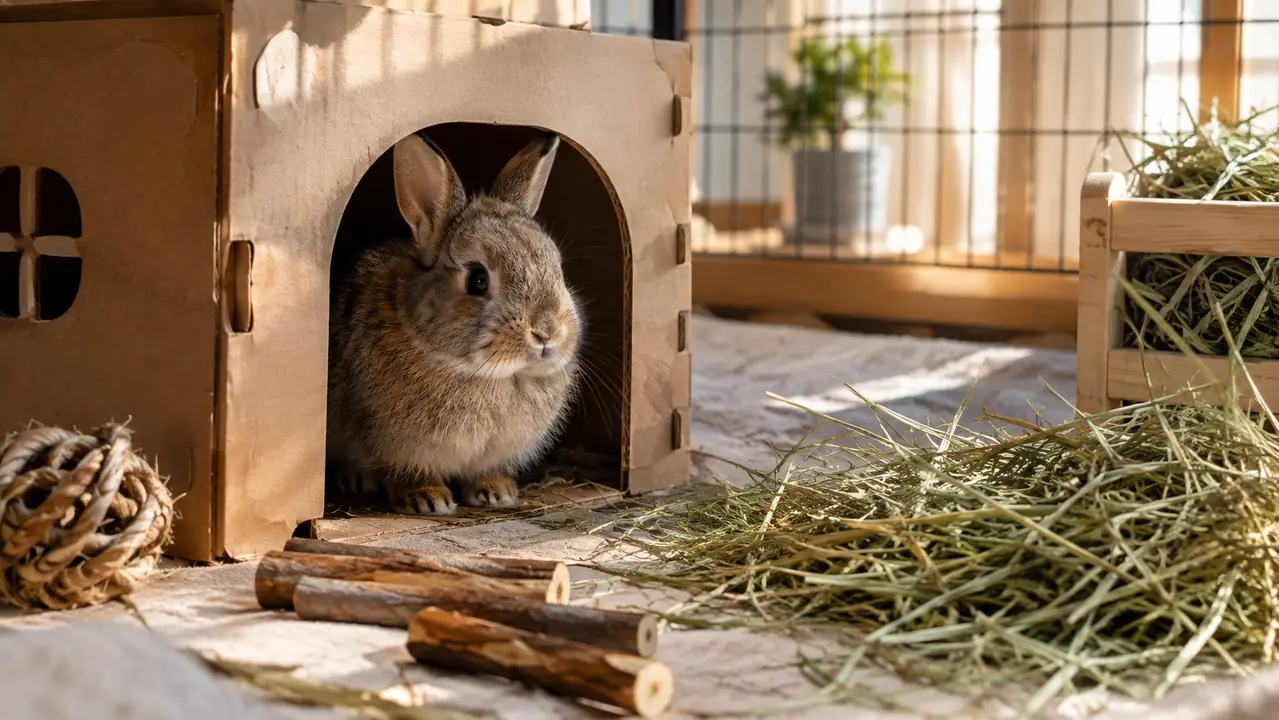
The bag is exactly what it says: ten apple orchard sticks, nothing added. There is no scent, no flavoring, no dye, and no mystery coating, which is precisely what I want in a chew. The sticks have a light, clean wood smell that is pleasant rather than chemical, and they feel dry and well cured rather than damp or sappy.
A few things are worth knowing before you buy. Some bags arrive with a little wood dust in the bottom, which is normal and harmless. A stick or two may be snapped in shipping, which does not matter because your rabbit will snap it anyway. And the bark does shed as the rabbit chews, so do not be alarmed when you find little bits of wood on the floor. It is part of the job.
I also appreciate that the brand is a familiar one. Kaytee has been making small animal supplies for a long time, and while that alone does not make a product good, it means the company has a reputation to protect. In the years I have been buying these, the bags have been consistent, the sticks have always smelled fresh, and I have never once opened one that looked stale or off.
I keep the bag in a sealed glass jar in the pantry, which may seem fussy, but it keeps the sticks fresh and stops Clover from dragging the whole bag across the living room when I am not looking. She has done that twice. A rabbit with a full bag of apple sticks considers it a personal victory.
Small Tricks That Make These Sticks Work Better
After several bags, I have figured out a few small things that improve the odds your rabbit actually chews the sticks. The first is placement. A stick lying flat in the middle of the floor is boring. The same stick poked through the bars of the hay rack becomes an event, because rabbits love to tug at things. The second is timing. Clover is most interested in chewing in the early evening, when she comes out of her afternoon nap with energy to burn. Offering a stick then gets a much better response than offering one at noon.
The third trick is variety. If I hand Clover the same thing every single day, she gets bored and starts eyeing my baseboards. If I rotate apple sticks, willow balls, and cardboard, everything stays interesting and my baseboards stay safe. These sticks work best as part of a rotation rather than the only chew in the house.
The fourth is patience, which is really the most important one. It took Clover a week to accept her first apple stick. Now she gets excited when she hears the bag crinkle. Give your rabbit time to figure out that the strange stick is food, and you will likely see the same shift.
What I Liked
- Plain apple wood with no added flavoring, dye, or coating
- Safe splintering action that gives a rabbit's front teeth real work
- Natural variation in thickness means some sticks last longer than others
- A familiar brand at a price that is easy to justify
- Works for rabbits, guinea pigs, and other small chewers
Where It Falls Short
- Sticks are thin, and a serious chewer goes through them fast
- Some rabbits ignore them for days before they catch on
- Not a substitute for hay when it comes to dental health
- Bark sheds as the rabbit chews, so expect a little mess
Apple wood is a nice chew, but hay is the real dental plan. The stick is a treat, not a treatment.
Who This Is For
These sticks are for the owner of a healthy rabbit who likes to chew. If your rabbit already works through willow balls, cardboard tubes, and anything else left on the floor, they will almost certainly enjoy apple wood too. The sticks are also handy for guinea pigs, which I tested with a friend's pig, and they make a nice addition to a hay rack or a foraging box.
They are also for owners who want a chew they can feel good about handing over. There is a real difference between giving your rabbit a piece of plain apple wood and handing over a plastic toy with a vague claim about exercise. With these, you know exactly what you are getting, and after a few days of patience, so does your rabbit.
One more group fits here: owners who are new to rabbits and worried about what is safe. If you are not sure whether a chew is okay, plain apple wood from a reputable brand is one of the safest things you can start with. It is hard to go wrong with a stick that is literally just wood, and that peace of mind is worth something.
Who Should Skip It
Skip these if your rabbit has zero interest in wood chews. Some rabbits only want hay, pellets, and cardboard, and no apple stick on earth will change their minds. You are not failing as an owner if that is your rabbit. You are just saving yourself some money, and there is nothing wrong with that.
Skip them too if you are hoping for a long-lasting toy. These are snack-length chews, not boredom busters. A rabbit that is left alone all day and needs entertainment will do better with a larger willow ball or a cardboard castle, because a single apple stick can disappear before lunch.
And if your rabbit has any sign of dental trouble, skip the shopping and see a vet first. An apple stick will not fix an overgrown molar, and delaying care makes everything harder on both of you. Chews are for healthy rabbits, not for rabbits who need treatment.
The honest verdict? These are worth trying
Kaytee Apple Orchard Sticks are plain, safe, and cheap enough that a picky rabbit does not have to cost you a fortune while you figure out what they like. I keep a bag in the pantry, and Clover keeps proving me right about them.
Amazon Check Today's Price on Amazon →