
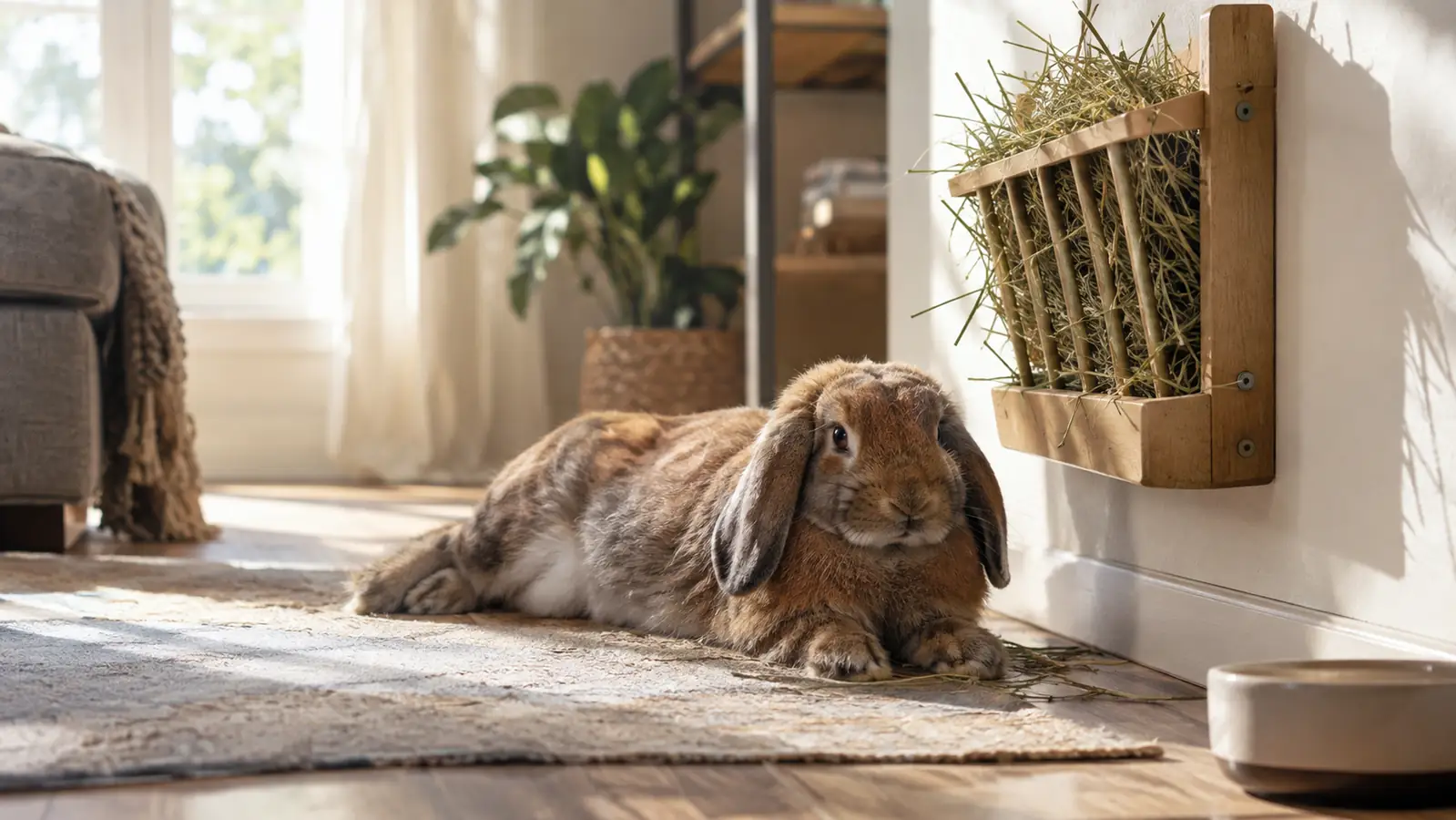
Nobody warns you that a rabbit's entire life revolves around hay. Not the pellets in the bowl, not the daily salad, hay. It should be about 80 percent of what a healthy rabbit eats, and I learned that lesson the hard way when I brought Clover home four years ago. She is a Holland Lop with strong opinions about everything. The first three hays I tried ended up as bedding instead of dinner. She sniffed each bag, pulled out a piece, dropped it, and looked at me like I had failed her. Then a friend who has kept rabbits for years handed me a bag of Oxbow Western Timothy Hay and told me to stop being cheap.
This is the honest version of that story. Not a list of marketing claims, not a rehash of the product page. I have bought Oxbow Western Timothy Hay in the 40 ounce bag for the better part of a year, watched a genuinely picky eater actually eat it, and found the things nobody puts on the label. Some of them are very good. A few of them will annoy you. All of them are worth knowing before you click the buy button, because hay is not a one-time purchase. It is a recurring expense and a daily ritual, and you should know exactly what you are getting.
The Quick Verdict
Oxbow Western Timothy Hay is the most reliable hay I have found for a picky house rabbit, and I have now bought six bags over five months. It is leafy, fresh, and consistent bag after bag, with two honest flaws: it costs more than the store brand, and the bottom of the bag is dustier than the top. For Clover, the tradeoff has been worth every cent, and I will keep ordering it.
Amazon Check Today's Price →A hay your rabbit actually eats is the cheapest hay you can buy.
I wasted three bags on a picky eater before this one. Check today's price on Amazon and read the recent reviews before you decide.
Amazon Check Today's Price on Amazon →How I've Used It
Clover has been with me since she was a baby, and she has never met a hay she could not complain about. She sniffs, she circles, she pulls a piece out of the rack, chews it twice, and drops it. Then she looks at me like I am the problem. So when I say this hay passed, I mean the specific test that matters in my house: she ate it within an hour of opening the bag, and she kept eating it for weeks. That has never happened with any other brand.
I kept a simple log for this review because I did not trust my memory. Bag number, date opened, how fast Clover worked through it, how much ended up on the floor, which is a real number with rabbits, and how the hay looked and smelled from the top of the bag to the bottom. I did this across six bags over about five months, from early January through late May. I write the opening date on the bag in marker, weigh what Clover leaves behind, and note which day she starts losing interest. Bag three lasted nineteen days. Bag five lasted twenty-three. Numbers like that sound dull, but they are the only honest way to review a product a rabbit eats. That is the honest basis for everything you are about to read.
One more thing before the details. I am not a veterinarian, and nothing here is medical advice. Hay choice matters enormously, but if your rabbit stops eating or stops producing droppings, that is an emergency, and no hay review in the world replaces a trip to the vet. Now let me tell you what nobody tells you.
What Nobody Tells You About Hay
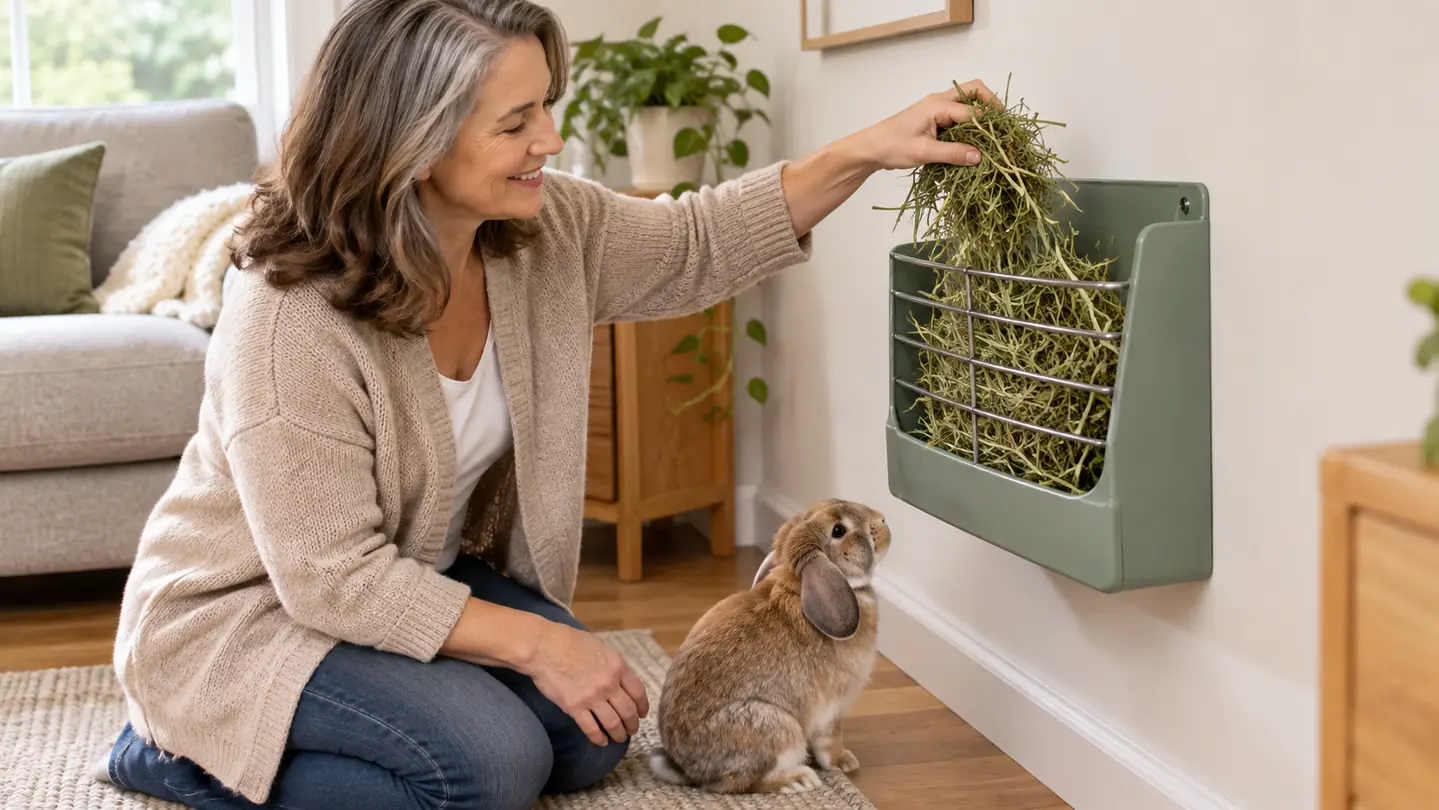
The first thing nobody tells you is that hay is the meal, not a side dish. Rabbits need an endless supply of good grass hay, and timothy is the classic choice, because the fiber keeps their digestive system moving and their teeth worn down. Rabbit teeth grow continuously, and chewing hay is the main way they keep them in check. No hay means dental problems, and dental problems mean vet bills that make a good bag of hay look very cheap.
The second thing nobody tells you is that rabbits are individuals with strong preferences. Some will eat any hay you put in front of them. Clover is not that rabbit. She wants leafy pieces, she dislikes thick stalks, and she can tell the difference between a fresh bag and one that has been sitting in a warehouse for months. That is why consistent freshness is the first thing I look for in any hay, and why it matters so much in an honest review.
The third thing is the one I repeat to every new owner I meet: the hay in the pet store aisle has often been sitting there for a long time. The bag on the shelf can look perfectly fine and smell like nothing, because it has gone stale. Fresh hay has a sweet, grassy smell that fills the room when you open it. That smell is the best freshness test there is, and it is the first thing I check with every bag of Oxbow that arrives.
The fourth thing, and the one that surprises most new owners, is the sheer volume. A rabbit should eat a pile of hay roughly the size of its own body every single day. For Clover, that is a small mountain of hay, and it means the 40 ounce bag is not a luxury purchase. It is the single biggest line item in her monthly care, which is exactly why picking a hay she will actually eat matters so much.
What Is Actually in the Bag
Oxbow Western Timothy Hay is a second cutting timothy hay, which in plain language means it is leafier and softer than the stalky first cutting that many cheaper bags use. For a picky rabbit, this matters more than you would think. Clover will pick the leafy pieces out first and leave the stems, and with this hay there are enough leafy pieces that she does not end up abandoning most of the bag. A stalky hay, by comparison, leaves her sorting through it and then walking away.
The pieces are mostly green and soft, with some golden bits mixed in, and the hay has that fresh, sweet barn smell that tells you it was not sitting around for a year. I have found occasional small stems and a little dust in every bag, which is normal for any hay on earth, but nothing like the crumbly brown material I have gotten from cheaper brands. The color and smell have been consistent across all six bags I have opened. The sixth bag arrived on a Wednesday in late May, the morning after a hot spell broke. I opened it on the back porch, and the smell of fresh cut grass was so strong that I stood there a second longer than I needed to. Clover was at my feet before I carried it inside. That has happened with every Oxbow bag. It has never happened with the store brand.
The 40 ounce bag is a sensible size for one rabbit. In my house it lasts about three weeks, sometimes a little less when Clover is in a hay-heavy mood. If you have two or more rabbits, you will go through it much faster, and Oxbow sells larger sizes that start to make more sense. For a single indoor rabbit, though, the 40 ounce bag is a good place to start without committing to more hay than you can store.
One practical note on checking freshness when a bag arrives. I look for three things before I even open it: no holes in the bag, no musty smell from the outside, and a bag that does not feel damp. Then I open it and take a breath. If it smells sweet and grassy, it is good. If it smells flat or dusty, I know to expect a pickier rabbit at dinner time.
The Picky Eater Test
Here is the honest heart of this review, and the part I wish someone had told me before I wasted money on three bags of hay my rabbit refused to eat. Clover eats this hay. She does not just eat it, she burrows into it, which is the highest compliment a rabbit can give. But she still has preferences within the bag, and pretending otherwise would be dishonest.
She eats the leafy pieces first, leaves some of the thicker stems behind, and every so often she decides the hay in the rack has been there too long and demands a fresh handful. That is not a flaw in the hay. That is a rabbit being a rabbit. My first system was simple: fill the rack in the morning, fill it again at night. It failed within a week. By day three the top layer had gone flat, and Clover was pulling out mouthfuls, chewing once, and dropping them on the rug. Hay that sits for twelve hours loses its appeal. The fix, learned through trial and error, was to offer two small handfuls a day instead of filling the rack once. The floor waste dropped by roughly half, and her intake went up. I could see it in the litter box before I could see it anywhere else.
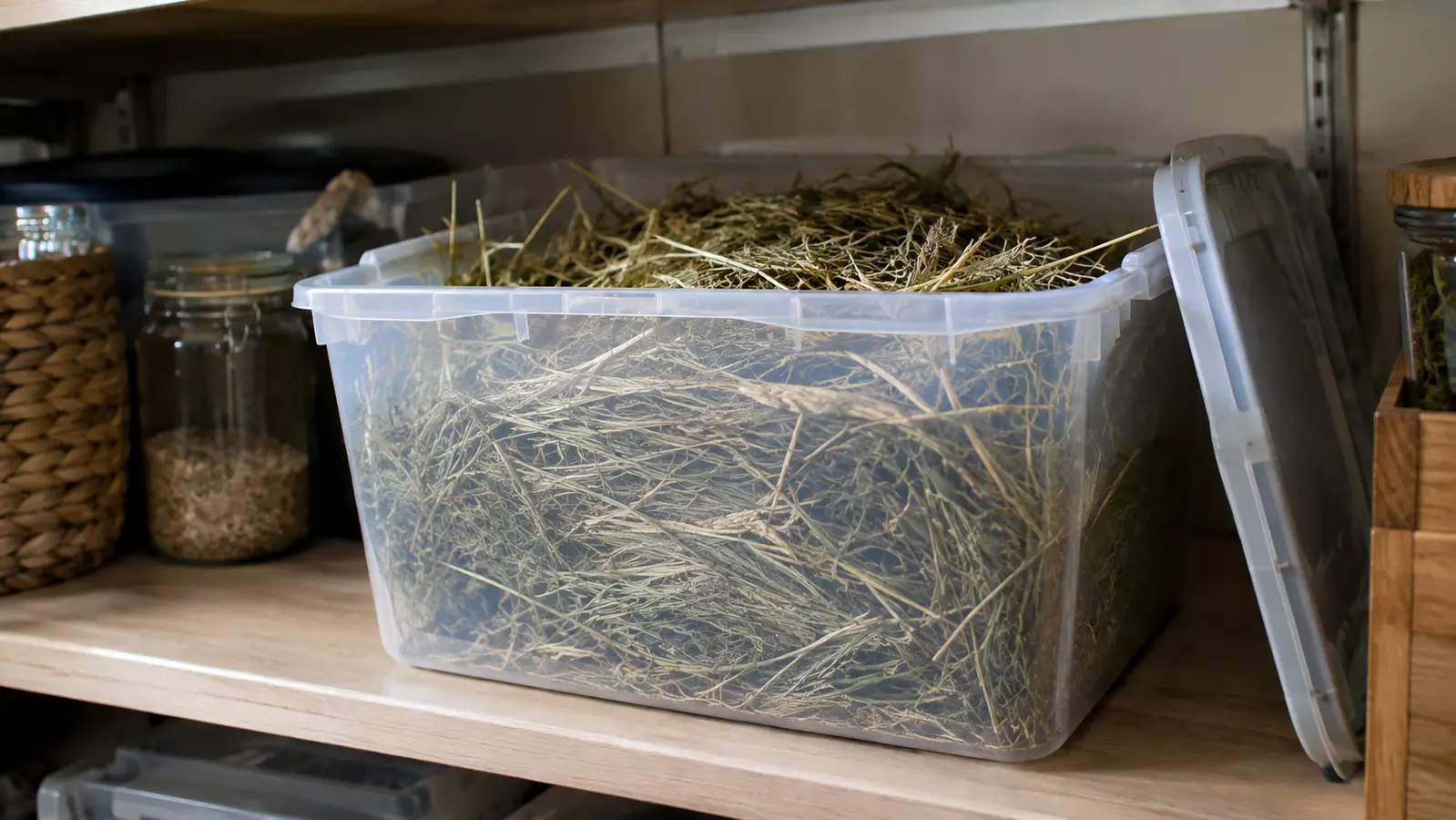
I also learned that storage is half the battle. I keep the bag sealed inside a large plastic bin in the pantry, away from humidity and direct sun. Hay that sits open on the floor picks up moisture and loses its smell, and a rabbit that smelled fresh hay yesterday will absolutely refuse the same hay today if it has gone stale. That is not the hay's fault, but it is the reason some owners think this product stopped working when the real problem is how they stored it.
One more observation from the log. Clover's intake stays steady on this hay, which is the quiet metric that matters most. With the cheaper hay, her eating would trail off by the second week, and I would find myself throwing away more than she ate. With Oxbow, the pile in her litter box says she is eating consistently, and that consistency is the whole point of buying hay in the first place.
Six bags in five months, and Clover has not once turned her nose up at this hay. That has never happened with any other brand, and I have tried plenty.
The Dust Nobody Mentions
Now the things that are not on the label. There is dust in this hay. Some bags are dustier than others, and the bottom of the bag always has more than the top. I shake each handful before giving it to Clover, and I have never had a problem with her, but if you are sensitive to hay dust, or your rabbit has respiratory issues, you need to know this before you buy. Every hay has dust. Anyone who tells you otherwise is not being honest with you.
Bag number four, which arrived in April, was the dustiest of the six. When I shook out a handful, a fine cloud hung in the air for a moment, and the last quarter of that bag was noticeably more powdery than the first three had been. I did not change anything about how I fed it. I just shook each handful a little harder for the final week, and Clover never seemed to notice.
The bag itself is my other honest gripe. It is a paper bag with a plastic lining, and once you open it, it does not reseal. You will want your own storage container, because a half-open paper bag invites stale hay and the occasional pantry visitor. This is a small thing, but it is exactly the kind of small thing that grates on you after the first month, and I would rather tell you now than have you discover it yourself.
How It Compares to Cheaper Hay
I have bought the store brand timothy hay more than once, because the price difference is real and nobody enjoys spending more on a bag of grass. The honest comparison: the cheap hay was stalkier, browner, and dustier, and Clover ate maybe a third of it before deciding the rest was floor decoration. Oxbow is not the cheapest hay you can buy, but a bag your rabbit actually eats is cheaper than a bag you throw away.
There is also the freshness factor. The store brand hay in my area had been on the shelf long enough that it smelled like nothing at all. The bags of Oxbow I have ordered arrived with that sweet grassy smell intact, and that smell is the difference between a rabbit that eats and a rabbit that complains. For a picky eater, smell is everything, because it is the first thing a rabbit checks.
What I Liked
- Leafy second cut that picky eaters actually finish
- Fresh, sweet smell bag after bag over five months
- Consistent quality from top of the bag to bottom, dust aside
- A 40 oz bag lasts a single rabbit about three weeks
- Small enough size to test without a big commitment
- Made in the USA by a brand with a strong reputation
Where It Falls Short
- Costs more than basic store brand hay
- Some dust, especially in the last quarter of the bag
- Paper bag does not reseal, so storage is on you
- Thicker stems still get left behind by the pickiest rabbits
- The 40 oz size is too small for multi-rabbit households
Who This Is For
This hay is for owners with a picky house rabbit, and for anyone who has bought cheap hay and watched most of it end up on the floor. If you want a bag you can open, trust, and feed without sorting through half of it, this is the hay I would buy first. It is also a good choice for first-time owners who want one less variable to worry about while they are still learning their rabbit's habits.
I would also recommend it to anyone who is tired of arguing with a rabbit. There is real peace of mind in opening a bag you trust, especially when your rabbit is going through a picky phase or recovering from a stressful move. Good hay removes a daily argument from your life.
Who Should Skip It
If your rabbit eats anything you put in front of it, this bag will feel expensive for what it is, and a cheaper hay will do the job. If you buy hay by the bale from a local farm, you already have better freshness and a better price than any bagged product. And if you have multiple rabbits, the 40 ounce size will disappear quickly, and you would be better served by a larger bag. If your rabbit has respiratory problems, the dust in any hay, including this one, is worth discussing with your vet before you stock up.
If you live somewhere with a local farm or feed store that sells fresh bales, you are already getting better hay than any bag can offer, and you should keep doing that. This review is aimed at the rest of us, the indoor rabbit owners who order everything online and need a bag we can trust.
The bag that finally passed the Clover test.
If your rabbit is picky about hay, this is the one I keep coming back to. Check today's price on Amazon and see what recent buyers say about freshness.
Amazon Check Today's Price on Amazon →